Understanding Invisalign for Teenagers
Clear aligners have become a popular choice among teens seeking a less visible path to a straighter smile. The Invisalign system, in particular, has treated over 6.5 million teen patients since 2001. The Invisalign Teen system is specifically designed for adolescent orthodontic needs, featuring compliance indicators and eruption tabs for growing teeth.
This article covers effectiveness, lifestyle fit, compliance, and cost to help parents decide if Invisalign is the right choice for their teen.
How Invisalign Teen Works
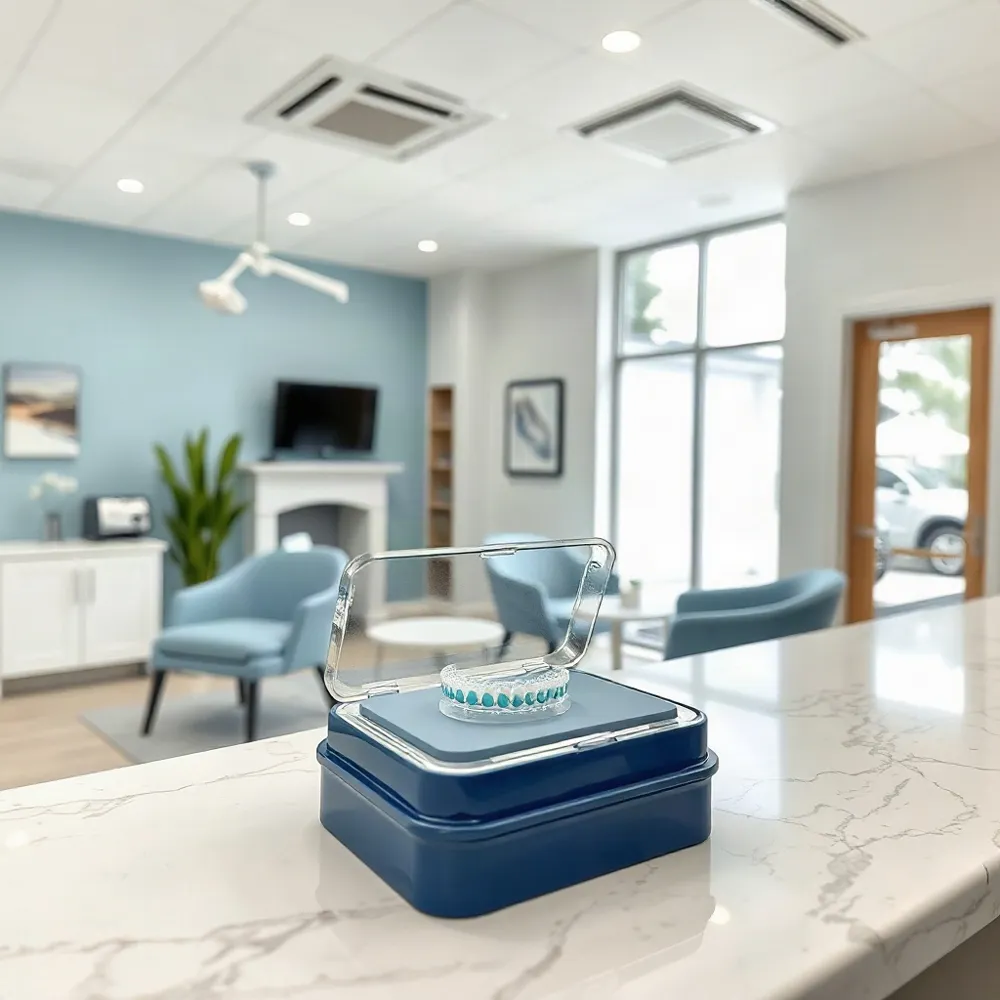 Invisalign Teen is not simply a smaller version of the adult product. It is a purpose-built system that uses custom clear aligners made from SmartTrack material, a proprietary multi-layer thermoplastic designed for predictable and comfortable tooth movement. The system includes features that address the biological, behavioral, and lifestyle needs of adolescent patients.
The Digital Treatment Process
Treatment begins with a consultation where the orthodontist evaluates the teen's teeth and bite. A 3D digital scan is taken using an iTero Element scanner, which is faster and more precise than traditional impressions. This scan feeds into ClinCheck software, which maps every tooth movement from start to finish. The teen and parents can preview a digital animation of the projected final smile before treatment begins.
Once the plan is approved, a series of custom aligners is fabricated from SmartTrack material. The number of aligners in a series ranges from 12 to 48, depending on the complexity of the case. Each aligner is worn for one to two weeks before being swapped for the next in the series, gradually shifting teeth into their correct positions.
Teen-Specific Design Features
Invisalign Teen includes several built-in features that adult aligners do not have:
Compliance indicators. Small blue dots built into each aligner that fade from blue to clear with proper wear over the prescribed time. If the dots are still blue at a checkup, it signals the aligners are not being worn enough, helping parents and the orthodontist track compliance.
Eruption tabs. Small ridges built into the aligner material that accommodate teeth still emerging, such as second molars. This makes Invisalign an option for teens whose permanent dentition is still developing.
Free replacement aligners. Up to six free replacement aligners are included in the treatment plan, covering the common scenario of lost or damaged aligners without additional cost.
Precision wings. Select Invisalign Teen aligners include precision wings that help guide jaw development in teens with mild-to-moderate jaw discrepancies (Class II malocclusions).
These features make Invisalign Teen a system designed specifically for adolescent orthodontic treatment, not simply a resized adult product. At Loud Family Dentistry, we start with a thorough consultation and 3D scan to determine if Invisalign Teen is the right fit for your teen's needs and to explain how the compliance indicators help keep treatment on track.
Effectiveness: What Invisalign Can and Cannot Fix
 Many parents wonder whether clear aligners can deliver the same results as traditional braces for their teenager. Clinical data helps answer that question. An analysis of 531,261 patients ages 11–19 who completed orthodontic treatment found that Invisalign delivers results equivalent to braces for teens, based on standard clinical parameters such as overjet, overbite, and crowding scores.
Invisalign is effective for a wide range of mild to moderate orthodontic issues, including crowding, spacing, overbite, underbite, crossbite, and open bite. The system has treated over 6.4 million cases involving complex malocclusions since 2011.
What Invisalign Can Treat
Crowding and Spacing. Mild to moderate crowding and gaps between teeth respond well to Invisalign Teen aligners.
Bite Issues. Overbite, underbite, crossbite, and open bite can be corrected in many teenage patients.
Complex Cases. Since 2011, over 6.4 million people with severe overbites, underbites, open bites, and cases requiring tooth removals have been treated with Invisalign clear aligners.
When Braces May Be a Better Choice
Not every teen is a candidate for clear aligners. Conditions that may disqualify a patient or make Invisalign less effective include severe skeletal discrepancies, significant jaw misalignment requiring surgical correction, and severe rotations or large gaps that are beyond the capacity of aligner therapy alone. Patients with active gum disease or extensive tooth decay need to resolve those problems first before beginning orthodontic treatment.
The best way to determine candidacy is an in-person evaluation. At Loud Family Dental, a comprehensive consultation can clarify whether Invisalign or traditional braces is the right path for your teen. The clinic uses digital scans to model treatment outcomes before any commitment is made, giving families clear expectations from the start.
Pros of Invisalign for Teens
 One of the most immediate benefits teens notice is appearance. Invisalign aligners are nearly invisible, which helps teens feel more confident in social settings, photos, and videos compared to the look of traditional metal braces. According to a survey, 84% of prospective teen patients prefer Invisalign over metal braces.
Because the aligners are removable, teens have no food restrictions — they can eat popcorn, apples, and chips without worry. This also makes brushing and flossing much easier. Research shows that during 12 months of treatment, teens with Invisalign demonstrated better compliance with oral hygiene and had less plaque and gingival inflammation than peers with fixed appliances.
Comfort is another clear advantage. Invisalign aligners are made from smooth SmartTrack material with no brackets or wires to poke the cheeks and lips. 98% of orthodontists who regularly treat teens agree that active teens in Invisalign have fewer emergency appointments than those in braces.
The treatment also fits a busy schedule. Invisalign requires on average about 30% fewer doctor visits than traditional braces. At clinics in Shreveport like Loud Family Dental, families can explore these clear aligner options and see how the convenience and lifestyle fit compare to other orthodontic choices.
Cons and Compliance Challenges
The biggest difference between braces and clear aligners is that Invisalign Teen puts the responsibility for progress on the teen. Aligners must be worn 20 to 22 hours every day, removed only for eating, drinking anything other than water, and brushing. Unlike braces, which work even when a teen forgets about them, aligners stop moving the teeth the moment they are taken out.
To help track wear, each aligner has a blue compliance indicator dot that fades from blue to clear as the tray is worn. If the dot remains blue at a checkup, the orthodontist knows the aligner has not been worn enough, and the treatment plan may need to be adjusted. Non-compliance directly prolongs treatment; a patient who skips hours may add months to their expected timeline.
Aligners are small and clear, which makes them easy to misplace. A common scenario is wrapping them in a napkin during lunch and accidentally throwing them away. Lost or damaged aligners require a replacement, which can cause delays. The solution is a simple habit: always store the aligners in their protective case when they are not in your mouth.
The first week with new aligners often comes with a mild lisp as the tongue adjusts to the plastic trays. This typically resolves within one to two weeks. Eating or drinking anything other than water with aligners in can stain them and trap sugar against teeth. The ideal routine is to remove the aligners, eat, brush, wait at least 30 minutes for the mouth's pH to reset, and then reinsert them. This means carrying a toothbrush and toothpaste on the go.
For teens who are committed to the daily routine, these challenges are manageable. At Loud Family Dentistry in Shreveport, the team is experienced at helping teens work through the early adjustment period and stay on track for a successful outcome.
Treatment Timeline and What to Expect
A free consultation at a clinic like Loud Family Dental is the first step. During this visit, the orthodontist uses a digital scanner to create a 3D model of your teen's teeth and shows a simulation of the projected final smile before any aligners are made.
Once treatment begins, the teen wears each set of aligners for one to two weeks before switching to the next. For mild to moderate cases, the total treatment time averages 12 to 18 months. Simpler cases can finish in as little as 6 months, while more complex corrections may take up to 24 months.
A 2024 study found that teenagers using Invisalign completed treatment an average of six months faster than those with braces — roughly 18 months compared to 24 months. Check-in appointments occur every 6 to 10 weeks, which is less frequent than the monthly adjustments needed for braces.
Each new tray may cause mild pressure or discomfort for the first one to two days, but most teens find this manageable and far less bothersome than the irritation from metal brackets and wires. After the last aligner, wearing a custom retainer is required to keep the teeth in their new positions.
Loud Family Dental walks families through each stage, from the initial 3D simulation to the retainer phase, so both parents and teens know exactly what to expect.
Cost and Insurance Coverage in Louisiana
The cost of Invisalign for teens in Louisiana typically ranges from $3,000 to $7,500, depending on the complexity of the case and treatment length. Simpler cases with mild crowding or spacing tend to fall toward the lower end, while more comprehensive bite corrections can cost more.
Many dental insurance plans cover orthodontic benefits equally for braces and Invisalign, with coverage averaging $1,772 per patient and up to $3,000 available for many families. Health savings accounts (HSAs) and flexible spending accounts (FSAs) can also be used to pay for treatment, and most orthodontists offer flexible monthly payment plans to spread the cost.
Free consultations at many Shreveport-area providers, including Loud Family Dental, help families get personalized estimates before committing to treatment. The price of Invisalign is now comparable to traditional braces, with the gap between the two options having narrowed significantly.
Whether Invisalign is worth it for a teenager depends on the teen's commitment to wearing aligners 20 to 22 hours per day and the severity of their orthodontic issues. For mild to moderate cases, Invisalign offers a discreet and convenient alternative to braces, with features like compliance indicators and eruption tabs designed specifically for teens.
Case Complexity. Mild crowding/spacing generally costs $3,000–$4,500; moderate bite issues range $4,500–$6,000; complex corrections may reach $6,000–$7,500.
Insurance Coverage. Many plans cover Invisalign the same as braces, with average benefits around $1,772 and up to $3,000 available.
Payment Options. Monthly payment plans, HSA/FSA funds, and free consultations are widely available.
Invisalign vs Braces: Comparison and Decision Tips
Choosing between Invisalign and traditional braces for a teenager comes down to weighing each option's strengths against your teen's personality and orthodontic needs. The table below offers a side-by-side snapshot of the most important factors.
| Factor | Braces | Invisalign |
|---|---|---|
| Visibility | Highly visible metal brackets and wires | Nearly invisible clear aligners |
| Comfort | Wires can poke, brackets may irritate | Smooth plastic, fewer mouth irritations |
| Food | Many restrictions (popcorn, gum, etc.) | No restrictions—aligners removed for eating |
| Hygiene | Needs special flossers and brushes | Normal brushing and flossing—aligners out |
| Compliance | Always working (fixed), no patient effort | Requires 20–22 hours of daily wear |
| Sports | Can cause mouth lacerations; mouthguard needed | Removable; mouthguard can be worn alone |
| Emergencies | Broken brackets and poking wires are common | Lost aligners covered by free replacements |
| Case type | Mild, moderate, and severe | Best for mild to moderate cases |
| Duration | Typically 18–24 months | Often 12–18 months for teens |
| Cost | $3,000–$7,000 (Louisiana range) | Comparable; $3,000–$7,500 in Louisiana |
For severe crowding, major overbites or underbites, or significant jaw misalignment, traditional braces are usually the better tool. Because braces are fixed and always working, they don't rely on daily compliance—so teens who struggle with consistency may have better results with this option. Braces, however, require special floss threaders and small interdental brushes, and broken brackets or loose wires can mean unscheduled emergency visits to the orthodontist.
Invisalign is nearly invisible, which appeals to self-conscious teens, and its removability makes eating any food and maintaining normal oral hygiene simple. Because aligners are smooth and free of sharp metal parts, sports and musical instrument playing remain uncomplicated. The trade-off is discipline: aligners must be worn 20–22 hours a day, and research confirms that the Invisalign Teen system, with its blue compliance-indicator dots, helps parents and loudfamilydentistry.com track whether a teen is meeting that target. For active teens, Invisalign also leads to fewer emergency appointments.
Before making a choice, assess your teen's maturity and organizational habits. Are they likely to put aligners in their designated case each night, or might trays be left on a lunch tray or in a napkin? If the teen is committed and their orthodontic needs are mild to moderate, Invisalign offers an effective, convenient path. If the teen struggles with daily routines or the case is complex, braces may be the more predictable route.
The best next step is a free consultation with an orthodontist who can scan your teen's teeth and map out a personalized plan. Some Shreveport practices also offer alternative clear aligner brands such as Spark Aligners or uLab, providing additional options. A professional evaluation will confirm whether Invisalign, braces, or another aligner type is the right fit for your teen's smile goals and lifestyle.
Finding the Right Orthodontic Fit for Your Teen
Invisalign Teen offers a modern, flexible approach that fits easily into an active lifestyle — aligners are nearly invisible, removable for sports and instruments, and require no food restrictions. But success depends on consistent daily wear and choosing a case that matches what clear aligners are designed to treat.
A consultation with an orthodontist is the best way to determine whether Invisalign or braces is the right fit for your teen. Families in Shreveport can visit local providers who use advanced technology like iTero scanning to create a detailed digital treatment plan and preview results before committing.
At Loud Family Dental, Dr. Loud offers free same-day consultations for teens and parents, helping families compare Invisalign and braces side by side and find a plan that matches both their teen's smile goals and their budget.