Introduction
Starting oral care as soon as a baby’s first tooth appears sets the foundation for a lifetime of healthy smiles. Parents often face power struggles—sensitivity, boredom, or fear of the toothbrush—making brushing feel like a battle. Evidence‑based guidelines from the American Dental Association, CDC, and pediatric dentists recommend soft‑bristled, child‑size brushes, a rice‑sized fluoride paste smear before age three and a pea‑sized amount thereafter, and twice‑daily two‑minute sessions supervised until the child can spit reliably. Turning brushing into a game, using timers or music, and letting kids pick their favorite brush or flavor can ease resistance and build lasting habits. Consistent routines and gentle praise further strengthen confidence and cooperation.
Setting the Foundation: Early Oral Care and Routine Building
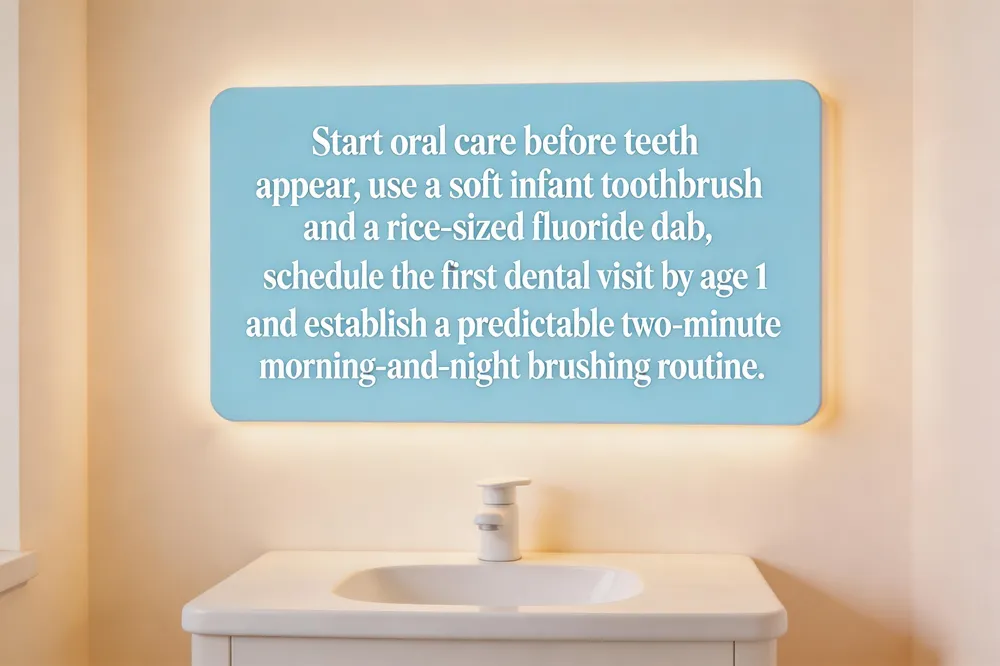 Begin oral care even before the first tooth appears by gently wiping gums with a damp cloth after each feeding. As soon as the first tooth erupts (around six months), switch to a soft infant toothbrush and a rice‑grain‑sized smear of fluoride toothpaste; a pea‑size dab can be used by 18 months. Schedule the child’s first dental visit by the first birthday or within six months of the first tooth to establish a dental home and catch early decay. Create a predictable two‑minute brushing schedule—morning after breakfast and night before bed—using a timer, song, or cartoon‑character app.
How to brush toddlers’ teeth when they refuse – Turn brushing into a fun ritual: let the toddler pick a favorite‑colored brush or mild‑flavored paste, sing a short song, or use a 2‑minute timer with a cartoon. Offer limited choices (top vs. bottom teeth) and let them “help” a stuffed animal before you take over. Reinforce effort with stickers or a extra bedtime story.
When should kids brush their own teeth – Children typically gain the coordination to brush alone between ages 6‑8; parents should supervise until about age 8, ensuring a pea‑size fluoride amount and full two‑minute coverage.
Baby oral‑care products – Use an extra‑soft infant toothbrush, silicone finger brush before teeth erupt, and age‑appropriate fluoride toothpaste. Optional tools include straw‑wheat floss picks, gauze gum cleaners, and a soft tongue‑scraper.
Making Brushing Fun: Games, Music, and Choice
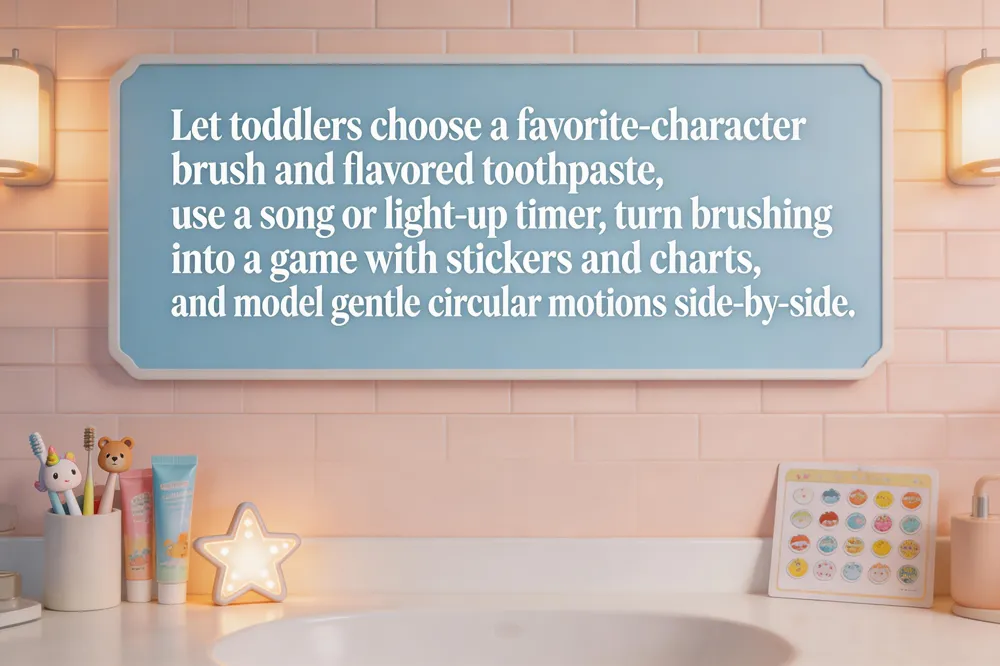 Turn the two‑minute routine into a game by letting toddlers pick a toothbrush with their favorite character and a kid‑friendly toothpaste flavor (bubblegum, strawberry or mild mint). Play a favorite song or use a light‑up timer so they brush "until the music stops," and imagine the brush as a superhero battling sugar bugs. For bedtime, make brushing a non‑negotiable step in the nightly sequence—bath, pajamas, brush, story, lights out—using a timer or a brushing app to give the task a clear, playful structure. Celebrate consistency with a sticker chart, high‑fives, or a weekly reward like an extra bedtime story. Parents should brush side‑by‑side, modeling gentle circular motions and praising effort. A free, printable Tooth‑Brushing Chart PDF can be downloaded from the clinic’s website, and a colorful Oral Hygiene Poster featuring a friendly "Tooth Defender" mascot can be displayed at home or in the waiting room. Older kids can sing a two‑minute tune—such as a custom "Brush‑Along" version of "Jingle Bells"—to keep the rhythm and reinforce proper technique.
Positive Reinforcement and Reward Systems
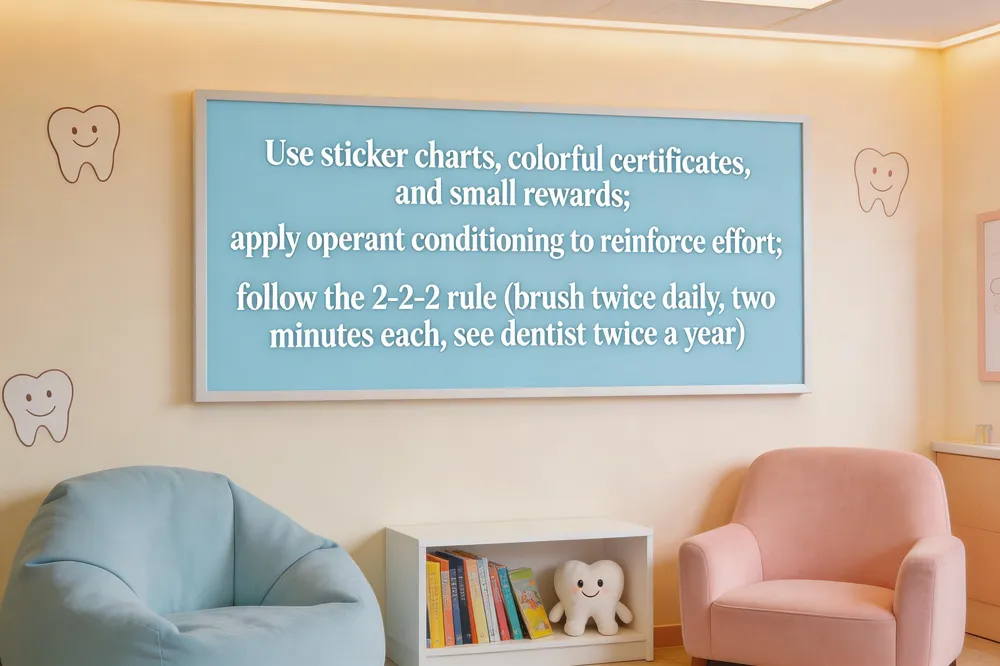 Sticker charts, colorful certificates, and simple reward tables turn brushing into a game children want to win. By giving a small reward for each successful session—rather than demanding a perfect technique—parents use operant conditioning to reinforce consistent effort and gradually shape better habits. Allowing kids to pick their own toothbrush, flavor of toothpaste, or the order in which they clean teeth provides a sense of autonomy while keeping expectations clear and predictable.
What is the 3‑3‑3 rule for teeth? The 3‑3‑3 rule suggests brushing three times a day for three minutes and waiting three hours before bedtime. Dental professionals, however, recommend the evidence‑based twice‑daily, two‑minute routine for optimal cavity protection.
What is the 2‑2‑2 rule for oral hygiene? Brush twice a day, two minutes minutes session, and see the dentist twice a year. This simple trio keeps plaque low and catches problems early.
How to avoid a power struggle with a toddler? Offer limited choices (e.g., red or blue cup), set clear boundaries, stay calm, and praise cooperation. Predictable routines reduce resistance.
How to get an 8‑year‑old to brush teeth? Let them choose a favorite‑character brush, use a two‑minute song or timer, track progress with stickers, and brush together as a family model.
11‑year‑old won’t brush teeth? Provide a cool‑design brush and flavored toothpaste, turn brushing into a timed game, involve them in the process, and use a reward chart that leads to a desired activity. If needed, a friendly visit to a pediatric dentist can reinforce the habit.
Addressing Challenges: Sensory Sensitivities and Specific Needs
 Autistic child won’t brush teeth
Start by identifying the sensory trigger—bristle feel, toothpaste taste, or bathroom noise. Offer a soft‑bristled , child‑size brush (manual at first) and a mild‑flavored or flavor‑free toothpaste. Let the child explore the brush with lips or a mirror before cleaning. Use a visual schedule, a two‑minute timer and a favorite song to create predictability. Model each step, break the task into tiny actions, and give gentle hand‑on cues. End with enthusiastic praise or a small non‑candy reward.
Do children with ADHD struggle to brush their teeth?
Yes. Difficulty sustaining attention and impulsivity can make the two‑minute timer feel endless. Short, high‑energy timers, movement‑based songs, and quick “brush‑and‑go” games help keep focus. Provide immediate, visual rewards and keep the bathroom environment low‑distraction.
Unhealthy kids teeth
Warning signs include white or brown spots, red/swollen gums, persistent bad breath, and sensitivity to hot or cold. These may signal early cavities or gum inflammation. Regular six‑month dental visits, supervised twice‑daily fluoride brushing, limited sugary snacks, and early flossing prevent progression.
What is the 7‑4 rule in pediatric dentistry?
The “7‑4 rule” notes that the first four primary teeth typically erupt around seven months, then a new tooth appears roughly every four months. By thirty‑two months most children have a full set of twenty‑four baby teeth, guiding expectations and early‑intervention timing.
Dental hygiene for preschoolers activities
Turn brushing into play: “toothpaste art” on paper, pretend dental office role‑play with a model tooth, and simple science demos like “egg‑in‑soda” to show sugar damage. Use sticker charts, song timers, and movement games (e.g., “Dentist Tray Relay”) to build routine and fine‑motor skills.
Professional Support and Community Resources
 Importance of dental care for children – Early check‑ups protect teeth from cavities, pain, and speech or nutrition problems. The ADA recommends a visit by age 1 to teach brushing, apply fluoride varnish and set a foundation for a lifetime of healthy smiles.
Dental Hygiene for kids – Start with a soft cloth on gums, then a soft‑bristled brush and a rice‑sized fluoride dab (under 3) or pea‑sized (3‑6). Brush twice daily for two minutes, supervise until age 7‑8, and floss once teeth touch. Fluoride‑rich water and sealants cut decay by up to 33 % and 80 % on molars.
Regular dental visits and fluoride treatments – Schedule six‑month exams, professional cleanings, fluoride varnish, and sealants as needed. These visits catch early decay and reinforce technique.
Loud Family Dental services in Shreveport – Offers pediatric check‑ups, fluoride varnish, sealants, and child‑friendly education. The clinic provides printable PDFs and classroom toolkits for teachers and parents.
Educational PDFs and classroom tools – Printable guides combine brushing charts, nutrition checklists, and symptom logs. Teachers can use hands‑on demos, games, and pledge worksheets to make oral health fun and memorable.
Conclusion
By using evidence‑based tactics—soft, age‑appropriate brushes, a pea‑size fluoride paste, two‑minute timers, game‑like songs or apps, and consistent family brushing—you can turn a nightly battle into a cooperative routine. Positive reinforcement through stickers, charts, or small non‑candy rewards builds confidence and encourages children to brush independently, while predictable morning‑and‑evening schedules cement lifelong, conflict‑free habits. Loud Family Dental reinforces these efforts by offering child‑friendly appointments, preventive fluoride varnish, and community workshops that empower parents with the tools and knowledge needed for lasting oral health success.