Why Consistent Oral Care Matters
Good oral hygiene does more than keep a smile bright; it protects the whole body. Bacteria from untreated gum disease can enter the bloodstream, raising the risk of heart disease, stroke, diabetes, and even complications during pregnancy. Simple daily habits—brushing twice a day with fluoride toothpaste, flossing, tongue cleaning, and using an alcohol‑free antibacterial mouthwash—break the plaque cycle and lower inflammation before it spreads. Loud Family Dental reinforces these habits by offering on‑site exams, professional cleanings, and personalized education, ensuring patients stay on track with preventive care. These services also include fluoride varnish and sealants for individuals, reducing cavity risk.
Foundations of a Daily Oral‑Hygiene Routine
| Step | Description | bsp | |||---| | Rinse with water | Clear debris and soften plaque before brushing | | Brush | Soft‑bristled or electric toothbrush, 2 min, 45° angle, fluoride toothpaste | | Floss | Interdental cleaning to remove plaque between teeth | | Tongue scrape | Remove biofilm from tongue surface, reduce bad breath | | Mouthwash | Alcohol‑free antibacterial or fluoride rinse, 30 sec | | Professional cleaning | In‑person dental cleaning every 6 months (or as advised) |
 A solid oral‑care plan begins with a clear order of steps. If you include oil pulling, start each morning on an empty stomach: swish a tablespoon of coconut (or another recommended) oil for 15‑20 minutes, spit into the trash, rinse thoroughly with water, then brush with fluoride toothpaste, floss, and—if advised—use a therapeutic mouthwash. Repeat brushing and flossing in the evening for consistency.
The 3‑3‑3 rule: brush three times a day (after meals and before bed), spend three minutes per session (divide the mouth into quadrants and use gentle 45‑degree strokes), and replace your toothbrush or electric head every three months (or sooner if bristles fray or after illness).
Types of oral‑hygiene practices include twice‑daily brushing with fluoride toothpaste, daily flossing or interdental cleaning, antimicrobial or fluoride rinses, tongue scraping, and the occasional use of water flossers or electric brushes. Professional cleanings every six months complete the routine.
Best products are those bearing the ADA Seal of Acceptance: a soft‑bristled or electric toothbrush, fluoride toothpaste, dental floss or interdental brushes (e.g., TePe, GUM), a water flosser for hard‑to‑reach areas, an alcohol‑free antibacterial mouthwash, and a tongue scraper. Xylitol‑sweetened gum can boost saliva and protect enamel.
Step‑by‑step routine: rinse with water, brush for two minutes at a 45‑degree angle, floss, scrape or brush the tongue, then finish with a mouthwash. Limit sugary foods, stay hydrated, and keep up with bi‑annual dental visits for early detection and professional cleaning.
By following this structured, evidence‑based approach you’ll reduce cavities, gum disease, and bad breath while supporting overall systemic health.
Advanced Techniques and Home‑Care Tips
| Practice | Benefit | Recommended Frequency |
|---|---|---|
| Oil pulling | Reduces bacterial load, freshens breath | 15‑20 min each morning on empty stomach |
| Water flosser | Reaches hard‑to‑clean areas, improves gum health | Once daily |
| Tongue scraping | Decreases volatile sulfur compounds, improves taste | After brushing |
| Xylitol‑sweetened gum | Stimulates saliva, protects enamel | After meals, up to 5 g/day |
| Soft‑bristle electric brush (for limited dexterity) | Provides consistent pressure, easier handling | Twice daily |
| Salt‑water rinse (budget‑friendly) | Soothes inflamed gums, mild antimicrobial | As needed, especially after irritation |
 Keeping your mouth healthy goes beyond brushing and flossing. Adding oil‑pulling, a daily water‑flosser session, and a quick tongue‑scrape can lower bacterial load and freshen breath, especially when you have limited dexterity or braces.
10 ways to keep your teeth healthy
- Brush twice daily with a soft‑bristled brush at a 45° angle using fluoride toothpaste (2 min).
- Floss or use interdental cleaners each day.
- Limit sugary/acidic foods and drink fluoridated water.
- Avoid tobacco and drink alcohol in moderation.
- See your dentist at least once a year for cleanings and exams.
- Use an alcohol‑free fluoride mouthwash or chew sugar‑free gum after meals.
- Wear a mouthguard for sports or grinding.
- Stay hydrated; saliva protects enamel.
- Manage chronic conditions (e.g., diabetes) and stay current on HPV vaccination.
- Promptly address bleeding gums, pain, or taste changes with a dental professional.
20 ways to care for your teeth expands on the above by adding: use a straw for acidic drinks, chew xylitol‑sweetened gum, replace your brush every 3‑4 months, choose a soft‑bristle electric brush if you have limited hand strength, adopt a calcium‑rich diet, use a fluoride rinse if high‑risk, quit nail‑biting, avoid DIY orthodontics, and keep a daily self‑exam for sores or swelling.
Effective at‑home tips focus on consistent brushing, flossing, tongue cleaning, and a balanced diet while using inexpensive tools like a reusable floss holder or a manual water flosser.
Budget‑friendly strategies include using salt‑water rinses, seeking low‑cost community clinics or dental‑school programs, and asking offices about payment plans. The basics—twice‑daily brushing, daily flossing, limited sugar, and regular professional check‑ups—provide the most cost‑effective protection for a healthy smile.
Oral Health and Systemic Wellness
| Systemic Condition | Oral Impact | Preventive Oral Care |
|---|---|---|
| Cardiovascular disease | Bacterial inflammation can contribute to atherosclerosis | Good plaque control, regular cleanings |
| Diabetes | Poor oral health worsens blood‑sugar control | Brushing, flossing, fluoride rinse, monitor gum health |
| Pregnancy complications (pre‑term birth, low birth weight) | Gum disease linked to adverse outcomes | Strict oral hygiene, dental check‑ups during pregnancy |
| Respiratory infections | Aspiration of oral bacteria | Regular cleaning, mouthwash, avoid smoking |
| Certain cancers (e.g., oral, esophageal) | Chronic inflammation increases risk | Maintain healthy mouth, limit tobacco/alcohol |
| Vitamin deficiencies (A, D) | Weaker enamel, higher cavity risk | Adequate nutrition, supplements if needed |
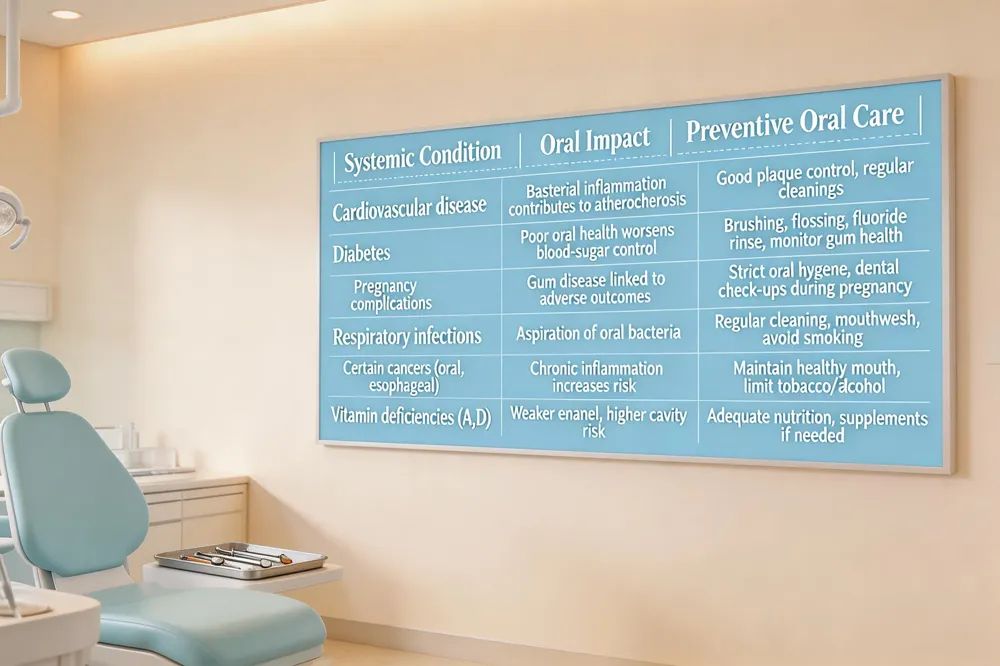 Keeping your mouth clean does more than preserve a bright smile—it supports the health of your entire body.
Impact of oral hygiene on heart, diabetes, and pregnancy
Regular brushing, flossing, and professional cleanings remove plaque and harmful bacteria that can enter the bloodstream. This reduces inflammation that contributes to cardiovascular disease, stroke, and endocarditis. Good oral care also improves blood‑sugar control, lowering the risk of type 2 diabetes and its complications. During pregnancy, diligent oral hygiene helps prevent gum disease, which is linked to pre‑term birth and low‑birth‑weight infants.
Vitamin deficiencies that affect tooth strength
A lack of vitamin A weakens enamel structure, making teeth more brittle. Vitamin D deficiency impairs calcium and phosphorus absorption, essential minerals for strong, resilient enamel. Both deficiencies often stem from poor diet, certain medications, or limited sun exposure. Ensuring adequate intake of vitamin A (found in orange and leafy green vegetables) and vitamin D (from fortified foods, sunlight, or supplements) helps maintain durable teeth.
Overall benefits of good oral hygiene
Good oral hygiene prevents plaque buildup, gum inflammation, cavities, and tooth loss. It lowers the risk of respiratory infections, certain cancers, and systemic conditions such as heart disease and diabetes. By maintaining a clean mouth, you support overall systemic health and enjoy fresher breath, healthier gums, and a more confident smile.
Frequently asked questions
- What are the benefits of good oral hygiene? Good oral hygiene keeps gums healthy, reduces the risk of heart disease, stroke, respiratory infections, diabetes, certain cancers, and supports safer pregnancies.
- Which vitamin deficiencies cause brittle teeth? Deficiencies in vitamin A and vitamin D weaken enamel, leading to brittle, fracture‑prone teeth.
- What are the benefits of good oral hygiene? (Repeated) It protects gums, heart, lungs, blood‑sugar control, reduces cancer risk, and promotes overall systemic health.
Accessing Dental Care: From Tele‑Dentistry to Mobile Services
| Service | Description | Typical Availability |
|---|---|---|
| Tele‑dentistry | Video consults, e‑prescriptions, remote assessments | Medicaid‑eligible in many states, varies by platform |
| Mobile dental clinics | Fully equipped vans for exams, cleanings, fillings | Community centers, assisted‑living facilities, home visits |
| In‑home dental services | Comprehensive care (X‑rays, extractions) performed at patient’s residence | For seniors, disabled, or mobility‑limited patients |
| Free online dentist prescription | Initial virtual evaluation at no charge, followed by e‑prescription if needed | Offered by select tele‑dentistry platforms |
| Child dental health PDFs | Downloadable guides (e.g., ADA “TinySmiles”) | Free from ADA and national oral‑health websites |
 Tele‑dentistry and mobile clinics are expanding options for patients who face barriers to traditional dental offices.
Do online dentists accept Medicaid? Yes—many teledentistry platforms are Medicaid‑eligible, but coverage varies by state and network. Before booking, verify that the provider is enrolled in your state’s Medicaid program; some services may still refer you to an in‑person dentist if they are out‑of‑network.
Are there mobile dental services for disabled patients? Absolutely. Companies such as Enable Dental and In‑House Dental Care bring fully equipped dental teams to homes, assisted‑living facilities, or community centers. They offer exams, cleanings, fillings, crowns, dentures and more, accommodating wheelchairs and bedside settings.
Can I receive dental care at home? Yes. Mobile dental services can perform comprehensive care—including X‑rays, fillings, and extractions—right in your living space, eliminating travel stress for seniors and those with limited mobility.
How can I obtain a free online dentist prescription? Start with a tele‑dentistry platform that offers a free initial evaluation or AI‑powered oral‑health scan. After a brief video consult, the dentist can issue an e‑prescription at no extra charge if medically needed.
Is there a child dental health PDF I can download? The American Dental Association’s “TinySmiles” PDFs and the National Maternal and Child Oral Health Resource Center’s guides are freely downloadable from their websites.
Where can I find in‑home dental services near me? Ask your regular dentist for referrals, search “mobile dentist” plus your city, or use platforms like Dentulu and Enable Dental, which serve Louisiana and many other states.
Recognizing Problems Early and Staying Safe
| Sign | Description | Recommended Action |
|---|---|---|
| Swollen or puffy gums | Redness, puffiness, possible inflammation | Schedule dental exam, improve brushing/flossing technique |
| Bleeding while brushing/flossing | Small amounts of blood, indicates gingivitis | Use soft brush, gentle technique, see dentist if persists |
| Persistent bad breath (halitosis) | Foul odor despite oral hygiene | Tongue cleaning, check for infection, professional cleaning |
| Tooth sensitivity | Sharp pain to hot/cold stimuli | Use desensitizing toothpaste, evaluate for decay or gum recession |
| Unexplained oral pain or sores | Persistent lesions, ulcerations | Seek prompt dental evaluation to rule out infection or oral cancer |
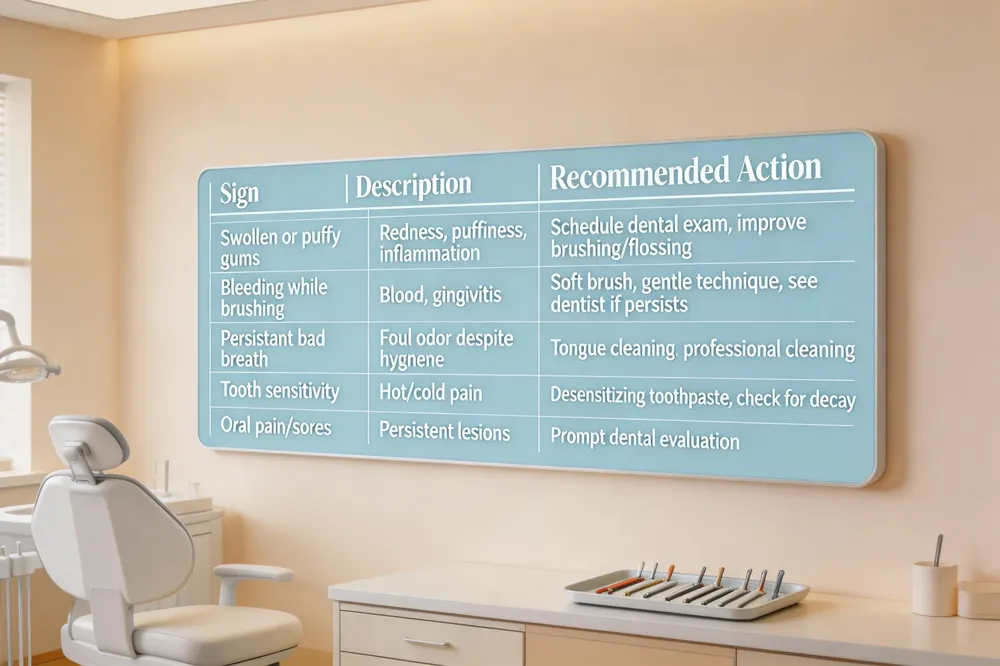 Good oral hygiene prevents plaque, gum disease, and systemic risks such as heart disease, stroke, and diabetes. Early signs of gum disease include swollen, puffy gums that turn bright or dark red, tenderness, easy bleeding while brushing or flossing, and persistent bad breath. Monitoring your mouth daily—checking gum color, texture, and any bleeding—helps catch gingivitis before it progresses to periodontitis.
Effective at‑home care follows ADA guidelines: brush twice daily for two minutes with a fluoride toothpaste, holding a soft‑bristled brush at a 45‑degree angle to the gum line; floss or use interdental cleaners once a day; replace the brush every three to four months; and consider an alcohol‑free antibacterial mouthwash if you’re at higher risk. Limit sugary and acidic foods. Stay well‑hydrated, and eat calcium‑ and vitamin‑D‑rich foods to strengthen enamel. Schedule professional cleanings and exams at least every six months (more often if you have a history of cavities or gum disease) to ensure early detection and personalized care.
Putting It All Together for a Healthier Smile
A healthy smile starts with three core habits: brush twice daily with a soft‑bristled, fluoride‑paste toothbrush at a 45° angle, floss once a day to clear interproximal plaque, and finish with an alcohol‑free antibacterial mouthwash. Schedule professional cleanings and exams every six months (or more often if high risk). Loud Family Dental’s mobile team brings these services to your home or assisted‑living facility, offering on‑site exams, cleanings, X‑rays, and coaching. Begin today—consistent steps protect your teeth, gums, and health.