Why Proper Care Matters
Keeping your dental restorations healthy starts with oral hygiene. Brushing twice a day with a bristled brush and fluoride toothpaste, plus flossing or water‑flossing, removes plaque that can cause decay at the margins of crowns, bridges, implants and fillings. A clean mouth also reduces gum inflammation that weakens support for any restoration. Nutrition and habits are important: limit sugary and acidic foods, stay hydrated, and avoid hard, sticky items to protect enamel and prevent chips or dislodgement. Check‑ups and cleanings at least twice a year catch signs of wear or decay and let the dentist adjust bite or reinforce areas. This article first explains why these practices matter, then outlines care for each restoration type, and ends with success tips.
Daily Oral Hygiene Basics
| Action | Details | Frequency / Duration |
|---|---|---|
| Brush | Soft‑bristled toothbrush, gentle circular motion at 45° angle | 2 × day, ≥2 min each (or 3 × day, 3 min each per 3‑3‑3 rule) |
| Floss | Traditional string floss or water flosser to clean beneath restorations | Daily |
| 3‑3‑3 Rule | Brush 3 × day, 3 min each; replace toothbrush every 3 months | Ongoing |
| Mouthwash | Antimicrobial (chlorhexidine or essential‑oil based) after meals | After each meal |
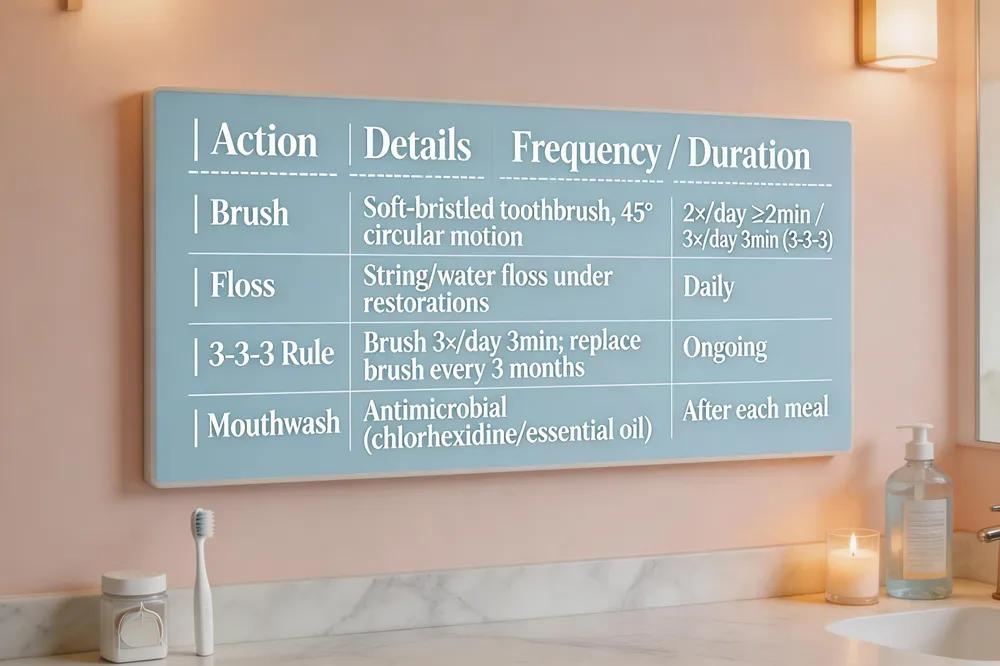 Good oral care starts with a proper brushing routine. Brush twice a day for at least two minutes with a soft‑bristled toothbrush, using a gentle circular motion and a 45‑degree angle to clean both tooth surfaces and the gum line. Floss daily, using traditional string floss or a water flosser, to remove plaque and food particles from beneath restorations and between teeth.
The 3‑3‑3 rule simplifies hygiene: brush three times a day, for three minutes each session, and replace your toothbrush every three months. This keeps plaque under control and ensures bristles remain effective without damaging gums.
Mouthwash adds an extra defense. Use an antimicrobial mouthwash (e.g., chlorhexidine or essential‑oil based) after meals to lower bacterial load while protecting restorations.
What are the do's and don'ts after tooth restoration? Follow the dentist’s specific after‑care instructions after any restoration procedure, including dietary restrictions and proper cleaning techniques, to ensure optimal healing and longevity.
What is the 3‑3‑3 rule for teeth? The 3‑3‑3 rule advises brushing three times a day, three minutes each time, and replacing the toothbrush every three months. This routine, combined with daily flossing, helps prevent cavities, gum disease, and plaque buildup.
Diet, Nutrition, and Healing
| Recommendation | Details | Timing |
|---|---|---|
| Limit sugary/acidic foods | Avoid sweets, sodas, citrus, berries to prevent enamel erosion & clot disruption | First 48 h post‑procedure |
| Calcium‑rich foods | Cheese, yogurt, fortified milk, soft carrots, applesauce with a bit of apple | Once soft foods tolerated |
| Hydration | Plenty of water to buffer acids and cleanse crowns/bridges/implants | Throughout day |
| Soft‑food diet | Greek yogurt, scrambled eggs, mashed potatoes, oatmeal, smooth soups, protein shakes | First 3‑5 days |
| Healing‑promoting foods | Protein‑rich (cottage cheese, eggs), vitamin C (pureed strawberries, banana), iron/zinc (pureed beans), calcium + D (fortified milks) | Ongoing as diet progresses |
| Foods to avoid | Hot, spicy, crunchy, hard, sticky, or acidic items; smoking, straws, suction | First 24‑48 h (and as advised) |
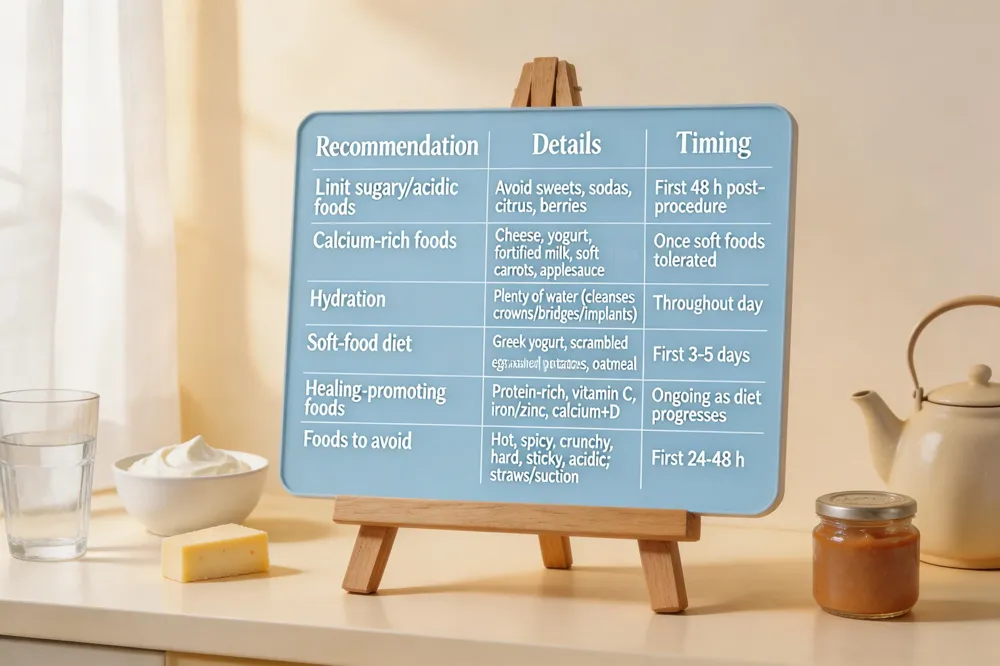 Maintaining a gentle diet after oral surgery or restorative work is key to protecting healing tissues and extending the life of restorations.
Sugary and acidic food limitations – Limit sugary foods and beverages, such as sweets, sodas, citrus, and berries, for at least the first 48 hours to prevent acid‑driven enamel erosion and clot dislodgement.
Calcium‑rich and crunchy foods for strength – Once soft foods are tolerated, Consume calcium‑rich foods like cheese and yogurt, and crunchy fruits and vegetables (soft cheese, yogurt, fortified milk, steamed carrots, applesauce blended with a bit of apple) to reinforce tooth structure without over‑loading restorations.
Hydration and saliva support – Drink plenty of water throughout the day; saliva buffers acids and helps cleanse food particles from around crowns, bridges, and implants.
Soft‑food recommendations after surgery – Favor lukewarm, nutrient‑dense options that require minimal chewing: Greek yogurt, scrambled eggs, mashed potatoes, oatmeal, smooth soups, and protein‑rich shakes.
What not to do after oral surgery? – Do not smoke, use straws, or create suction; Avoid hard or sticky foods and hot, spicy, crunchy, or acidic foods for 24‑48 hours; refrain from vigorous rinsing, spitting, or aggressive brushing of the surgical site; skip alcohol, strenuous activity, and heavy lifting during the first couple of days.
Foods that promote healing after oral surgery – Soft, cool foods rich in protein (Greek yogurt, cottage cheese, scrambled eggs), vitamin C (mashed potatoes with orange juice, pureed strawberries, banana‑smoothie), iron/zinc (fortified oatmeal, pureed beans, tender chicken soup), and calcium + vitamin D (fortified milks, soft cheese, blended tofu). Stay hydrated with water or electrolyte drinks.
What to eat after oral surgery with stitches? – Stick to soft, cool foods that protect sutures: smoothies (no straw), yogurt, pudding, applesauce, mashed potatoes, oatmeal, scrambled eggs, well‑cooked rice or pasta, warm broth, blended soups, mashed avocado, soft‑cooked fish, cottage cheese, ground meat, and pureed vitamin‑C fruits. Avoid hot, spicy, crunchy, sticky, or acidic items and anything that could lodge near stitches.
Protecting Restorations from Mechanical Stress
| Care Step | Details | Note |
|---|---|---|
| Brushing | Soft‑bristled brush, fluoride toothpaste, 45° angle, focus on gum line | Twice daily |
| Flossing / Interdental cleaning | Floss threader, interdental brush, or water flosser to clean under bridges/crowns | Daily |
| Mouthwash | Alcohol‑free antimicrobial rinse | After brushing/flossing |
| Avoid hard/sticky foods | Ice, hard nuts, hard candy, caramel, etc. | Ongoing |
| Professional check‑ups | Schedule regular dental visits for cleanings and early problem detection | Every 6 months |
| Protective devices | Custom nightguard for bruxism, sports mouthguard for contact sports | As needed |
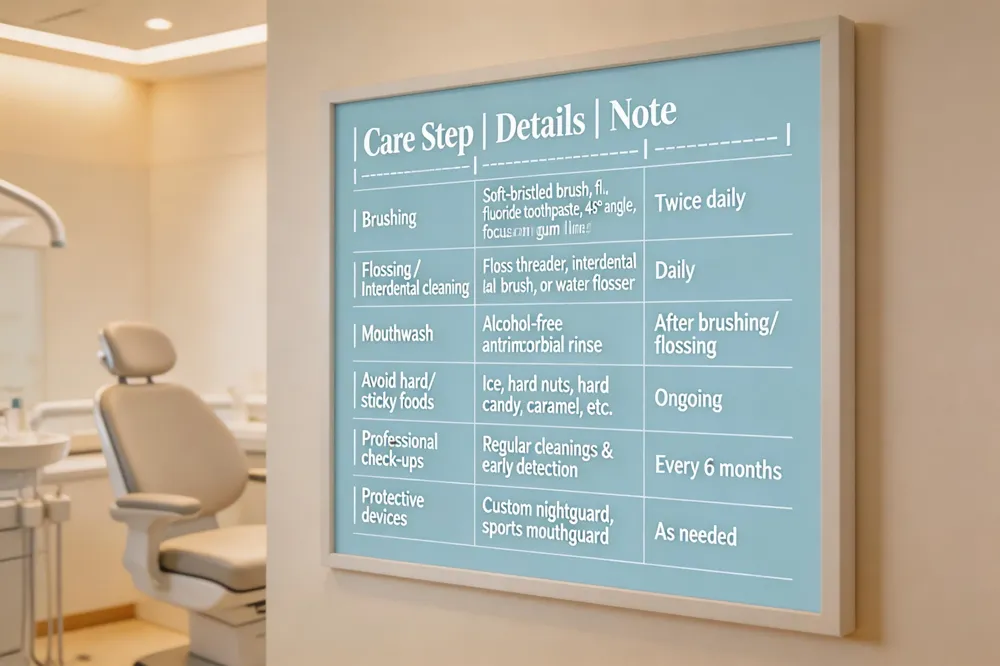 Maintaining crowns and bridges is essential for a lasting smile. How do you take care of crowns and bridges? Brush twice a day with a soft‑bristled toothbrush and fluoride toothpaste, paying special attention to the gum line. Use a floss threader, interdental brush, or water flosser daily to clean beneath a bridge and around a crown. Rinse with an alcohol‑free antimicrobial mouthwash to keep plaque at bay. Avoid chewing very hard foods—ice, nuts, hard candy—and sticky items like caramel that can chip or loosen restorations. Schedule regular dental check‑ups for professional cleanings and early problem detection.
Is a Waterpik good for cleaning under bridges? Yes. A Waterpik’s pulsating water stream reaches beneath pontics and around supporting crowns where floss may miss. Use a low‑to‑medium pressure setting at a 45° angle to the gum line for safe, effective cleaning.
What is the most painful tooth procedure? Impacted wisdom‑tooth extraction is often the most painful, involving gum incision, bone removal, and tooth sectioning. Proper anesthesia and post‑operative care help manage discomfort.
Additional protection tips: wear a custom nightguard the bruxism, use a sports mouthguard during contact activities, and never use teeth as tools to open packages or bite nails.
Specialized Cleaning Tools and Professional Care
| Tool | Use | When |
|---|---|---|
| Water flosser (e.g., Waterpik) | Pulsating water stream to reach pontics & crown margins | After each meal |
| Interdental brush | Clean narrow spaces around bridges and implants | After meals |
| Floss threader | Thread floss under bridges and around crowns | After meals |
| Denture brush & cleanser | Soft brush for removable dentures; soak overnight in non‑abrasive cleanser | Daily for removable dentures |
| Professional cleaning | Gentle cleaning after surgical clearance | 7‑10 days after minor surgery, 4‑6 weeks after major surgery or when on blood thinners |
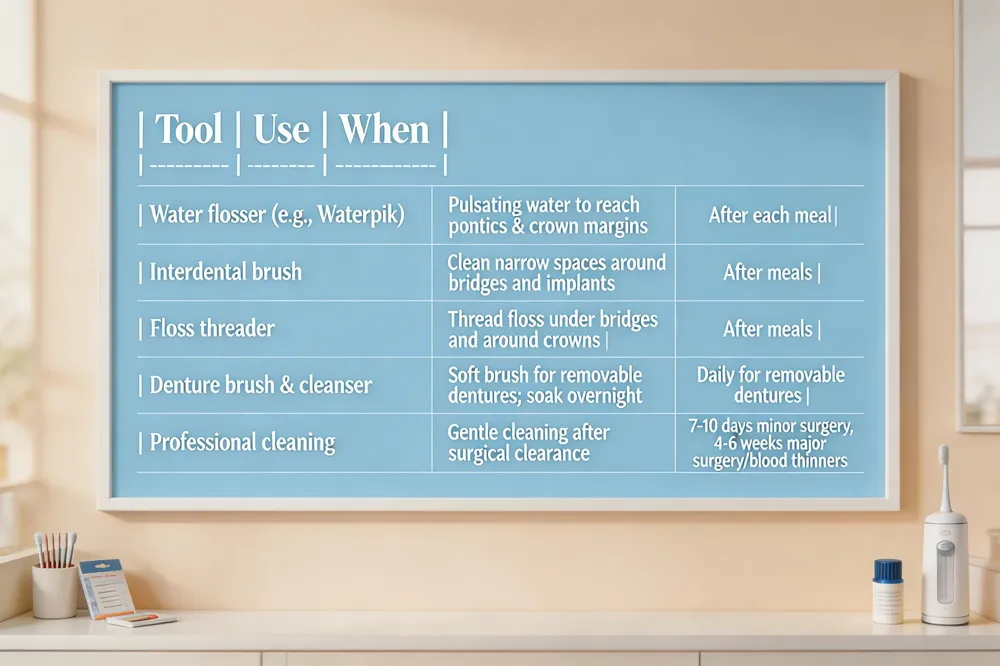 Water flossers and small brushes are gentle, effective ways to reach under crowns, around bridges, and along implant margins where a regular toothbrush can’t. The pulsating stream of water dislodges food particles, while thin bristles clean narrow spaces without damaging delicate restorations.
For fixed restorations like bridges and implants, use a floss threader or an interdental brush after each meal to prevent plaque buildup that can lead to gum inflammation or secondary decay. Removable dentures should be brushed with a soft‑bristled denture brush and soaked overnight in a non‑abrasive cleanser to keep them fresh and free of bacterial colonies.
Dental cleanings after surgery are safe once your surgeon gives clearance. Most clinicians advise waiting 7–10 days after uncomplicated abdominal procedures, and up to 4–6 weeks for major operations, especially if blood thinners are involved. During recovery, maintain gentle home oral hygiene to reduce infection risk.
Dental cleaning after abdominal surgery
A dental cleaning can be performed after abdominal surgery once your surgeon confirms you’re medically cleared and the risk of bleeding is low. For most uncomplicated abdominal procedures, waiting about 7–10 days (or up to two weeks) before a routine cleaning is advisable, while more extensive surgeries may require a longer interval of 4–6 weeks. Maintaining gentle home oral hygiene at home during recovery helps prevent plaque buildup and reduces the chance of infection that could affect the surgical site. If you’re taking blood‑thinners or have an active infection, your dentist may prescribe preventive antibiotics or postpone the cleaning until those issues are resolved. Always coordinate care between your surgeon and dentist to ensure a safe and comfortable post‑operative oral health plan.
Is it safe to have dental cleaning after surgery?
Yes, a dental cleaning can usually be performed after surgery, but only after you have received clearance from your surgeon and any immediate healing period has passed. For most major surgeries, dentists recommend waiting at least 6 – 8 weeks to reduce the risk of bleeding and infection, while after oral procedures such as tooth extractions a shorter wait of 7‑14 days is often sufficient. Be sure to inform your dentist about any medications (especially blood thinners) and any ongoing post‑surgical symptoms, and follow any prescribed antibiotics if needed. If you have an active infection, fever, or persistent pain, postpone the cleaning and contact your healthcare team. Once cleared, a professional cleaning helps keep your mouth healthy and supports overall recovery.
Post‑Operative Care and Follow‑Up Resources
| Phase | Guidance | Key Points |
|---|---|---|
| Immediate (0‑2 h) | Clear liquids as anesthesia fades | No straws, no hot foods |
| Early (4‑6 h) | Cool, soft foods (yogurt, applesauce, mashed potatoes) | Continue avoiding straws |
| First 3‑5 days | Soft‑food diet (smooth soups, oatmeal, protein shakes) | Gentle rinsing with warm salt water after day 1 |
| Days 6‑14 | Gradually add soft regular foods (soft pasta, scrambled eggs) | Resume normal eating by week 1‑2 if healing well |
| Sensitivity & pain | OTC analgesics as directed, ice packs first 24 h, warm salt‑water rinses after day 1 | Avoid hot, spicy, crunchy foods |
| Warning signs | Persistent bleeding, fever, worsening pain, swelling, pus | Contact dentist immediately |
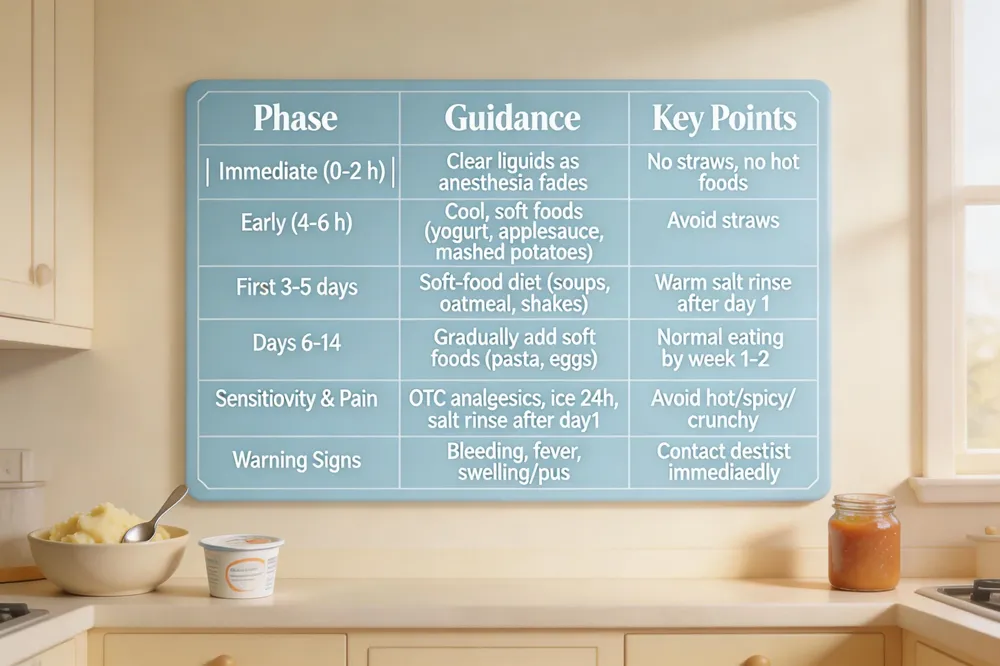 After oral‑surgery, patients can rely on a clear, step‑by‑step plan. Loud Family Dental offers an easy‑to‑download PDF titled “Oral Surgery Post‑Op Instructions” that covers bleeding control, pain management, swelling reduction, and the first‑day diet.
Timing of meals – Start with clear liquids as the anesthesia fades (1‑2 hours). By 4‑6 hours, switch to cool, soft foods (yogurt, applesauce, mashed potatoes) and avoid straws. Continue a soft‑food diet for 3‑5 days, then gradually add gentle foods (soft pasta, scrambled eggs, oatmeal) and resume regular eating within 1‑2 weeks, based on healing.
Managing sensitivity and pain – Use prescribed or OTC analgesics as directed, apply ice packs for the first 24 hours, and rinse gently with warm salt water after the first day. Avoid hot, spicy, crunchy, or hard foods that can trigger discomfort.
When to seek professional help – Contact the office if you experience persistent bleeding, fever, worsening pain, or signs of infection (swelling, pus). The PDF lists the clinic’s after‑hours emergency line and care coordinator contact information.
Frequently asked questions
Oral surgery post‑op instructions PDF – The downloadable guide outlines bleeding control, pain relief, swelling management, diet, oral‑hygiene, warning signs, and emergency contacts.
After oral surgery: when can I eat? – Clear liquids soon after anesthesia, soft cool foods after 4‑6 hours, soft‑food diet for 3‑5 days, then gentle regular foods by week one.
What not to do after oral surgery? – Do not smoke, use straws, eat hot/crunchy foods, rinse vigorously, brush the surgical site aggressively, or engage in heavy activity for the first 1‑2 days.
Long‑Term Maintenance and Monitoring
| Activity | Frequency | Purpose |
|---|---|---|
| Bi‑annual dental check‑ups | Every 6 months | Early detection of decay, gum inflammation, marginal breakdown |
| Professional cleanings | Every 6 months (or as advised) | Remove plaque, maintain restoration health |
| Systemic health monitoring | Ongoing (smoking cessation, diabetes control, xerostomia management) | Support gum health and bone support |
| Patient education & early reporting | Continuous | Prompt intervention for pain, bleeding, infection |
| Healing timeline awareness | Soft tissue 1‑2 weeks, bone remodeling 4‑6 weeks, full density later | Set realistic expectations for recovery |
 Maintaining dental restorations starts with bi‑annual check‑ups and professional cleanings. These visits let the dentist spot early decay, gum inflammation, or marginal breakdown before a restoration fails. Systemic factors such as smoking, diabetes, and xerostomia can undermine gum health and bone support; quitting tobacco, controlling blood sugar, and using saliva substitutes when needed are essential steps.
Healing timeline for gums and bone – After oral surgery, soft‑tissue gums usually begin closing the socket within 1‑2 weeks, with most swelling subsiding by the end of the first week. Underlying bone remodels over 4‑6 weeks, and full density may take several months. A soft‑food diet, avoiding straws, and gentle salt‑water rinses after the first 24 hours protect the clot and speed repair.
Patient education and early intervention – Promptly reporting persistent pain, bleeding, or infection allows timely corrective care.
Q: How long does it take for gums to heal after oral surgery?
A: Soft tissue closes in 1‑2 weeks, swelling eases by week 1, bone remodeling completes by 4‑6 weeks, with full density later.
Q: What is the 3‑3‑3 rule for teeth?
A: Brush three times daily, for three minutes each, and replace your toothbrush every three months, using a soft‑bristle brush at a 45° angle and daily flossing for optimal hygiene.
Putting It All Together for Lasting Restorations
A successful restoration rests on four pillars: diligent daily hygiene, a supportive diet, protective habits, and regular professional care. Brush twice a day with a soft‑bristled toothbrush and fluoride toothpaste, floss (or use a water flosser) to keep plaque away from crowns, bridges, veneers, and implants. Choose foods rich in calcium, fruits, and vegetables while limiting sugary and highly acidic items that can erode enamel and weaken margins. Guard your work from trauma—avoid hard or sticky foods, wear a nightguard if you grind, and quit smoking to preserve gum health. Finally, schedule bi‑annual check‑ups and cleanings at Loud Family Dental, where personalized after‑care guidance and early‑intervention monitoring keep your smile vibrant for years to come.