Welcome to Your Cavity‑Free Journey
Oral health matters at every age because the mouth is the gateway to the body. In childhood, early cavities can affect speech, nutrition, and permanent teeth; in teens, braces and sugary habits raise risk; in adulthood, untreated decay can cause pain, infection, and even systemic problems such as heart disease; in seniors, dry mouth and receding gums make teeth more vulnerable. This guide will walk you through cavity formation and give practical, evidence‑based habits to adopt today. You’ll learn how twice‑daily brushing with fluoride toothpaste, daily flossing, and proper technique remove plaque; why limiting sugary and acidic foods, drinking fluoridated water, and chewing sugar‑free gum protect enamel; the role of professional cleanings, sealants, and fluoride treatments; and how personalized care—based on age, health, and lifestyle—keeps your smile healthy for life. You’ll also learn about fluoride mouthwash, regular check‑ups, and fun ways to keep the whole family smiling.
Foundations of Daily Oral Hygiene
Key Practices for Daily Oral Hygiene
| Practice | Details |
|---|---|
| Brushing | Soft‑bristled brush (electric or manual) at a 45° angle; gentle circular motions for 2 minutes; cover all surfaces and tongue; avoid rinsing immediately to keep fluoride on teeth. |
| Flossing | Daily floss or interdental cleaner; C‑shaped motion around each tooth to remove plaque and food particles from between teeth and under gums. |
| Mouthwash | Alcohol‑free antimicrobial or fluoride mouthwash; rinse 30 seconds after brushing/flossing; avoid eating/drinking for a short period to let active ingredients work. |
| Toothbrush Care | Replace brush/head every 3‑4 months (or sooner if bristles fray); rinse thoroughly after each use; store upright to air‑dry. |
| Gum‑Health Tips | Stay hydrated; limit sugary snacks; avoid tobacco; watch for persistent bad breath, bleeding gums, or plaque buildup and schedule a dental check‑up promptly. |
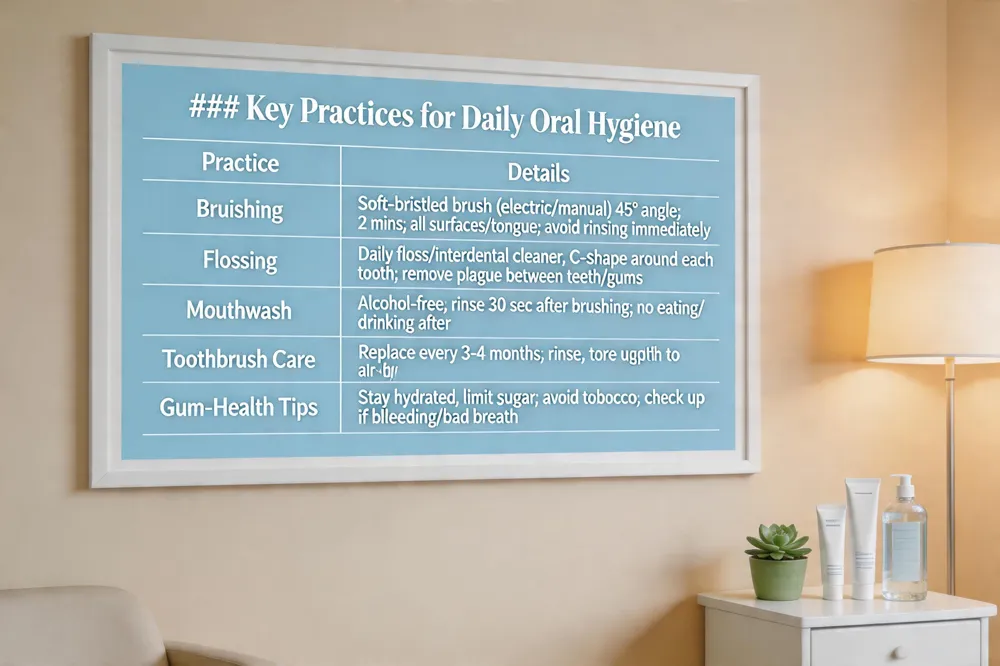 A solid oral‑hygiene routine is the cornerstone of a cavity‑free smile and healthy gums. It starts with brushing technique: use a soft‑bristled brush (electric or manual) and hold it at a 45° angle to the gum line. Apply gentle circular motions for two minutes, covering all surfaces and the tongue, then spit out the excess toothpaste but don’t rinse immediately so fluoride stays on the teeth.
Flossing importance cannot be overstated. Daily floss or an interdental cleaner removes plaque and food particles from between teeth and under the gums—areas a brush can’t reach. A C‑shaped motion around each tooth helps prevent gum inflammation and early decay.
Mouthwash selection adds a protective layer. Choose an alcohol‑free antimicrobial or fluoride mouthwash to lower bacterial load and strengthen enamel. Rinse for 30 seconds after brushing and flossing, then avoid eating or drinking for a short period to let the active ingredients work.
Toothbrush care keeps your kit effective. Replace the brush or electric head every three to four months, or sooner if bristles fray. Rinse the brush thoroughly after each use and store it upright to air‑dry, preventing bacterial growth.
Quick tips for gum health: stay hydrated, limit sugary snacks and avoid tobacco. If you notice persistent bad breath, bleeding gums, or plaque buildup, schedule a dental check‑up promptly.
By following these steps—brushing twice daily with proper technique, flossing every day, using a fluoride‑rich mouthwash, and maintaining your toothbrush—you’ll protect enamel, reduce plaque, and enjoy a healthier smile at any age.
Diet, Hydration, and Lifestyle Choices
Lifestyle Factors Influencing Oral Health
| Recommendation | Why / How |
|---|---|
| Limit sugary & acidic foods/drinks | Reduces acid attacks that erode enamel; less substrate for plaque bacteria. |
| Drink fluoridated water | Provides continuous low‑level fluoride, strengthening enamel and reducing cavities by ~25 %. |
| Chew sugar‑free gum (xylitol) | Stimulates saliva to buffer acids, wash debris, and supply calcium/phosphate for remineralization. |
| Avoid tobacco & limit alcohol | Decreases plaque, gum disease, oral cancer risk; prevents dry mouth that accelerates erosion. |
| Ten ways to keep teeth healthy | 1 Brush twice daily (2 min) with fluoride toothpaste; 2 Use soft brush at 45° angle; 3 Floss daily; 4 Rinse with antibacterial/fluoride mouthwash; 5 Limit sugar/acid; 6 Drink fluoridated water; 7 Chew sugar‑free gum; 8 Replace toothbrush every 3‑4 months; 9 Visit dentist ≥2×/yr; 10 Avoid tobacco/moderate alcohol. |
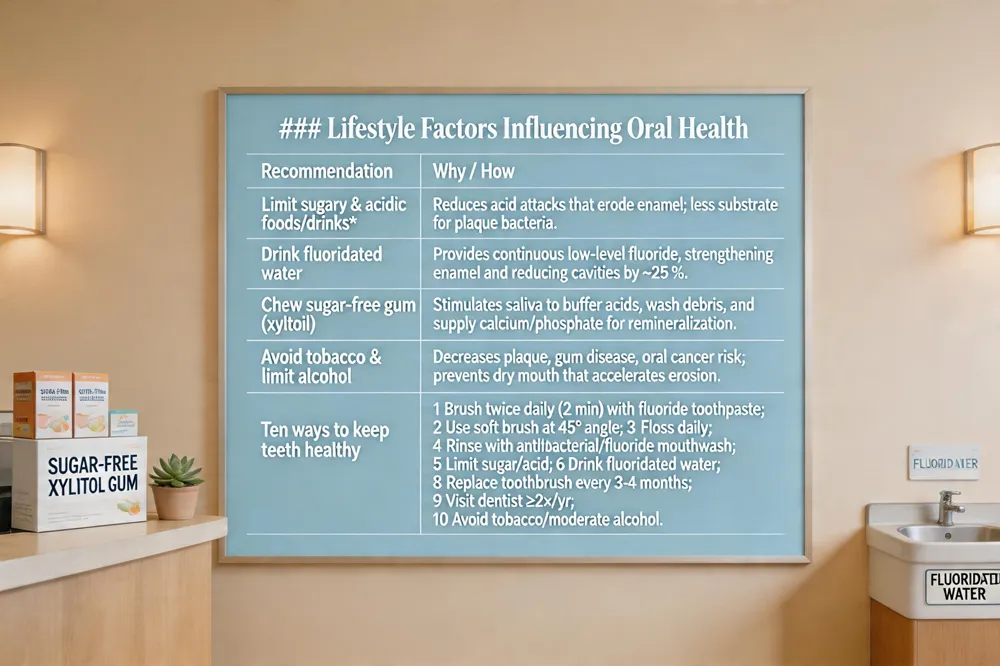 A healthy smile starts with what you eat, drink, and the habits you practice each day.
Limit sugary and acidic foods and drinks – Bacteria in plaque turn sugar and starch into acid that erodes enamel. Cutting back on candy, sodas, fruit juices, and frequent snacking reduces the number of acid attacks, giving saliva a chance to neutralize and remineralize teeth.
Fluoridated water is a simple, low‑cost defense – Community water fluoridation lowers cavity rates by about 25 % and provides a constant, gentle supply of fluoride that strengthens enamel and helps reverse early decay.
Chew sugar‑free gum after meals – The act of chewing stimulates saliva flow, which buffers acids, washes away food debris, and supplies calcium and phosphate for enamel repair. Xylitol‑sweetened gum adds an extra antimicrobial benefit.
Tobacco and alcohol – Smoking and smokeless tobacco increase plaque, gum disease, and oral cancer risk, all of which can accelerate cavity formation. Excessive alcohol also dries the mouth and contributes to enamel erosion. Quitting or moderating these habits protects both teeth and overall health.
What are ten ways to keep my teeth healthy?
- Brush twice daily for two minutes with fluoride toothpaste.
- Use a soft‑bristled brush at a 45° angle and gentle circular motions.
- Floss or clean interproximal spaces daily.
- Rinse with an antibacterial or fluoride mouthwash.
- Limit sugary and acidic foods and drinks.
- Drink fluoridated water throughout the day.
- Chew sugar‑free gum after meals.
- Replace your toothbrush every 3‑4 months.
- Visit the dentist for cleanings and check‑ups at least twice a year.
- Avoid tobacco and keep alcohol consumption moderate.
What oral health tips are especially important for adults? Adults should maintain the twice‑daily brushing and nightly flossing routine, choose a fluoride mouthwash, stay well‑hydrated, and limit sugary snacks. Managing chronic conditions such as diabetes, staying up‑to‑date on HPV vaccination, and avoiding tobacco further reduce gum disease and oral cancer risk. Regular professional cleanings (at least once a year) and personalized fluoride treatments keep enamel strong and cavities at bay.
Targeted Preventive Measures
Focused Preventive Strategies
| Measure | Effectiveness |
|---|---|
| Dental sealants | Apply to pits/fissures of molars; block plaque; cut decay risk up to 80 % in children/adolescents. |
| Professional fluoride varnish/gel | Replenishes lost minerals; hardens enamel; helps reverse early lesions. |
| Six‑month professional cleanings | Remove tartar, detect white‑spot lesions early, provide opportunity for sealants/fluoride. |
| Xylitol‑based products | Chewing gum, lozenges, toothpaste stimulate saliva, neutralize acids, and reduce Streptococcus mutans bacteria. |
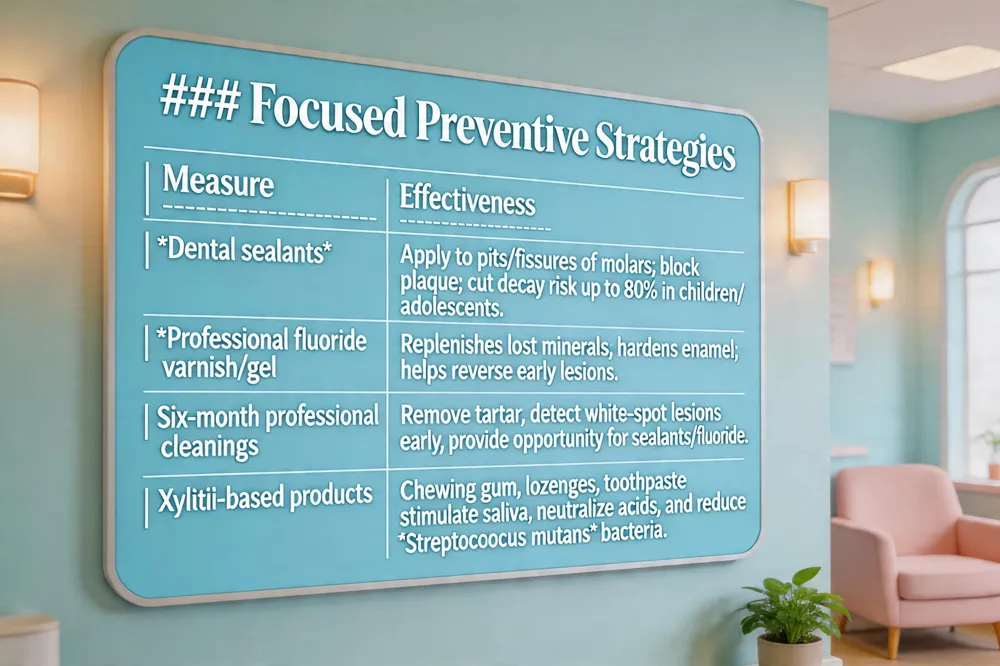 A cavity‑free smile relies on several focused strategies beyond daily brushing and flossing. Dental sealants applied to the pits and fissures of molars create a thin, protective barrier that blocks plaque and food debris, cutting decay risk by up to 80% in children and adolescents. Professional fluoride varnish or gel treatments performed during routine cleanings, replenish lost minerals and harden enamel, helping to reverse early lesions and guard against future attacks. Regular professional cleanings every six months remove tartar that brushing cannot reach, allow early detection of white‑spot lesions, and provide an opportunity for sealant placement or fluoride application. Xylitol‑based products—chewing gum, lozenges, or toothpaste stimulate saliva flow, neutralize acids, and reduce the bacteria that cause cavities; using them after meals adds an extra layer of protection.
What are the essential steps in an oral hygiene routine? Brush twice daily for two minutes with a fluoride toothpaste and a soft‑bristled (or electric) brush, then floss or use an interdental cleaner. Rinse with an antimicrobial or fluoride mouthwash, clean the tongue, and replace the toothbrush every three months.
What types of oral hygiene products should I use? Choose a soft‑bristled toothbrush, preferably electric with a timer, fluoride toothpaste, daily floss or interdental brushes, an alcohol‑free antimicrobial or fluoride mouthwash, a tongue scraper, and optional xylitol‑sweetened gum or prescription fluoride rinse for added cavity protection.
Special Situations and Frequently Asked Questions
Frequently Asked Questions
| Question | Answer |
|---|---|
| Can I kiss my boyfriend if he has cavities? | Bacteria (e.g., S. mutans) can transfer; repeated exposure raises decay risk. Encourage treatment and maintain strict oral hygiene for both. |
| How many cavities is considered a lot for an adult? | One‑two cavities over a lifetime is typical; three or more in a year signals concern; five + untreated cavities indicates significant decay. |
| How can I care for my teeth if I can’t visit the dentist right now? | Stick to a strict home routine: brush twice daily with fluoride toothpaste, floss, use antibacterial mouthwash, limit sugar/acid, chew sugar‑free gum, consider OTC fluoride rinse, and use tele‑dentistry for guidance. |
| What is the definition of oral care? | Daily habits (brushing, flossing, mouthwash) plus regular professional services (exams, cleanings, preventive treatments) that protect teeth, gums, and overall oral health. |
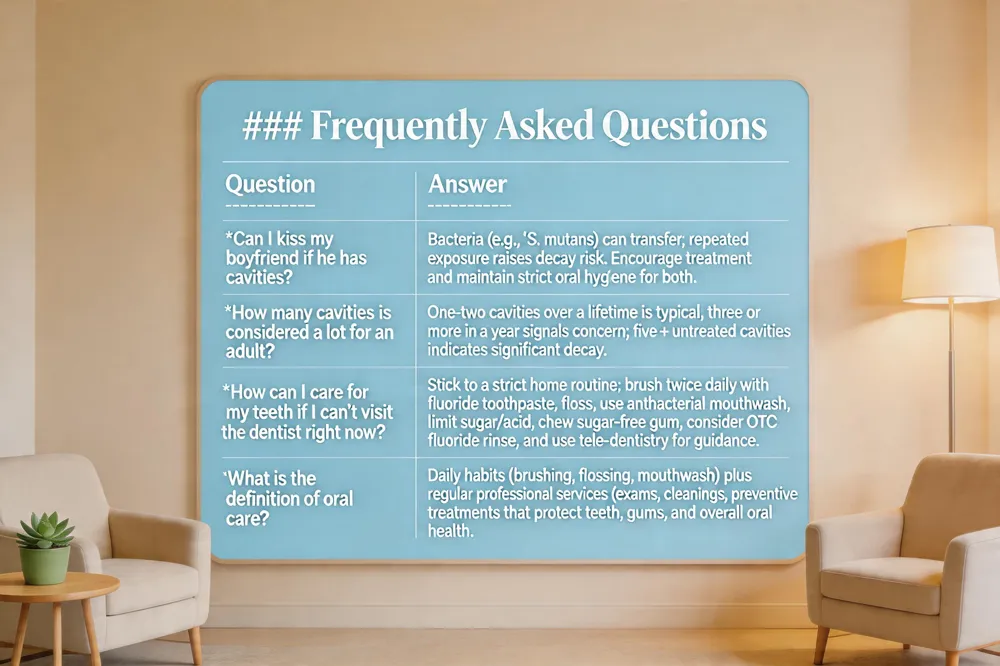 Can I kiss my boyfriend if he has cavities?
Kissing a partner with untreated cavities can transfer cavity‑causing bacteria such as Streptococcus mutans to your mouth, raising your risk of decay over time. A single kiss is unlikely to cause immediate damage, but repeated exposure may allow these bacteria to colonize. Encourage your boyfriend to schedule a dental exam and treat any cavities promptly. Both of you should keep diligent oral hygiene—brush twice daily with fluoride toothpaste, floss daily, and use an antimicrobial mouthwash. Avoid sharing utensils, straws, or lip balm, which can also spread bacteria.
How many cavities is considered a lot for an adult?
For most adults, one or two cavities over a lifetime is typical. Developing three or more cavities within a single year is a warning sign, and five or more untreated cavities generally indicates a “lot” of decay. This suggests that brushing, flossing, diet, or underlying health issues need immediate attention. Prompt dental evaluation can identify causes and guide a preventive plan, including fluoride treatments and lifestyle changes.
How can I care for my teeth if I can’t visit the dentist right now?
Maintain a strict home routine: brush twice a day with fluoride toothpaste, floss daily, and finish with an antibacterial mouthwash. Limit sugary and acidic foods, chew sugar‑free gum after meals to stimulate saliva, and consider an over‑the‑counter fluoride rinse. Tele‑dentistry or mobile services can provide virtual exams and professional advice until an in‑person visit is possible.
What is the definition of oral care?
Oral care encompasses daily habits—brushing, flossing, mouthwash—and regular professional services such as exams, cleanings, and preventive treatments. It protects teeth, gums, and the entire oral cavity, supports chewing, speech, and aesthetics, and helps prevent dental disease and related systemic health issues.
Professional Care and Community Resources
Professional & Community Resources
| Service | Benefit |
|---|---|
| Regular dental exams & cleanings (every 6 months) | Remove tartar, detect early decay, apply preventive treatments. |
| Dental sealants | Protective coating on molars; reduces cavity risk up to 80 % in high‑risk areas. |
| Community water fluoridation | Low‑cost, continuous fluoride exposure; lowers caries rates by ~25 %. |
| Dental Equation’s comfort model | Personalized, gentle care using latest technology to make visits painless and effective. |
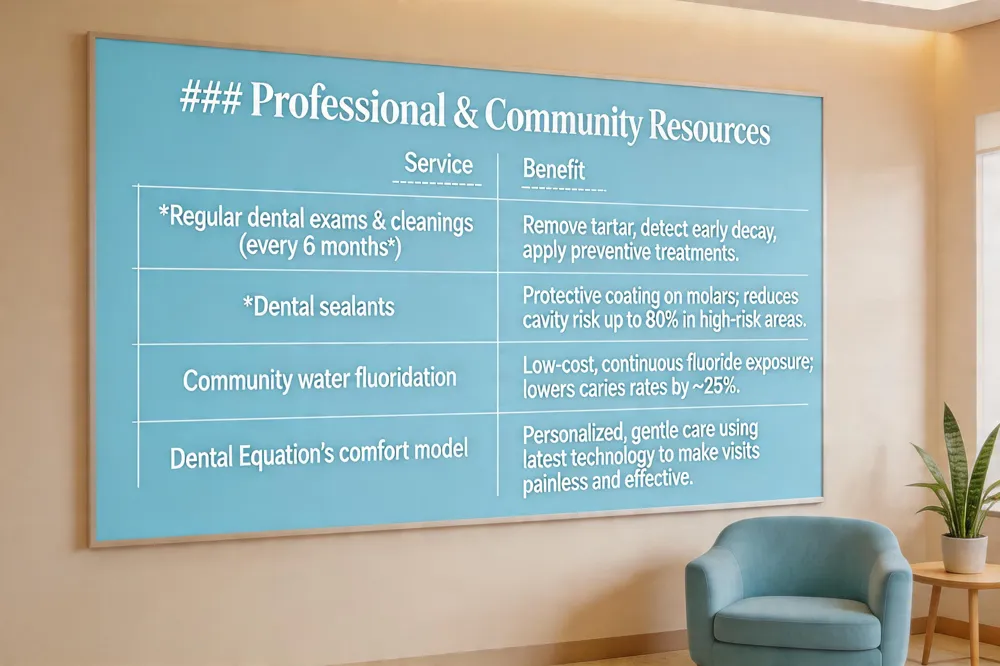 Regular dental exams and cleanings every six months are the cornerstone of a cavity‑free smile. A professional cleaning removes tartar that brushing can’t reach and lets the dentist spot early decay before it becomes a problem. Dental sealants—thin, protective coatings placed on the pits and fissures of molars—are an evidence‑based tool for both children and adults. When applied soon after the permanent molars erupt, sealants can cut cavity risk by up to 80% in high‑risk areas. Community water fluoridation is another powerful, low‑cost strategy: drinking fluoridated tap water supplies a continuous low level of fluoride that strengthens enamel and reduces caries by roughly a quarter compared with non‑fluoridated water. The Dental Equation’s comfort model complements these preventive measures by emphasizing personalized, gentle care and using the latest technology to keep each visit painless and effective. Together, these resources create a supportive network that helps patients of all ages maintain healthy, resilient teeth.
Putting It All Together: A Lifetime Oral‑Health Plan
Lifetime Oral‑Health Plan Overview
| Component | Action |
|---|---|
| Daily routine | Brush twice daily (2 min) with soft‑bristled brush + fluoride toothpaste; floss; rinse with antibacterial/fluoride mouthwash; chew sugar‑free gum after meals; replace toothbrush every 3 months. |
| Professional care | Schedule cleanings/exams every 6 months (or more often if high‑risk); consider sealants and fluoride varnish as needed. |
| Tracking | Use an app or calendar to log brushing, flossing, mouthwash, and appointments; note missed steps for quick adjustments. |
| Family involvement | Teach children proper technique, use timers, hold a weekly “family‑health” night to review logs and discuss nutrition. |
| Lifestyle | Stay hydrated, limit sugary/acidic foods, avoid tobacco, moderate alcohol, and maintain overall health (e.g., diabetes control). |
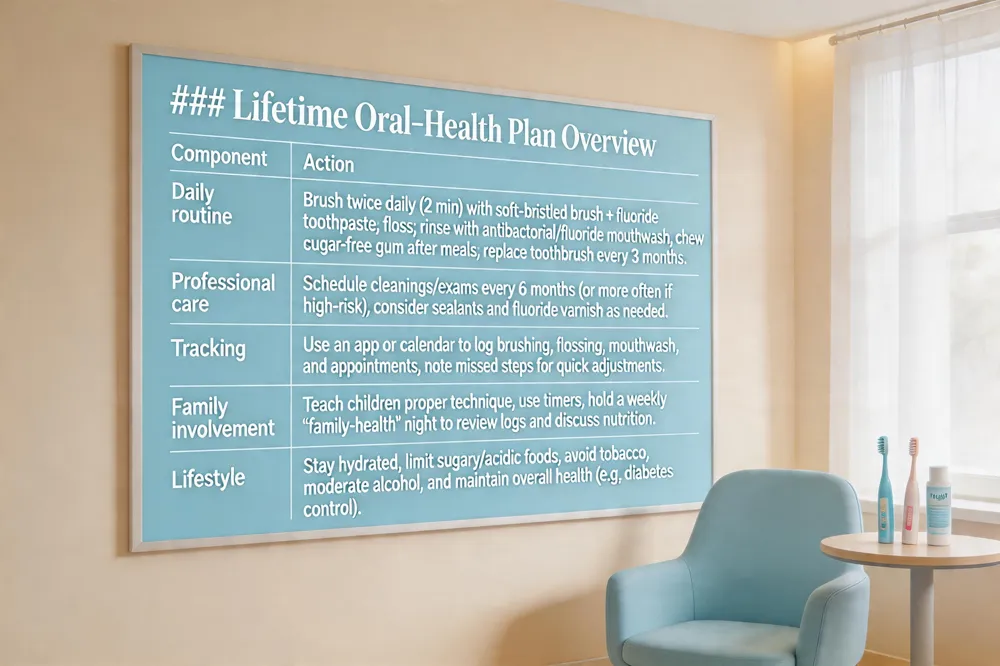 A lifelong oral‑health plan starts with a personalized schedule. Begin by brushing twice daily for two minutes with a soft‑bristled brush and fluoride toothpaste, and floss daily to clear interproximal plaque. Add a fluoride mouthwash or antibacterial mouthwash when you can’t brush right after meals, and consider a sugar‑free gum to boost saliva flow. Schedule professional cleanings and examinations every six months or more often if you’re high‑risk); these visits catch early decay, apply sealants on molars and provide fluoride varnish when needed.
Track your routine with a simple app or calendar reminder that flags brushing, flossing, mouthwash use, and dental appointments. Mark each successful day and note any missed steps so you can adjust quickly.
Involve the whole family: teach children proper technique with a pea‑sized toothpaste amount, use fun timers, and set a weekly “family‑” night where everyone reviews their logs. Parents can model good habits, supervise younger kids, and discuss the impact of sugary foods and tobacco. A collaborative, tracked approach keeps every member on the road to a cavity‑free smile for life.
Your Path to a Cavity‑Free Smile
Keeping your smile healthy is easier than you think when you make a few proven habits part of your daily routine. Brush twice a day for two minutes with a soft‑bristled brush and fluoride toothpaste, angling the bristles at 45° to the gum line and using gentle circular motions. Floss or use interdental cleaners every day to reach the spaces a brush can’t. Rinse with a fluoride or alcohol‑free mouthwash, and chew sugar‑free gum after meals to boost saliva, which naturally neutralizes acids. Limit sugary and acidic snacks and drinks, drinking fluoridated water whenever possible to strengthen enamel. Schedule professional cleanings and exams at least every six months, and consider sealants or fluoride varnish if you’re at higher risk. Stay proactive—track your routine, replace your toothbrush every three to four months, and keep up with regular dental visits. Consistency is the key to a cavity‑free smile for life.