Why Early Prevention Matters
Early oral health sets the stage for a child’s overall wellbeing. Healthy baby teeth help shape the jaw, support clear speech, and create space for permanent teeth; when they are lost too soon, speech development can lag and orthodontic problems may arise. The CDC tells us that more than half of children aged 6‑8 have had a cavity in a primary tooth, and over 50 % of adolescents have cavities in permanent teeth. Such chronic disease can cause pain, missed school days and even affect nutrition. Establishing a “dental home” by the first birthday ensures regular check‑ups, professional cleanings, fluoride varnish and sealants when needed. Consistent visits let the dentist catch early white‑spot lesions, apply protective treatments and teach families proper brushing and flossing. In short, early prevention keeps smiles bright, supports growth, and reduces costly dental work later in life.
Establishing Oral Care From Birth
| Step | Action | Age / Timing |
|---|---|---|
| 1 | Wipe gums with a clean, damp washcloth or soft gauze after each feeding | Birth to first tooth (≈4‑6 months) |
| 2 | Introduce soft‑bristled infant toothbrush with rice‑grain‑sized fluoride toothpaste | First primary tooth appears |
| 3 | Brush twice daily (after breakfast & before bedtime) using gentle circular motions | From first tooth onward |
| 4 | Increase to pea‑sized toothpaste amount | By age 2 |
| 5 | Supervise brushing until child can spit out paste | Until age 6‑7 |
| 6 | Schedule first dental visit | By 12 months or within 6 months of first tooth eruption |
| 7 | Apply professional fluoride varnish (up to 1/3 cavities prevented) | Every 6 months (as recommended) |
| 8 | Limit sugary snacks/drinks, transition from bottle to cup | By first birthday |
| 9 | Encourage fluoridated water between meals | Ongoing |
| 10 | Model good oral habits & make brushing fun (songs, timers) | Ongoing |
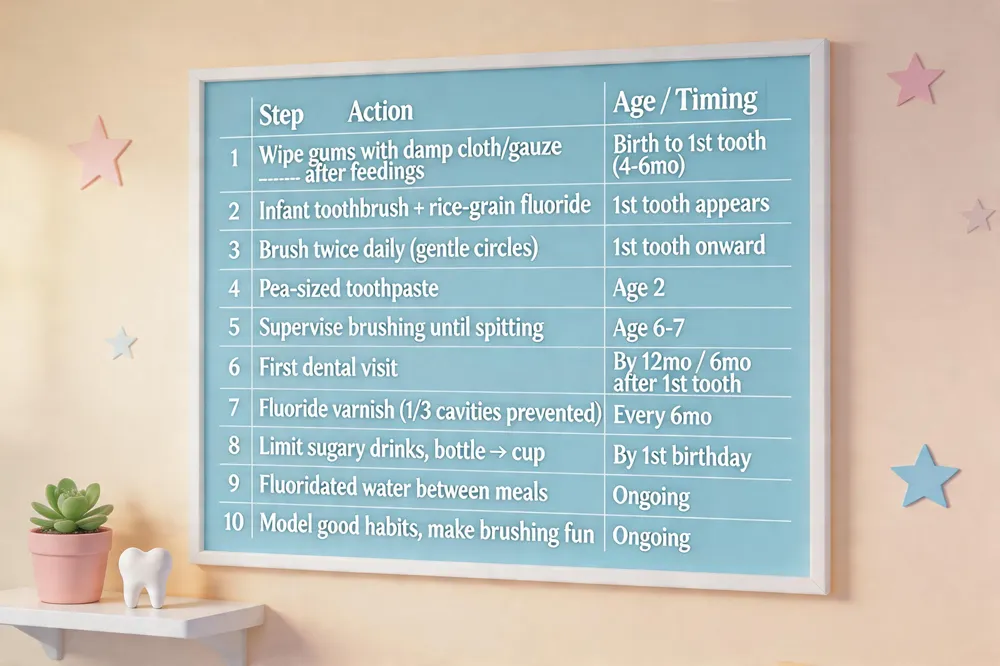 Good oral health begins the moment your baby is born. After each feeding, gently wipe the infant’s gums with a clean, damp washcloth or soft gauze pad to remove milk residue and reduce bacterial buildup. This simple step protects the mouth even before the first tooth erupts (usually around 4–6 months).
When the first primary tooth appears, switch to a soft‑bristled infant toothbrush and apply a rice‑grain‑sized amount of fluoride toothpaste. Brush twice daily—once after breakfast and once before bedtime—using gentle circular motions. By age two, children can use a pea‑sized amount of fluoride toothpaste and a soft brush; supervise brushing until they can spit out paste, typically around age 6–7, and continue to remind them to brush for two minutes.
Schedule the child's first dental visit by twelve months of age—or within six months of the first tooth’s eruption—to establish a dental home. Early check‑ups let the dentist assess the bite, detect early white‑spot lesions, and apply professional fluoride varnish, which can prevent up to one‑third of cavities in baby teeth. Follow‑up visits every six months keep the smile healthy.
Limit sugary snacks and drinks, especially at bedtime, and transition from a bottle to a regular cup by the first birthday. Encourage water, especially fluoridated tap water, between meals. Modeling good oral habits yourself and making brushing fun with songs or timers reinforces lifelong dental health.
Daily Hygiene Habits for Toddlers and Preschoolers
| Habit | Details | Age |
|---|---|---|
| Brushing technique | Soft‑bristled brush, circular motions on all surfaces, 2‑minute timer | 1 yr onward (after first tooth) |
| Toothpaste amount | Rice‑grain size smear until age 3, then pea‑size | 0‑3 yr (smear), 3‑6 yr (pea‑size) |
| Flossing basics | Use child‑friendly floss picks or pre‑threaded flossers once two teeth touch | 2‑3 yr onward |
| Fun reinforcement | “Egg‑Enamel Demo”, “Marshmallow Mouth” craft, sticker charts, songs | Ongoing |
| Oral‑hygiene poster | “Be a Tooth Defender” showing brush, floss, replace brush every 3 mo | Ongoing |
| PPT for kids | 5‑step slide deck: brush, floss, diet, dental visits, habit warnings | Ongoing |
| Habit rules | 2‑2‑2 (twice daily, 2 min, dentist twice yearly) | Ongoing |
| Habit rules | 3‑3‑3 (three times daily, 3 min, no food/drink 3 hr before bed) | Ongoing |
| Thumb‑sucking & bottle | Discourage prolonged use | Up to age 6‑7 |
| Motivation | Stickers, colorful timers, “Dentist Tray Relay Race” | Ongoing |
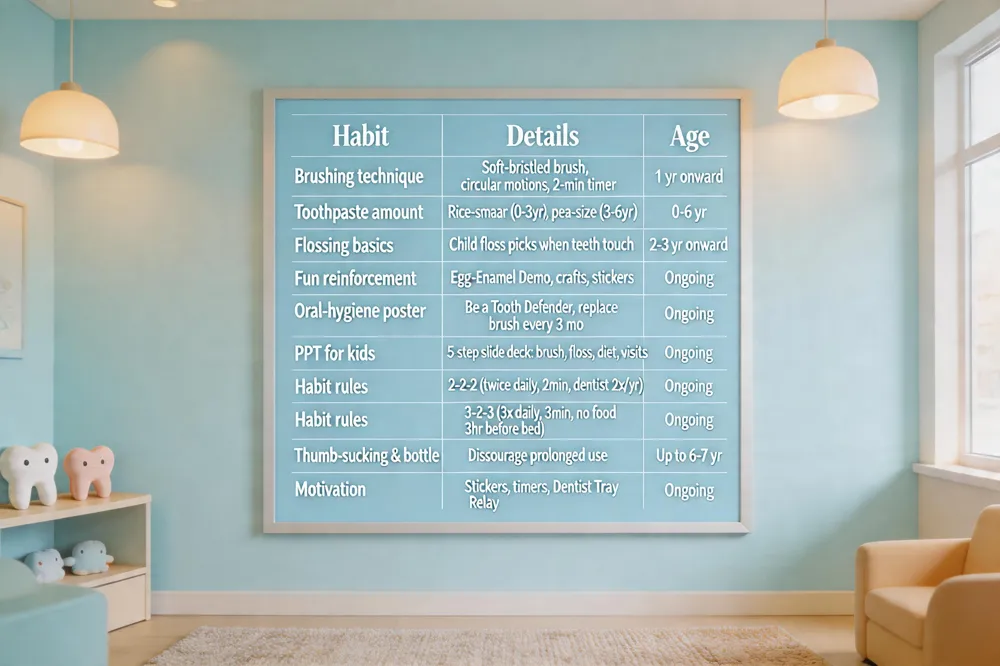 Brushing technique & toothpaste amount – When the first tooth appears, wipe gums with a damp cloth. Once teeth erupt, use a soft‑bristled brush and a smear of fluoride toothpaste (rice‑grain size) until age 3, then a pea‑sized amount. Teach circular motions on the outer, inner and chewing surfaces for a full two minutes; a timer or a favorite song helps keep the length right.
Flossing basics – Begin as soon as two teeth touch (usually age 2‑3). Use child‑friendly floss picks or pre‑threaded flossers until the child can handle regular floss. Floss once daily to remove plaque where a brush can’t reach.
Fun activities to reinforce habits – Turn oral care into play: "Egg‑Enamel Demo" (soda stains a boiled egg tooth), "Marshmallow Mouth" craft, and "Healthy‑vs‑Unhealthy Snack Sort" games. A tooth‑brushing chart with stickers, colorful timers, and a "Dentist Tray Relay Race" keep motivation high.
Oral‑hygiene poster – A bright poster titled "Be a Tooth Defender" shows the two‑minute brush, pea‑size toothpaste, circular strokes, flossing, and toothbrush replacement every three months. Display it in waiting rooms or hand it out for home reminder.
Instructions for a child‑focused PPT – 1) Brush twice daily with pea‑size fluoride paste. 2) Floss once daily once teeth touch. 3) Limit sugary drinks, offer water, cheese, fruits, veggies. 4) Schedule six‑month dental check‑ups. 5) Discourage thumb‑sucking, nail‑biting, and prolonged bottle use. These steps, combined with playful learning, give toddlers and preschoolers a strong foundation for a cavity‑free smile.
Nutrition and Lifestyle Choices
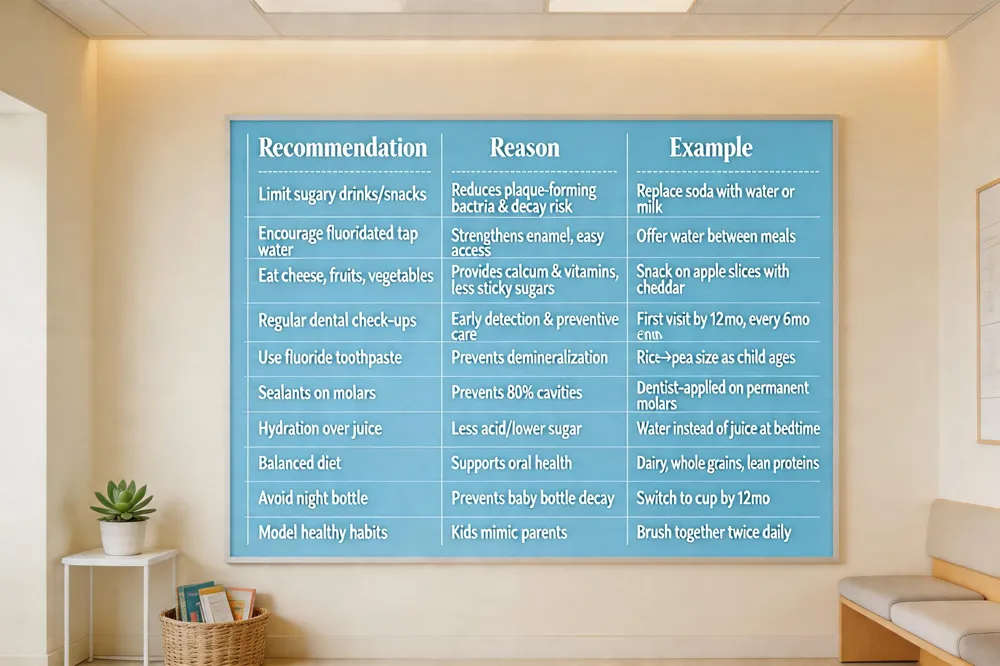
| Recommendation | Reason | Example |
|---|---|---|
| Limit sugary drinks/snacks | Reduces plaque‑forming bacteria & decay risk | Replace soda with water or milk |
| Encourage fluoridated tap water | Strengthens enamel, easy access | Offer water between meals |
| Eat cheese, fruits, vegetables | Provides calcium & vitamins, less sticky sugars | Snack on apple slices with cheddar |
| Regular dental check‑ups | Early detection & preventive care | First visit by 12 mo, then every 6 mo |
| Use fluoride toothpaste | Prevents demineralization, reverses early lesions | Rice‑grain size → pea‑size as child ages |
| Sealants on molars | Protect pits/fissures, prevents up to 80 % cavities | Applied by dentist on permanent molars |
| Hydration over juice | Less acid exposure, lower sugar intake | Water instead of fruit juice at bedtime |
| Balanced diet | Supports overall growth & oral health | Include dairy, whole grains, lean proteins |
| Avoid prolonged bottle at night | Prevents “baby bottle tooth decay” | Switch to cup by 12 mo |
| Model healthy habits | Kids mimic parents, reinforces routine | Brush together twice daily |
 Oral health in children
Oral health is a cornerstone of a child’s overall well‑being. Untreated cavities can cause pain, infection, difficulty eating, speaking, and learning. Daily brushing with an age‑appropriate amount of fluoride toothpaste, regular fluoride varnish or sealant applications, and drinking fluoridated tap water are proven to prevent most decay. Parents should begin cleaning gums before teeth erupt, then use a soft‑bristled toothbrush and supervise brushing until the child can do it reliably (about age six). Limiting sugary drinks and snacks, encouraging water and nutritious foods, and scheduling a dental check‑up by the first birthday help catch problems early.
Oral health in children
Oral health is a cornerstone of a child’s overall well‑being. Untreated cavities can cause pain, infection, difficulty eating, speaking, and learning. Daily brushing with an age‑appropriate amount of fluoride toothpaste, regular fluoride varnish or sealant applications, and drinking fluoridated tap water are proven to prevent most decay. Parents should begin cleaning gums before teeth erupt, then use a soft‑bristled toothbrush and supervise brushing until the child can do it reliably (about age six). Limiting sugary drinks and snacks, encouraging water and nutritious foods, and scheduling a dental check‑up by the first birthday help catch problems early.
Importance of dental care for children Regular dental visits are essential because tooth decay is the most common chronic disease in U.S. kids. Early dental homes—by age 1—allow dentists to apply protective fluoride varnish, sealants, and provide nutrition counseling. Consistent oral‑hygiene habits reduce plaque, support proper jaw development, and prevent misaligned permanent teeth.
Unhealthy kids teeth Cavities arise from plaque‑forming bacteria feeding on frequent sugars and inadequate brushing. Early signs include white spots, brown discoloration, or sensitivity. Prevention focuses on twice‑daily brushing with fluoride toothpaste, limiting sugary snacks, and regular dental exams. Early fluoride treatments can reverse demineralization; advanced decay may need fillings.
Healthy teeth kids Begin with gentle gum cleaning, then brush twice daily with a smear of fluoride toothpaste (under 3) or a pea‑size amount (3+). Start flossing once two teeth touch. Fluoridated water strengthens enamel, and sealants protect molars. Regular six‑month check‑ups ensure early detection and preventive care.
Children’s Dental Health Month February is a perfect time to reinforce these habits. Families are encouraged to join community screenings, use brushing charts, and celebrate with fun oral‑health activities that promote lifelong cavity‑free smiles.
4‑year‑old tooth decay treatment at home Supervise brushing twice daily with a pea‑size fluoride toothpaste, limit sugary foods, and offer water or milk instead of juice. Use a soft brush or damp cloth to clean gums between meals. Schedule a dental visit promptly for professional fluoride varnish or sealants.
Professional Preventive Measures
| Measure | Frequency | Benefits |
|---|---|---|
| Fluoride varnish | 2‑4 times per year (as dentist advises) | High fluoride concentration, remineralizes early lesions, reduces cavities up to 1/3 |
| Dental sealants | Apply on permanent molars soon after eruption, check annually | Prevents up to 80 % cavities in pits/fissures |
| Regular check‑ups | Every 6‑12 months | Monitor eruption, early detection of decay, apply varnish/sealants |
| Mouthguards for sports | Every practice/game for contact/high‑impact sports | Protects teeth, gums, jaw from trauma |
| Early orthodontic screening | Around age 7 | Identifies bite problems, reduces later orthodontic work |
| Printable oral‑health guides | As needed (ADA Tiny Smiles, AAPD Healthy Smiles) | Provides parents with clear instructions, tips, and schedules |
| Professional fluoride gel | Applied during check‑up, as recommended | Extra enamel protection for children with poor brushing compliance |
| Tooth replacement education | Ongoing | Helps parents understand transition from primary to permanent dentition |
| Dental health counseling | At each visit | Reinforces diet, brushing, flossing habits |
| Emergency preparedness | Immediate guidance on knocked‑out tooth, trauma | Increases chance of tooth saving and reduces complications |
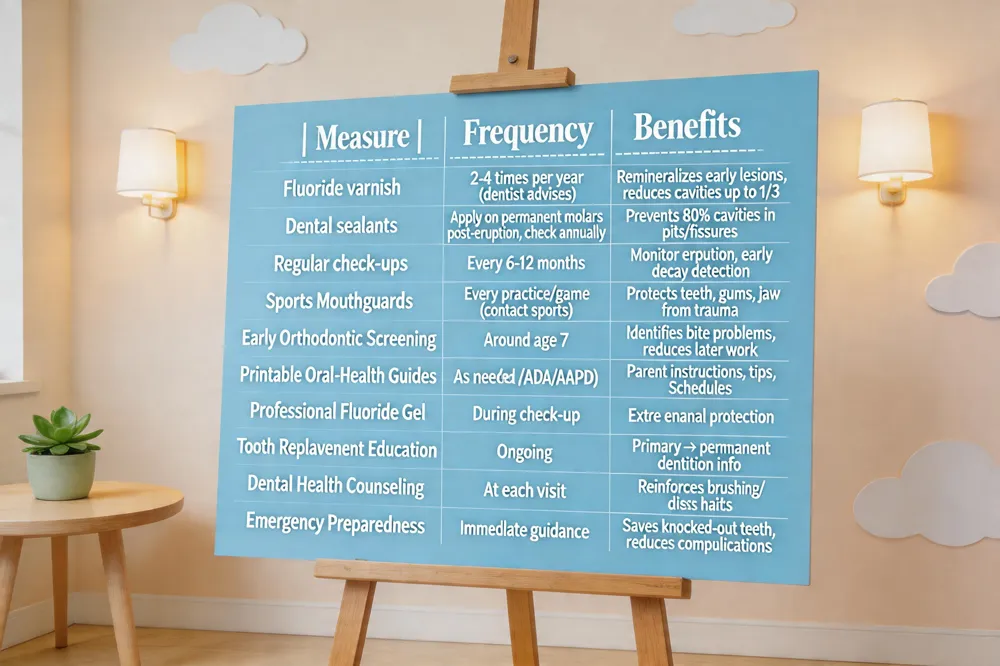 Fluoride varnish and sealants – Professional fluoride varnish, applied two to four times a year by a dentist, delivers a higher concentration of fluoride than over‑the‑counter toothpaste and helps remineralize early lesions. Dental sealants, a thin protective coating placed on the chewing surfaces of permanent molars, can prevent up to 80% of cavities in those pits and fissures.
Regular dental check‑ups – Schedule your child’s first dental visit by the first birthday—or within six months after the first tooth appears—and keep follow‑up appointments every six to twelve months. These visits allow the dentist to monitor tooth eruption, apply fluoride varnish and sealants, and catch decay early before it requires extensive treatment.
Mouthguards for sports – If your child participates in contact or high‑impact sports, a custom‑fitted mouthguard protects teeth, gums, and jaw from injury. Encourage use at every practice and game to avoid costly dental trauma.
Early orthodontic screening – Around age seven, an orthodontic evaluation can identify bite problems, crowding, or thumb‑sucking habits that may affect oral hygiene and future tooth alignment. Early intervention often reduces the need for extensive orthodontic work later.
Child dental health PDF – Free, printable guides are available from the ADA’s Tiny Smiles program and the AAPD’s “Healthy Smiles” guidebook, offering tips on brushing, flossing, nutrition, and scheduling the first dental visit.
Fluoride on kids’ teeth at dentist – Professional fluoride varnish or gel applied during a check‑up strengthens enamel and provides extra protection for children who may not brush effectively on their own.
Types of teeth for kids – Children have 20 primary (baby) teeth that are later replaced by 32 permanent teeth, including incisors, canines, premolars, and molars.
Dental health for kids – Begin cleaning gums at birth, brush twice daily with age‑appropriate fluoride toothpaste, floss once teeth touch mouth and limit sugary drinks.
How can I help my child's teeth grow healthy? – Start oral care early, use a rice‑grain‑sized toothpaste smear for infants, a pea‑size amount after age three, schedule regular dental visits, apply fluoride and sealants, limit sugary snacks, and make brushing fun with timers or songs.
Building a Positive Dental Experience
| Strategy | How to Implement | Impact |
|---|---|---|
| Early dental home | Schedule first visit by 12 mo, keep biannual appointments | Establishes trust, early preventive care |
| Parent modeling | Brush together, use soft brush, pea‑size toothpaste after age 3 | Children imitate good habits |
| Fun timers & charts | Use sand timers, songs, sticker charts | Increases compliance, makes brushing enjoyable |
| Interactive PPTs | Include videos, quizzes, “Dentist Tray Relay Race” | Engages kids, reinforces learning |
| Community resources | Dental fairs, school sealant programs, downloadable guides | Expands access, builds community support |
| Emergency protocol | Keep knocked‑out tooth in milk/saliva, call dentist ASAP | Reduces trauma outcomes |
| Safety rules | Mouthguards, smoke‑free home, no bottle at sleep ( Prevents injuries & decay | |
| Positive reinforcement | Praise, small rewards after brushing | Boosts motivation, builds confidence |
| Transparent communication | Explain procedures in child‑friendly language | Reduces fear, improves cooperation |
| Affordable care info | Share pricing, insurance, Medicaid options | Increases access to needed dental services |
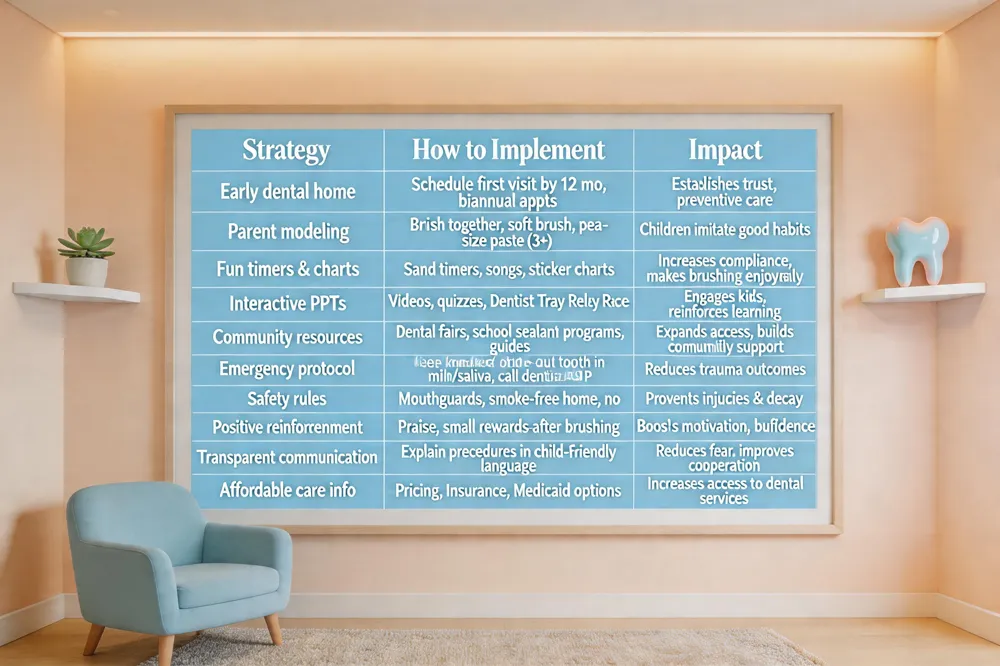 Creating a dental home early is the cornerstone of a lifetime of healthy smiles. Schedule the first visit by the first birthday or within six months of the first tooth erupting, and keep appointments every six months for cleanings, fluoride varnish, and sealants. Parents model good habits by brushing together, using a soft‑bristled toothbrush and a pea‑sized amount of fluoride toothpaste after age three, and showing children how to spit out toothpaste. Reinforce these routines with fun timers, charts, and praise.
Educational resources such as community dental‑health fairs, school‑based sealant programs, and downloadable “Dental Hygiene for Kids” PowerPoints make learning enjoyable. These tools explain why baby teeth matter, demonstrate proper brushing and flossing, and highlight a diet rich in fruits, vegetables, cheese, and water while limiting sugary snacks and nighttime bottles.
Handling emergencies is simple: keep a child’s knocked‑out tooth moist (in milk or saliva), call the dentist immediately, and avoid rinsing or touching the root. Safety rules include using mouthguards for sports, keeping homes smoke‑free, and never allowing a child to fall asleep with a bottle containing anything but water.
Child dental care tips: Start with gum wipes, then brush twice daily with fluoride toothpaste, supervise until age 6, limit sugary drinks, and schedule regular check‑ups.
Kids teeth cleaning price: $75‑$150 at Loud Family Dental, with insurance, Medicaid, and financing options available.
Dental hygiene for kids PPT: Include fun intro, brushing technique, flossing guide, healthy‑eating slide, habit warnings, and an interactive quiz.
2‑2‑2 rule: Brush twice a day, two minutes each time, and see the dentist twice yearly.
3‑3‑3 rule: Brush three times a day for three minutes, and avoid food or drink for three hours before bedtime.
Safe fillings for 3‑year‑olds: Yes—fillings are safe and prevent pain and future decay.
7‑4 rule: Starting at 7 months, children typically get four new baby teeth every four months, completing the full set by age 2½‑3.
Putting It All Together
Early oral‑health habits set the foundation for a lifetime of healthy smiles. Begin by wiping an infant’s gums with a damp cloth, then brush the first tooth with a soft, soft‑bristled toothbrush and a rice‑grain‑size smear of fluoride toothpaste. By age two, switch to a pea‑sized amount of fluoride paste and add flossing as soon as two teeth touch. Limit sugary drinks and snacks, keep bottles water at night empty of milk or juice, and encourage water from a cup after 12 months. Schedule the first dental visit by the first birthday and continue check‑ups every six months for fluoride varnish, sealants, and professional cleanings. Consistent parental modeling and fun routines (songs, timers, stickers) reinforce these practices, turning them into lifelong habits. Loud Family Dental helps families establish this “dental home” by offering child‑friendly offices, personalized preventive care—including fluoride and sealants—nutrition counseling, and flexible scheduling, ensuring every child feels comfortable and protected from the first tooth onward.