Introduction
Digital X‑ray technology has become a staple in United States dental practices, with more than 80 % of offices now using electronic sensors instead of traditional film. This rapid adoption is driven by the technology’s ability to deliver instant, high‑resolution images while cutting radiation exposure by up to 90 %. For patients, the benefits are immediate: smaller, lightweight sensors reduce the gag reflex and chair‑time, and the instant image view lets the dentist discuss findings on the spot, easing anxiety. At the same time, clinicians gain the ability to zoom, adjust contrast, and enhance images in real time, leading to more accurate diagnoses of cavities, bone loss, and other oral conditions. The combination of comfort and diagnostic precision makes digital X‑rays a cornerstone of modern, patient‑centered dental care.
Advances in Digital Radiography and Diagnostic Accuracy
 Are digital dental X‑rays better?
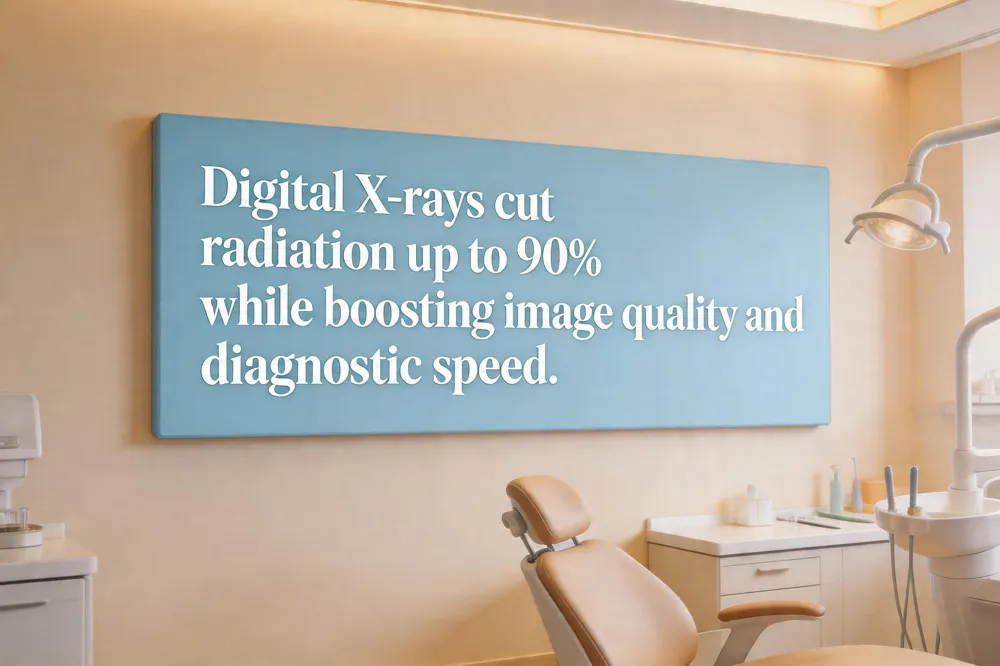
Yes. Digital sensors emit up to 90 % less radiation than film, making them safer for children, pregnant patients and anyone needing frequent imaging. The high‑resolution images appear instantly on a screen, can be enlarged, contrast‑adjusted, and stored electronically, allowing quicker diagnosis and seamless sharing with specialists. Eliminating chemical processing also reduces waste and chair time.
How accurate are digital X‑rays?
Digital radiographs meet or exceed film quality, offering sharp, high‑contrast pictures of teeth, bone and soft tissue. Real‑time brightness, contrast and zoom adjustments let clinicians spot tiny caries, early bone loss and subtle fractures that film might miss. Because the sensor captures radiation directly, diagnostic confidence is high while patient exposure drops 80‑90 %.
What are the six advances in digital radiography?
- AI‑assisted interpretation that flags abnormalities
- Dual‑energy imaging for better soft‑tissue vs. bone contrast.
- Tomosynthesis – a limited‑angle 3‑D view that reduces structural overlap.
- Computer‑aided diagnosis tools that provide automated measurements.
- Automatic image stitching for seamless panoramic scans.
- Portable mobile units that enable bedside or on‑site imaging with rapid electronic transfer.
Radiation Safety and Exposure Levels
 Digital dental X‑rays deliver an exceptionally low effective dose—about 0.005 mSv (5 µSv) for a single intra‑oral bitewing, comparable to a few hours of natural background radiation and far lower than traditional film (40‑80 % reduction). Panoramic scans emit 4‑30 µSv, roughly the radiation from two‑to‑three days of background exposure, still far below a chest X‑ray. 3‑D CBCT scans are higher but remain well within safety limits when used only for specific diagnostic needs. All imaging follows the ALARA principle—‘as low as reasonably achievable’—and is often likened to the radiation from a short flight or a banana, illustrating minimal risk. Guidelines suggest routine bitewing X‑rays every 6‑12 months for stable adults, with panoramic or CBCT scans taken only when clinically indicated. There is no strict monthly quota; the number of X‑rays is individualized based on risk factors, recent work, and diagnostic necessity. Modern U.S. standards (ADA, FDA) consider additional lead shielding unnecessary for routine digital imaging, reinforcing the safety and comfort of digital X‑ray technology.
Cost Considerations for Patients and Practices
 Digital bitewing X‑rays in the United States typically run between $30 and $100 per set, while a full‑mouth digital series can cost $100‑$250 depending on the practice and diagnostic need. A 2‑D panoramic scan usually falls in the $150‑$350 range, and a 3‑D cone‑beam CT (CBCT) scan costs $100‑$600, with most offices pricing it around $350‑$500.
Digital X‑ray dental price
Patients can expect faster prices for a standard bitewing and higher fees for panoramic or 3‑D imaging. Insurance coverage varies; many plans cover part or all of the expense when the scan is medically necessary, and some clinics offer reduced rates for small‑field‑of‑view CBCT scans.
How much does a 3D dental X‑ray cost?
A 3‑D CBCT scan generally costs $100‑$600 per session, with the exact amount depending on field‑of‑view size, technology, and geographic location. Insurance often reimburses a portion when the scan guides treatment planning.
Disadvantages of digital imaging
The upfront investment for digital X‑ray systems ranges from $20,000‑$50,000 for 2‑D units and $30,000‑$70,000 for CBCT machines, which can influence patient fees. Ongoing software updates, maintenance, staff training, and data‑security requirements add to practice costs. Some sensors may feel bulkier than film, causing discomfort in tight oral spaces, and any system downtime can disrupt workflow.
Up‑front equipment investment for dental offices
Practices must budget for sensors, flat‑panel detectors, computers, and networking infrastructure, which can be a significant capital expense but ultimately reduces film, chemicals, and repeat scans.
Insurance coverage and reimbursement trends
Dental insurers increasingly favor digital imaging for its lower radiation dose and faster turnaround, leading to broader coverage and modest reimbursement rates that help offset patients’ out‑of‑pocket costs.
Patient Comfort and Workflow Efficiency
 At our practice we prioritize a soothing environment—soft lighting, calming music, and comfortable seating—while greeting each patient by name and explaining procedures in plain language. This gentle approach reduces anxiety from the start.
Ergonomic sensor designs and comfort accessories – Modern digital X‑ray sensors are thin, lightweight, and often paired with cushioned bite‑blocks like Pac‑Dent’s EzAim™ SoftBite™ tabs and SoftEdge™ cushions. These accessories shorten the sensor height, expand the adhesive base, and eliminate sharp edges, making intra‑oral placement comfortable even for children, patients with a gag reflex, or those with limited mouth opening. The result is a diagnostic‑quality image on the first try, minimizing retakes and additional radiation.
Reduced chair time and instant image access – Digital radiography captures images in seconds and displays them on a screen instantly. Clinicians can adjust contrast, brightness, and zoom in real time, allowing immediate diagnosis and same‑appointment treatment planning. This rapid workflow shortens overall chair time, speeds referrals, and eliminates the wait for film processing.
Sedation and anxiety‑reduction options – For patients who remain nervous, we offer nitrous oxide (laughing gas), oral sedatives, and topical anesthetics. Distraction tools such as headphones, stress balls, or virtual‑reality visuals are also available to enhance comfort.
How do you ensure patient comfort during dental procedures? – We create a calming atmosphere, use ergonomic chairs and cushions, employ comfort accessories for imaging, and provide sedation or distraction tools as needed, continuously checking in with the patient throughout the visit.
Benefits of digital radiography – Digital X‑rays deliver high‑resolution images with up to 90 % lower radiation exposure, instant on‑screen viewing, easy electronic storage and sharing, and eliminate chemical processing, all of which improve diagnostic accuracy, patient safety, and overall practice efficiency.
Integration, Environmental Impact, and Future Directions
 Modern dental practices like Loud Family Dental now store every X‑ray image electronically, which means instant access, secure HIPAA‑compliant sharing with specialists, and a permanent digital record that never degrades. This eliminates bulky film archives and the chemicals needed for development, cutting hazardous waste and reducing the clinic’s environmental footprint. The shift to digital also supports greener operations—no film processing trays, no developer fluids, and far less landfill material.
Looking ahead, artificial‑intelligence algorithms are being embedded in radiography software to flag early cavities or bone loss, while lightweight mobile units bring high‑quality imaging to community clinics and home‑bound patients. Advanced flat‑panel detectors offer even greater sensitivity, allowing up to 90 % lower radiation doses without sacrificing detail.
What is the purpose of a collimator in an X‑ray machine? A collimator shapes the X‑ray beam to the exact area being examined, blocking stray radiation, reducing scatter, lowering patient exposure, and improving image contrast and sharpness.
Disadvantages of digital imaging include high upfront equipment costs, ongoing maintenance and software upgrades, a learning curve for staff, occasional sensor thickness discomfort, and the need for robust data‑security measures to protect patient privacy.
Conclusion
Digital radiography has transformed dental diagnostics by delivering crystal‑clear, high‑resolution images that can be instantly enhanced, zoomed, and shared—greatly improving detection of early caries, bone loss, and other pathologies. The technology uses up to 80‑90 % less ionizing radiation than traditional film, safeguarding children, pregnant patients, and those needing frequent exams while still meeting stringent FDA and ADA safety standards. Immediate image availability shortens chair‑time, reduces repeat scans, and streamlines referrals, resulting in lower operational costs and a smaller environmental footprint. Patient comfort is also boosted: sensors are smaller, lighter, and often paired with soft bite‑blocks, minimizing gag reflexes and anxiety. At Loud Family Dental in Shreveport, Louisiana, we have fully embraced this patient‑centered digital workflow. Our commitment is to provide safe, swift, and accurate imaging that supports early intervention, personalized treatment planning, and an overall smoother, more reassuring dental experience for every patient.