Why Diet Matters for Enamel
The minerals that make up tooth enamel are constantly being broken down by acid attacks and rebuilt by natural repair processes. Nutrition directly influences both sides of this balance. Calcium and phosphorus, found in dairy, leafy greens, nuts, and fatty fish, supply the building blocks that remineralize enamel, while vitamin D helps the body absorb these minerals efficiently. Saliva, which buffers acid, is stimulated by fibrous, crunchy foods such as apples, carrots, and cheese, further protecting the tooth surface.
Foods are classified as cariogenic (cavity‑promoting) or cariostatic (cavity‑preventing). Sucrose and other free sugars are the most cariogenic; they are readily fermented by oral bacteria, causing plaque pH to drop below the critical 5.5 level and leading to demineralization. Sticky or frequently sipped sugary drinks amplify the risk. In contrast, natural sugars in whole fruits and dairy are less cariogenic because fiber, calcium, and polyphenols accompany them, and they stimulate saliva flow. Sugar‑free gum (especially xylitol), hard cheeses, and nuts are classic cariostatic options that raise oral pH and supply minerals for enamel repair. Limiting added sugars to fewer than four exposures per day and choosing saliva‑rich, calcium‑laden foods keep enamel strong and less prone to decay.
Good vs Bad Foods for Teeth
 Good and bad food for teeth – Fiber‑rich fruits and vegetables (apples, carrots, celery) act like natural toothbrushes, boost saliva flow and wash away sugars. Calcium‑rich dairy such as cheese, milk and plain yogurt supplies calcium and phosphate that remineralize enamel, while the protein casein helps buffer acids. Sugar‑free gum—especially xylitol‑containing varieties—stimulates saliva, providing a protective rinse between meals. Green and black teas add polyphenols that suppress plaque‑forming bacteria, and fluoridated water or fluoride‑fortified foods give an extra enamel‑strengthening shield.
Foods bad for enamel – Acidic items—citrus fruits, juices, sodas, sports drinks—lower oral pH below the critical 5.5, softening enamel and promoting erosion. Sticky, sugary snacks (candy, dried fruit, honey‑based treats) cling to teeth, feeding Streptococcus mutans and prolonging acid attacks. Starchy, adhesive foods like chips or soft bread can become trapped, creating a food reservoir for plaque. Alcohol and many prescription or over‑the‑counter medications dry the mouth, reducing saliva’s natural buffering capacity and increasing decay risk.
Bad food for teeth – In addition to the above, frequent sipping of sugary or acidic drinks keeps the mouth in a low‑pH state for up to 20 minutes after each exposure. Chewing ice or hard candies can cause micro‑fractures in enamel, while caffeinated beverages may further decrease salivation. To protect your smile, limit these foods to meals, stay hydrated with water, and consider a calcium‑rich, saliva‑stimulating snack after sugary treats.
Understanding Cariogenic and Cariostatic Foods
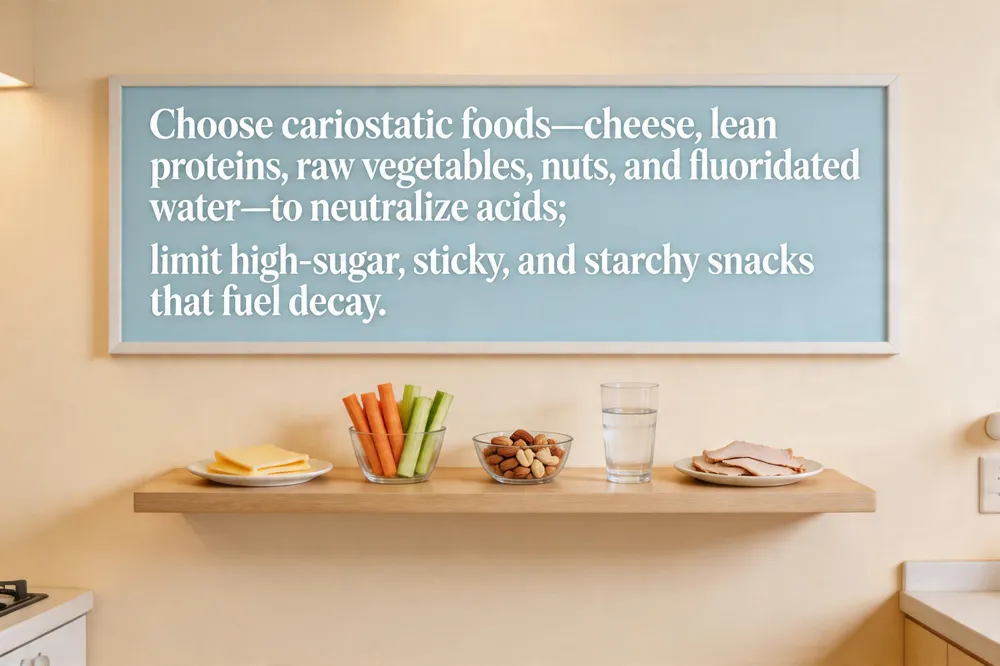 Cariogenic and cariostatic foods – Cariogenic foods are those that feed plaque bacteria and trigger acid attacks on enamel. They are usually high in refined sugars or starches, sticky, and remain on the teeth for long periods. Common culprits include sodas, fruit juices, candy, cookies, chips, white bread, sweetened cereals, ice‑cream, and dried fruit. Cariostatic foods, by contrast, do not fuel decay‑causing bacteria and can even help neutralize acids. Examples are plain cheese, lean meats, fish, eggs, raw high‑fiber vegetables such as celery and broccoli, nuts, unsweetened popcorn, and sugar‑free gum—especially xylitol‑containing gum.
The dental‑diet food list – A smile‑friendly plate emphasizes calcium‑rich dairy (milk, cheese, unsweetened yogurt) and vitamin D sources like salmon or fortified soy milk to strengthen enamel. Crunchy, low‑sugar fruits and vegetables—leafy greens, apples, carrots, strawberries—act as natural toothbrushes while supplying vitamins A, C, and K. Almonds and other nuts provide calcium, protein, and a scrubbing texture. Dark chocolate in moderation and green or black tea add fluoride and polyphenols that protect against decay. Staying well‑hydrated with fluoridated water washes away debris and maintains a neutral oral pH.
Vitamins for strong teeth – Strong teeth need a blend of vitamins and minerals. Vitamin D promotes calcium and phosphorus absorption, the primary minerals that form enamel and dentin. Vitamin A supports saliva production and soft‑tissue health, while Vitamin C is vital for gum collagen and inflammation control. Vitamin K works with vitamin D to direct calcium to teeth. Incorporating dairy, leafy greens, carrots, citrus fruits, and fatty fish ensures you receive this essential nutrient mix for resilient, healthy teeth.
Managing Sugar, Snacks, and Acid Exposure
 Best food for teeth pain
When you have tooth pain, choose soft, cool foods that won’t aggravate the area—mashed potatoes, oatmeal, scrambled eggs, or yogurt. Dairy products (milk, cheese, yogurt) supply calcium that helps neutralize mouth acidity and can ease discomfort. Soft fruits like ripe bananas or applesauce provide gentle nutrition without hard chewing. Warm soups or broths keep you hydrated and soothe gums while you await professional care. Drink plenty of fluoridated water to rinse bacteria and keep the mouth moist.
Best food for teeth pain
When you have tooth pain, choose soft, cool foods that won’t aggravate the area—mashed potatoes, oatmeal, scrambled eggs, or yogurt. Dairy products (milk, cheese, yogurt) supply calcium that helps neutralize mouth acidity and can ease discomfort. Soft fruits like ripe bananas or applesauce provide gentle nutrition without hard chewing. Warm soups or broths keep you hydrated and soothe gums while you await professional care. Drink plenty of fluoridated water to rinse bacteria and keep the mouth moist.
Diet and dental diseases Frequent consumption of added sugars and fermentable carbs fuels cariogenic bacteria, dropping plaque pH below the critical 5.5 and demineralizing enamel. Acidic beverages and foods further lower pH, promoting erosion and sensitivity. In contrast, calcium‑rich foods (cheese, milk, yogurt, almonds, leafy greens) and phosphorus support remineralization; vitamin D enhances calcium absorption, and vitamin C aids gum health. Whole grains, fresh fruits, and vegetables provide fiber that mechanically cleans teeth and stimulates saliva, reducing acid attack duration.
What to eat for healthy teeth and gums Prioritize calcium and phosphate sources—dairy, fortified soy, tofu, almonds, and leafy greens. Include fiber‑rich snacks like apples, carrots, and celery to act as natural toothbrushes and boost saliva flow. Sip fluoridated water and enjoy green or black tea for fluoride and polyphenols. Add protein‑dense foods (salmon, eggs, lean meat) for vitamin D and omega‑3s. Limit sugary, sticky items, and consider sugar‑free xylitol gum between meals to keep saliva production high and protect enamel.
Special Considerations Across the Lifespan
 A life‑stage approach to nutrition can dramatically affect oral health.
Pregnancy and early childhood nutrition – Adequate calcium, vitamin D, and vitamin C during pregnancy support enamel formation in the developing fetus, while a balanced diet for infants (breast‑milk preferred) supplies natural sugars that are far less cariogenic than formula or bottle‑feeding with sweet liquids.
Breastfeeding vs. bottle feeding – Breast milk contains lactose, a sugar that is less readily fermented by oral bacteria, and it encourages saliva flow. Night‑time bottle feeding with sugary drinks, by contrast, raises plaque acidity and increases early‑childhood caries risk.
Children’s snack choices – Low‑cariogenic snacks such as cheese, plain yogurt, fresh fruit, and whole‑grain crackers help neutralize acids and provide calcium, phosphate, and fiber that stimulate saliva. Sticky candies, frequent sugary drinks, and prolonged sipping should be avoided because frequency of sugar exposure—more than four times per day—drives demineralization.
Older adults nutrition – Recent literature shows that poor dietary intake—especially low protein, calcium, vitamin D, and vitamin C—exacerbates tooth loss, periodontal disease, and caries in seniors. Excessive sugars and acidic foods accelerate plaque formation and enamel erosion, while dehydration reduces salivary protection. Interdisciplinary care that couples dental visits with tailored nutrition plans (whole foods, adequate hydration, appropriate supplements) improves both oral and systemic health.
Which fruit is good for teeth and gums? Apples act as “nature’s toothbrush,” stimulating saliva and mechanically scrubbing teeth. Strawberries supply vitamin C and malic acid for stain removal, while kiwis provide antioxidants that strengthen gum tissue.
What drink cleans your teeth? Plain water—especially fluoridated—washes away debris and neutralizes acids, supporting saliva’s natural cleaning action. Milk offers calcium and low acidity, and unsweetened green tea adds polyphenols that curb bacterial growth.
Practical Tips for Strengthening Enamel
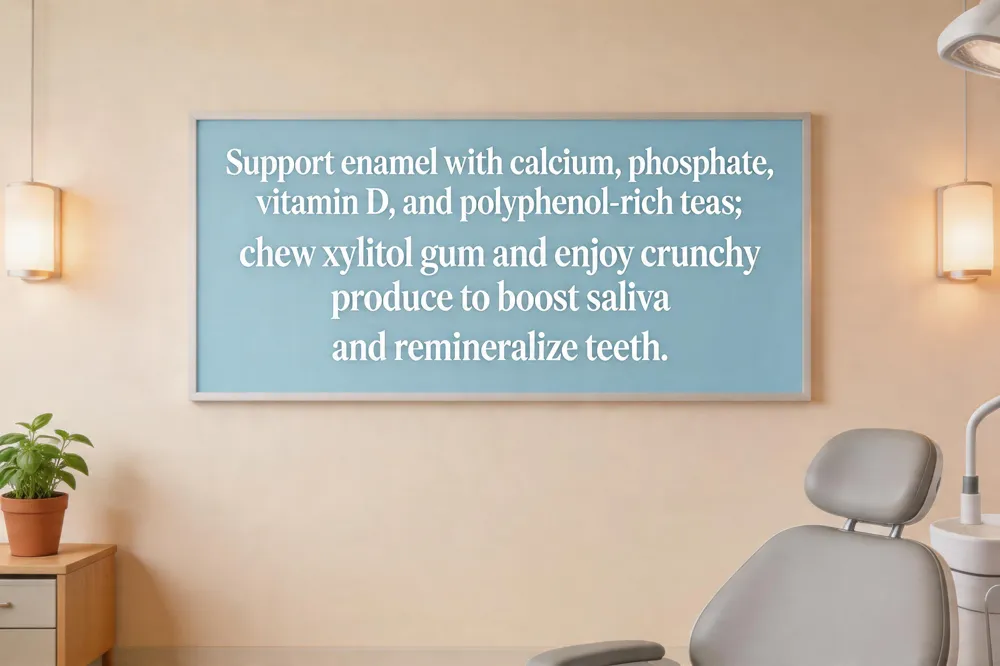 A diet rich in calcium, phosphorus and vitamin D is the foundation of strong enamel. Low‑fat dairy (milk, cheese, yogurt), fortified plant milks, tofu, almonds and leafy greens supply calcium and phosphate, while fatty fish such as salmon, sardines and egg yolks provide vitamin D to boost calcium absorption. Crunchy fruits and vegetables (apples, carrots, celery) act like natural toothbrushes, stimulate saliva and deliver vitamins A and C for gum health.
Chewing sugar‑free gum, especially xylitol‑containing gum, increases salivary flow, which buffers plaque acids and delivers calcium and phosphate for remineralization. Xylitol‑containing gum increases salivary flow, which buffers plaque acids and delivers calcium and phosphate for remineralization. Green and black teas are rich in polyphenols that inhibit Streptococcus mutans and contain fluoride, further protecting enamel.
Dark chocolate with the compound CBH can help harden enamel, and a modest amount of unsweetened cocoa provides antioxidants without excess sugar.
Fluoridated water remains the most effective beverage for enamel protection, continuously supplying fluoride that reinforces tooth structure.
Food for strong teeth and bones – Calcium‑rich foods (cheese, milk, yogurt, almonds, fortified milks, tofu, leafy greens) together with vitamin D sources (salmon, egg yolks) meet the mineral needs for teeth and skeletal health, while crunchy produce and vegetables stimulate saliva and supply vitamins A and C.
Diet, nutrition and oral health in older adults – Inadequate intake of protein, calcium, vitamin D and vitamin C is linked to higher tooth loss, periodontal disease and caries. Tailored nutrition plans that emphasize whole foods, hydration and appropriate supplementation, combined with regular dental care, improve oral and systemic health in the aging population.
Best foods for teeth whitening – Crunchy apples, celery and carrots scrub plaque; strawberries’ malic acid lifts surface stains; dairy (cheese, yogurt) remineralizes enamel and raises pH; pineapple’s bromelain enzyme breaks down plaque; sugar‑free xylitol gum stimulates saliva to keep teeth clean and bright.
Resources and Further Reading
 Diet and dental caries PDF – This document explains how frequent consumption of sugars—especially sucrose—feeds oral bacteria that produce acid and demineralize enamel, leading to cavities. It stresses that the timing of sugar exposure matters more than the total amount, recommending that free sugars be limited to less than 5 % of daily calories and that sugary drinks be avoided between meals. Practical tips for preschoolers include limiting juice portions and choosing low‑cariogenic snacks such as cheese or plain milk.
The impact of nutrition and diet on oral health PDF – Highlights the link between sugary foods, bacterial acid production, and enamel erosion. It advises keeping added sugars below 10 % of calories (ideally < 5 % for children), eating a balanced diet rich in whole grains, lean proteins, fruits, vegetables, and low‑fat dairy, and drinking Fluoridated water. Reducing between‑meal snacking and using fluoride toothpaste complete the preventive plan.
Nutrition and oral health PDF – Offers practical strategies for cavity prevention: choose cariostatic foods (cheese, nuts, raw vegetables), limit added sugars, chew sugar‑free xylitol gum to boost saliva, and stay hydrated with water. The guide is designed for patients of all ages and can be shared by dental teams during professional counseling.
Professional counseling and interdisciplinary collaboration—among dentists, physicians, nurses, and dietitians ensure that these dietary recommendations are personalized, reinforcing oral‑health habits at every stage of life.
Putting It All Together
Key Takeaways:
- Limit free‑sugar exposure to four or fewer times per day and keep total intake below 5 % of calories to protect enamel.
- Choose foods that boost saliva (hard cheese, nuts, whole‑grain products, sugar‑free gum) and provide calcium, phosphate, vitamin D and vitamin C (dairy, leafy greens, fatty fish, citrus fruits).
- Incorporate crunchy, fibrous fruits and vegetables as natural toothbrushes and favor low‑cariogenic snacks such as cheese, plain yogurt, nuts, and whole‑grain crackers.
Next Steps for Patients:
- Review your daily diet and replace frequent sugary drinks with water or fluoridated milk.
- Add a calcium‑rich snack (e.g., a slice of cheese or a handful of almonds) after meals to neutralize acids.
- Chew xylitol‑sweetened gum for 10–15 minutes after eating to stimulate saliva.
- Schedule regular dental visits (at least twice a year) for professional cleanings and personalized counseling.
Loud Family Dental Support: Loud Family Dental offers interdisciplinary counseling that includes dentists, physicians, nurses, and dietitians. The team can create a tailored nutrition plan, recommend appropriate fluoride products, and provide guidance on enamel‑friendly snacking. Contact the office to book a nutrition‑focused appointment and keep your smile strong for life.