Introduction
Oral health is far more than a bright smile; it is a cornerstone of overall wellness. The mouth serves as the gateway to the digestive and respiratory tracts, and inflammation or infection in the gums can spread to the heart, blood vessels, lungs, and even the brain. In the United States, more than 90% of adults have experienced cavities, and about 65 million American adults over age 30 live with periodontitis, a chronic inflammatory gum disease that is linked to diabetes, cardiovascular disease, stroke, adverse pregnancy outcomes, and even certain cancers. These statistics underscore that untreated oral disease is a hidden driver of systemic illness and health‑care costs. This article aims to inform patients of Loud Family Dental about the integral role of oral health in their overall health, the latest evidence‑based connections between the mouth and the body, and practical steps they can take to protect both their smile and their whole‑body well‑being.
Oral Health Fundamentals: Definition, Importance, and Education
Oral Health Fundamentals Summary
| Aspect | Details |
|---|---|
| Definition | Condition of teeth, gums, and supporting oral structures; free of cavities, gum disease, oral cancer, and pain. |
| Why It Matters | Essential for eating, speaking, smiling, and expressing emotions. The mouth reflects systemic health; gum inflammation can signal or trigger diabetes, heart disease, stroke, pneumonia, and adverse pregnancy outcomes. |
| Systemic Link | Shared blood vessels, nerves, and immune pathways mean oral infections can affect whole‑body health and vice‑versa. |
| Key Educational Messages | • Brush twice daily with fluoride toothpaste<br>• Floss daily<br>• Limit sugary foods<br>• Stay hydrated<br>• Quit tobacco<br>• Regular dental check‑ups for early detection |
| Outcome of Awareness | More preventive care, reduced inflammation, lower medical costs, and better overall well‑being. |
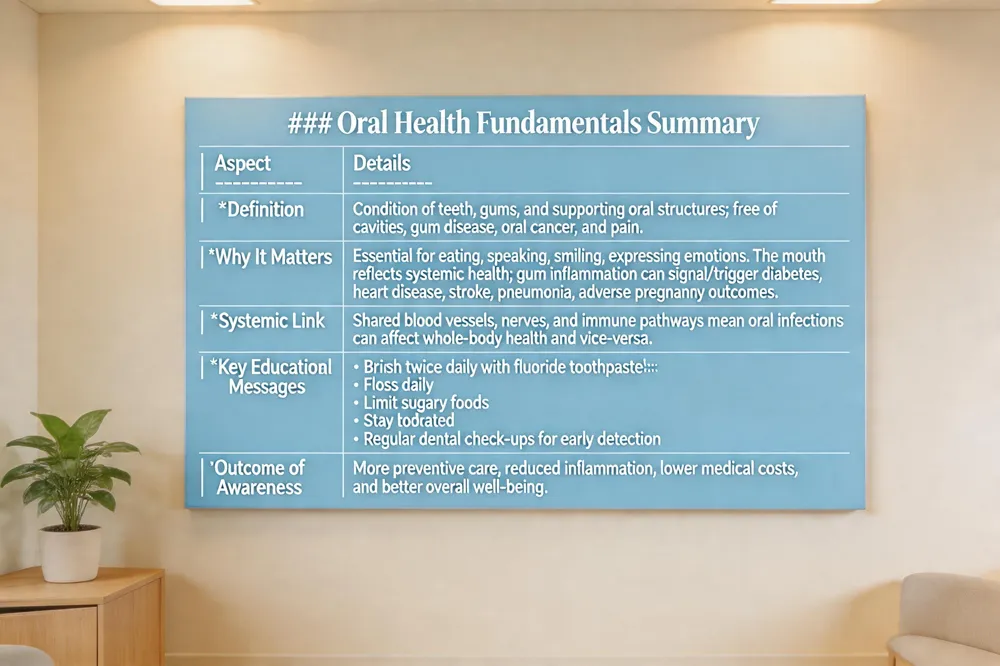 Oral health – also called dental health – refers to the condition of the teeth, gums, and all supporting structures of the mouth. It means having no cavities, gum disease, oral cancer, or pain, and Oral health is essential for eating, speaking, smiling, and expressing emotions. The mouth serves as a gateway to the body, reflecting systemic health; blood vessels, nerves and immune pathways are shared, so infections or inflammation in the gums can signal or even trigger systemic problems such as diabetes, heart disease, stroke, pneumonia, and adverse pregnancy outcomes. Conversely, systemic conditions, medications that dry the mouth, and nutritional deficiencies often appear first as oral lesions or gum bleeding. Because of this two‑way relationship, routine dental check‑ups become an early detection tool for broader health issues. Raising oral‑health awareness and providing education—through school curricula, community workshops and online resources—teaches people daily habits that matter: brushing twice a day with fluoride toothpaste, flossing daily, limiting sugary foods, staying hydrated, and quitting tobacco. Empowered patients who understand the oral‑systemic link are more likely to seek preventive care, reduce inflammation, lower medical costs, and enjoy better overall well‑being.
Timing and Frequency: When Should Oral Health Be Assessed?
Timing & Frequency Overview
| Population | First Visit | Routine Interval | High‑Risk Adjustments | Urgent Signs |
|---|---|---|---|---|
| Infants & Children | By age 1 or when first tooth erupts | Every 6 months (standard) | More frequent if early decay, orthodontic appliances, or special health needs | Persistent pain, swelling, pus, bleeding, loose teeth, non‑healing sores, bite/speech changes |
| Adults (General) | First dental home establishment | At least annually; most clinicians recommend every 6 months | Every‑month if diabetes, history of periodontal disease, or other systemic risk factors | |
| Immediate Evaluation Needed | — | — | — | Any of the listed urgent signs above |
| Special Note | Can I kiss my boyfriend if he has cavities? | — | — | Bacteria (Streptococcus mutans) can be transferred via saliva; maintain good oral hygiene to keep risk low. |
 Establishing a dental home early is essential. The American Academy of Pediatrics and the American Dental Association recommend that a child’s first professional oral‑health visit occur by the age of one year, or when the first tooth erupts. This early assessment helps identify risk factors, provides preventive guidance, and sets a foundation for lifelong oral health.
For children, routine check‑ups are typically scheduled every six months, though children with a history of early decay, orthodontic appliances, or special health needs may need more frequent visits. Adults are advised to have at least an annual comprehensive exam and cleaning; however, most clinicians recommend a six‑month interval for patients with diabetes, a history of periodontal disease, or other systemic conditions that increase oral‑health risk.
Immediate evaluation is warranted when any of the following appear: persistent tooth pain, swelling or pus in the gums, unexplained bleeding, loose teeth, sores that do not heal, or sudden changes in bite or speech. Prompt attention can prevent progression to more serious systemic complications.
When should oral health be assessed?
Early assessment (by age one) and regular six‑month check‑ups for high‑risk individuals form the baseline; any new pain, swelling, bleeding, or visible changes demand an urgent visit.
Can I kiss my boyfriend if he has cavities?
Yes, but cavity‑causing bacteria such as Streptococcus mutans can be transferred through saliva. While you won’t instantly develop a hole, acquiring these bacteria raises your risk if oral hygiene is inadequate. Both partners should maintain twice‑daily brushing with fluoride toothpaste, floss daily, limit sugary snacks, and seek prompt dental treatment for any decay to keep the bacterial load low.
Daily Oral Hygiene: Ten Proven Ways to Keep Your Teeth Healthy
Ten Proven Daily Oral Hygiene Practices
| # | Practice | How to Do It |
|---|---|---|
| 1 | Brush twice daily | Use fluoride toothpaste and soft‑bristled brush; gentle strokes; replace brush every 3‑4 months |
| 2 | Floss or water flosser | Clean between teeth and along gum line daily |
| 3 | Limit sugary foods/drinks | Choose vegetables, fruits, nuts, cheese; stay hydrated with water |
| 4 | Chew sugar‑free gum | After meals; use fluoride mouth rinse; avoid tobacco |
| 5 | Regular dental visits | Cleanings and check‑ups; consider sealants or professional fluoride treatments |
| 6 | Stay hydrated | Water helps wash away food particles and maintains saliva flow |
| 7 | Use fluoride products | Toothpaste, mouthwash, or varnish for extra protection |
| 8 | Avoid tobacco | Reduces risk of gum disease, oral cancer, and staining |
| 9 | Limit acidic beverages | Prevent enamel erosion (e.g., soda, citrus juices) |
| 10 | Maintain a balanced diet | Nutrients support tooth and gum health (calcium, vitamin D, phosphorus) |
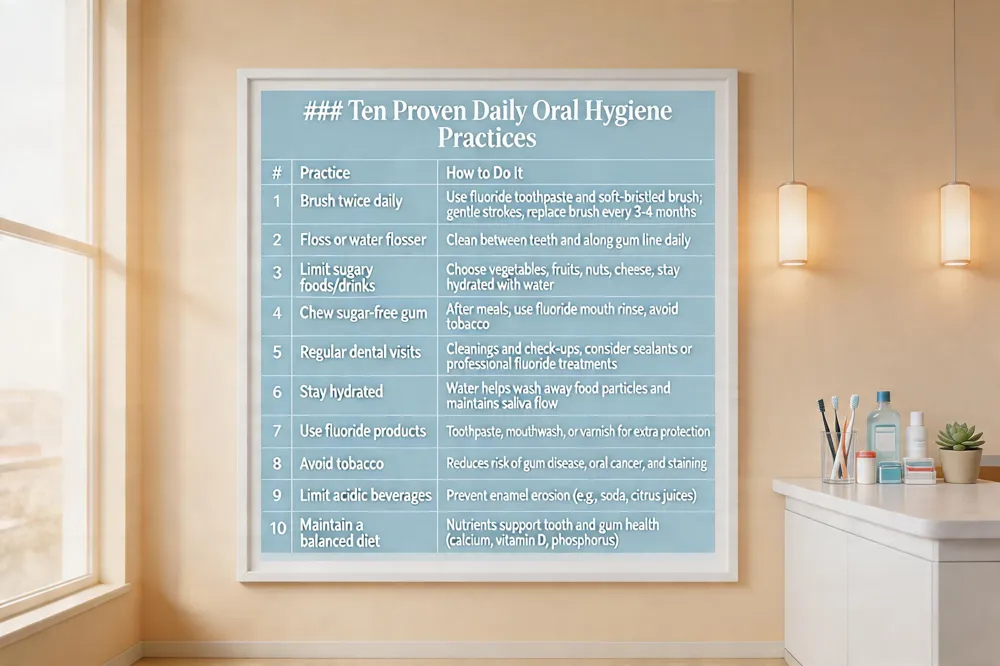
10 ways to keep your teeth healthy
- Brush twice a day with fluoride toothpaste using gentle, soft‑bristled strokes; replace the brush every 3‑4 months.
- Floss daily or use a water flosser to clear plaque from between teeth and along the gum line.
- Limit sugary foods and drinks; choose enamel‑friendly snacks such as vegetables, fruits, nuts, and cheese, and stay well‑hydrated with water.
- Chew sugar‑free gum after meals, use a fluoride mouth rinse, and avoid tobacco to protect enamel and reduce gum‑disease risk.
- Visit your dentist regularly for cleanings and check‑ups; consider sealants or in fluoride treatments for extra protection.
Importance of oral hygiene in daily life
Good oral hygiene removes dental plaque, the primary cause of cavities and gum disease, keeping teeth strong and gums healthy. By preventing infection and inflammation in the mouth, proper brushing and flossing lower the risk of systemic conditions such as heart disease, diabetes complications, pneumonia, and adverse pregnancy outcomes. A clean mouth also preserves fresh breath, supports clear speech, and allows enjoyment of a varied, nutritious diet without pain.
Oral health and hygiene
Daily habits—brushing twice a day with fluoride toothpaste, flossing or using interdental cleaners, and limiting sugary foods—are the foundation of oral health. These practices eliminate plaque, the sticky bacterial film that leads to cavities, gum disease, and bad breath. Regular dental check‑ups and professional cleanings at least once a year catch problems early, maintain healthy teeth and gums, and reduce the risk of systemic issues such as cardiovascular disease, stroke, and pregnancy complications.
Common Oral Problems and Their Links to Chronic Diseases
Common Oral Problems & Chronic Disease Links
| Oral Problem | Description | Chronic Diseases Associated |
|---|---|---|
| Dental Caries | Acid‑driven enamel decay from plaque | Diabetes complications, heart disease (via inflammation) |
| Gingivitis | Early gum inflammation, bleeding | May progress to periodontitis, linked to cardiovascular disease |
| Periodontitis | Advanced gum disease, bone loss, tooth loosening | Heart disease, stroke, diabetes worsening, Alzheimer’s disease |
| Oral Thrush (Candidiasis) | Fungal infection with white patches | Weakened immunity, diabetes, HIV |
| Dry Mouth (Xerostomia) | Reduced saliva, often medication‑induced | Increased caries risk, difficulty speaking/swallowing, oral infections |
| Oral Cancer | Malignant tumors of lips, tongue, oral tissues | Tobacco, alcohol, HPV; can lead to severe systemic effects |
| Halitosis (Bad Breath) | Chronic bad odor from bacterial buildup | May indicate periodontal disease; can affect social/psychological health |
Bidirectional Relationship: Poor oral hygiene can exacerbate systemic inflammation, while systemic conditions (e.g., diabetes, obesity) worsen oral disease. |
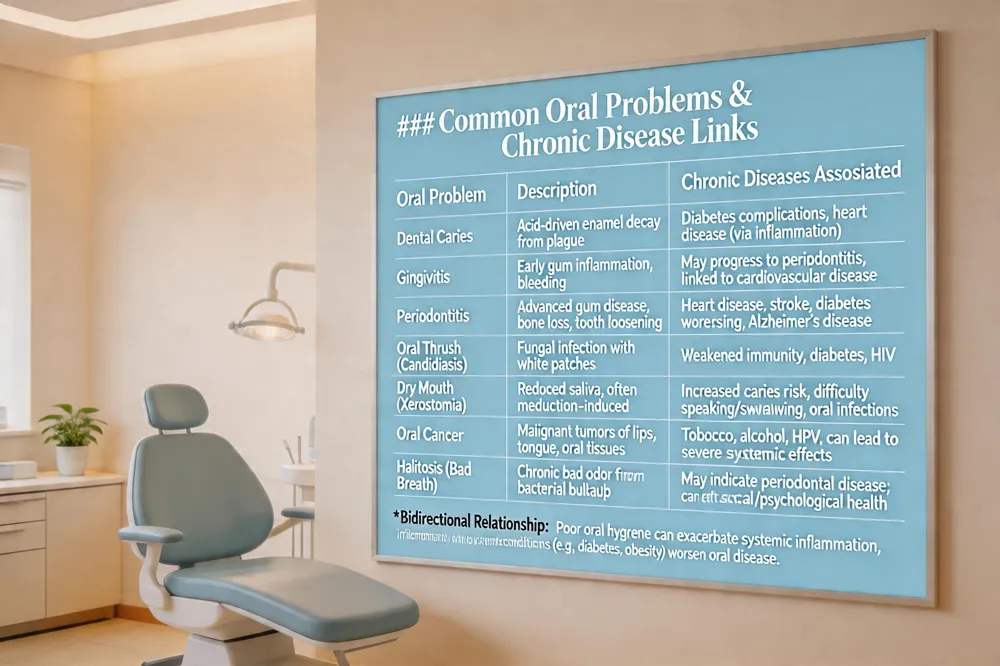 The mouth is a gateway to the body, and everyday dental issues can signal or even trigger larger health problems. Common oral health problems include dental caries (tooth decay) caused by plaque‑derived acids, gum disease ranging from gingivitis (red, bleeding gums) to periodontitis (bone loss and tooth loosening), tooth sensitivity, chronic bad breath, dry mouth, and oral cancer of the lips, tongue, or other tissues. Early detection of these conditions is crucial because untreated disease can spread inflammation throughout the body.
What are five oral health diseases? 1. Dental caries – acid‑driven decay of enamel. 2. Gingivitis – early gum inflammation from plaque buildup. 3. Periodontitis – advanced gum disease destroying supporting bone. 4. Oral thrush (candidiasis) – fungal infection with white patches. 5. Oral cancer – malignant tumors linked to tobacco, alcohol, or HPV.
Connection between oral health and chronic diseases – Persistent gum inflammation releases inflammatory markers and bacteria into the bloodstream, raising the risk of heart disease, stroke, diabetes complications, and even Alzheimer’s disease. Poor oral hygiene also allows bacteria to be aspirated into the lungs, causing pneumonia, especially in the elderly. Conversely, systemic conditions like diabetes and obesity worsen oral disease, creating a bidirectional relationship.
Diseases caused by poor dental hygiene – When plaque is not removed, it can lead to cavities, gingivitis, periodontitis, and the systemic spread of infection, contributing to cardiovascular disease, respiratory infections, adverse pregnancy outcomes, and higher rates of certain cancers.
Community Impact, Economic Benefits, and Raising Awareness
Community Impact & Economic Benefits
| Impact Area | Benefits |
|---|---|
| Educational Success | Better chewing → improved nutrition → enhanced learning and school attendance |
| Employment & Productivity | Reduced absenteeism; healthier workers = higher productivity |
| Healthcare Cost Savings | Preventive dental visits can cut overall health‑care spending by 20‑30 % (ADA) |
| Economic Savings | CDC study: untreated dental pain costs billions in lost work/school hours annually |
| Program Example – Loud Family Dental | Free cleanings, fluoride varnish, education for low‑income families |
| Program Example – Smile Shreveport | School‑based screenings lowered childhood caries rates by 12 % |
| Overall Community Health | Investment in oral‑health prevention leads to healthier, more equitable communities |
Key Takeaway: Investing in oral‑health education and preventive services yields substantial social and economic returns. |
 Good oral health is a cornerstone of community well‑being. When people can chew nutritious foods, speak clearly, and smile confidently, they are more likely to succeed in school, stay employed, and engage socially. This translates into higher productivity and lower absenteeism; a study from the CDC shows that untreated dental pain costs billions of work and school hours each year. Preventive dental care—regular cleanings, fluoride treatments, and sealants—dramatically cuts those losses. The American Dental Association estimates that routine preventive visits can reduce overall health‑care spending by 20‑30 % because they prevent costly emergency procedures and help control chronic diseases such as diabetes and heart disease.
Community programs amplify these benefits. Loud Family Dental in Shreveport, for example, offers free cleanings, fluoride varnish, and oral‑health education to low‑income families, while the “Smile Shreveport](https://www.pellafamilydentistry.com/patient-info/prevention)” initiative provides school‑based screenings that have lowered childhood caries rates by 12 %. By bringing affordable care to underserved neighborhoods, such programs not only improve individual health but also generate economic savings for families and the broader health system. Investing in oral‑health prevention is therefore an investment in a healthier, more productive, and more equitable community.
Conclusion
In short, the health of your mouth is a powerful indicator of—and influencer on—your overall well‑being. Research consistently shows that periodontal disease can worsen diabetes control, increase the risk of heart attack, stroke, and even affect pregnancy outcomes, while good oral hygiene helps keep systemic inflammation low and supports nutrition, mental health, and longevity. To protect both your smile and your whole body, schedule regular check‑ups and cleanings at Loud Family Dental – our team offers gentle, evidence‑based care and can catch early signs of systemic disease before they become serious. Meanwhile, make daily brushing twice a day with fluoride toothpaste, daily flossing, and a balanced, low‑sugar diet a habit, and take advantage of community resources such as the "Smile Shreveport" screenings and local water fluoridation programs. Small, consistent steps today lead to a healthier mouth and a healthier you tomorrow.