Introduction
Most patients who come to the office ask for a brighter smile because a whiter set of teeth is the single most requested cosmetic improvement, and nearly 90 % of dental patients specifically request whitening. The most frequent culprits behind dull or stained teeth are lifestyle habits—daily coffee, tea, red wine, and tobacco use—as well as age‑related enamel thinning that reveals the naturally yellow dentin. Trauma that disrupts blood flow, certain medications (e.g., tetracyclines, antihistamines, high‑blood‑pressure drugs), and chemotherapy can also cause intrinsic discoloration that is harder to treat. All modern whitening systems rely on peroxide chemistry: hydrogen peroxide or its more stable cousin carbamide peroxide break down chromogenic molecules into smaller, less colored particles. The concentration of peroxide determines how quickly and how deeply the stain is broken down, which is why professional and at‑home products differ in speed, shade gain, and longevity.
Understanding How Whitening Works and What Influences Results
Key Factors Influencing Whitening Results
| Factor | Details |
|---|---|
| Active Ingredient | Hydrogen peroxide (direct) vs. carbamide peroxide (splits into hydrogen peroxide + urea) |
| Stain Type | Yellow (extrinsic) – best response; Brown (tobacco/drugs) – moderate; Grayish (intrinsic) – poor response |
| Restorations | Crowns, veneers, fillings do not bleach (no porous enamel) |
| Result Longevity | 6 months–1 year+ with good oral hygiene; touch‑up trays extend durability |
| Potential Sensitivity | Temporary; resolves after treatment; over‑use may increase risk |
| Safety | Professional supervision ensures minimal risk to enamel and gums |
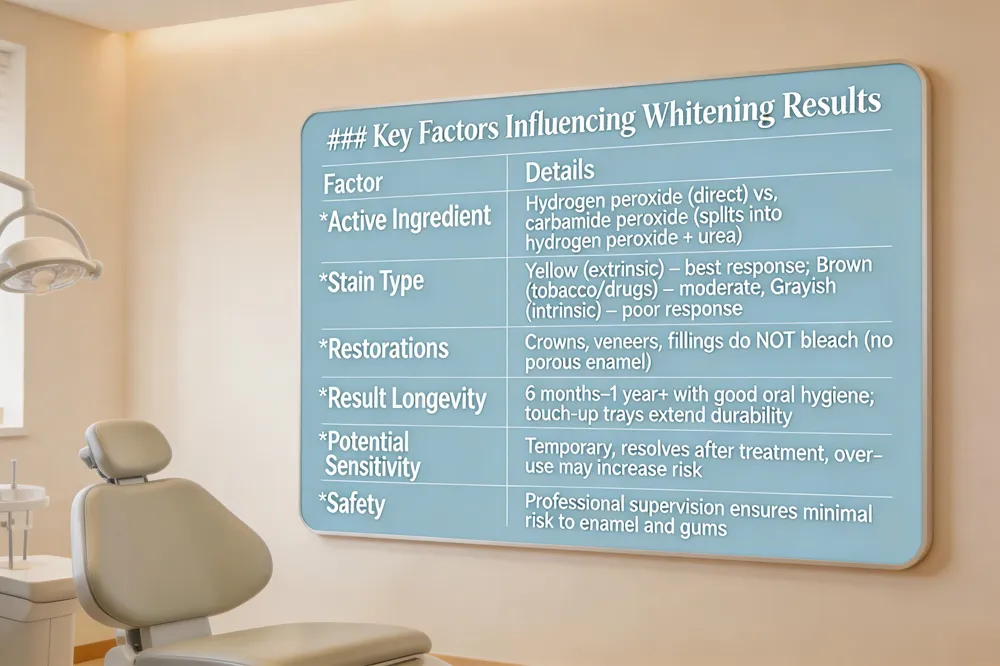 Teeth whitening relies on hydrogen peroxide or carbamide peroxide breaking down chromogenic molecules into smaller, less‑colored particles. Hydrogen peroxide works directly, while carbamide peroxide first splits into hydrogen peroxide and urea, providing a gentler, slower release. The type of stain matters: yellow stains—typically from coffee, tea, or aging enamel—respond best to peroxide bleaching; brown stains from tobacco or certain drugs are less responsive; grayish discoloration, often intrinsic, may not lighten at all. Only natural tooth structure can be bleached; restorations such as crowns, veneers, or fillings stay their original hue because they lack the porous enamel that absorbs peroxide.
Long lasting teeth whitening results before and after – A single in‑office session (30‑60 minutes) can lift a smile 4‑10 shades, most patients seeing 7‑8 shades lighter. The initial brightening may soften as teeth rehydrate, but with diligent oral hygiene and reduced intake of staining foods and drinks, the shade can stay stable for 6 months to a year or more. Touch‑up trays or periodic maintenance extend durability, especially for intrinsic stains.
Does professional whitening damage your teeth? – When performed by a dentist, professional whitening is safe and does not cause permanent enamel loss. Temporary sensitivity or gum irritation can occur but usually resolve after treatment. Over‑use—multiple sessions in a short span or excessive at‑home gel—may increase sensitivity and, rarely, enamel softening. An annual, dentist‑supervised whitening with proper after‑care poses minimal risk.
Professional In‑Office vs. At‑Home: Concentrations, Costs, and Time
In‑Office vs. At‑Home Whitening Comparison
| Aspect | In‑Office (Professional) | At‑Home (OTC/Dentist‑Prescribed) |
|---|---|---|
| Peroxide Concentration | 30‑40 % hydrogen peroxide | 3‑10 % carbamide peroxide (≈1‑3 % H₂O₂) |
| Shade Improvement | 6‑8 shades (single 60‑min session) | 2‑5 shades (2‑4 weeks daily wear) |
| Cost (Typical) | $300‑$1,000 (average $500‑$600) | OTC $20‑$70/month; dentist‑prescribed $150‑$500 |
| Time Commitment | 1‑2 hours single visit | 1‑2 hours daily for several weeks |
| Result Duration | 12‑24 months (with care) | 4‑6 months (most kits) |
| Safety | Controlled exposure, protective barriers | Lower strength, but requires proper use |
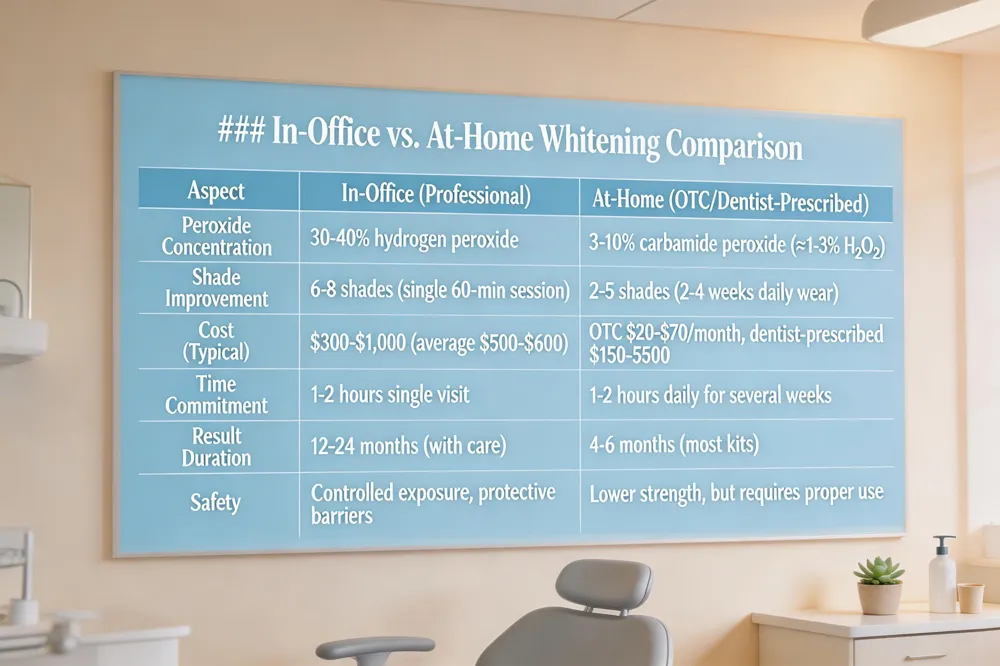 When you compare professional in‑office whitening with over‑the‑counter (OTC) kits, the first difference is peroxide concentration. Professional in‑office teeth whitening typically uses a solution containing 30‑40% hydrogen peroxide, while most over‑the‑counter (OTC) at‑home kits contain 3‑10% carbamide peroxide (equivalent to 1‑3% hydrogen peroxide). The higher concentration lets the gel penetrate deeper into enamel, so In a single 60‑minute dental office session, patients can achieve an average of 6‑8 shade improvements on the VITA shade guide. whereas most at‑home kits achieve 2‑5 shades after 2‑4 weeks of daily wear.
Cost reflects this disparity. Cost comparison: at‑home kits average around $50, whereas professional in‑clinic whitening typically costs $300 or more. An in‑office whitening visit averages $300‑$1,000, often $500‑$600 for a single session, while a dentist‑prescribed take‑home kit costs $150‑$500. In contrast, OTC strips, trays or toothpaste range from $20‑$70 for a month’s supply. Although the upfront price of a professional option is higher, the results tend to last 12‑24 months with proper care, compared with 4‑6 months for most at‑home kits.
Time commitment also varies. Time efficiency: professional whitening can achieve 8‑shade improvement in a single 1‑2‑hour visit, while at‑home methods may need 1‑2 hours daily over weeks for a 3‑6‑shade improvement. Professional whitening delivers dramatic change in one appointment—about one hour—whereas at‑home kits require 1‑2 hours of daily application over several weeks. For patients who want fast, lasting, and uniform whitening with the guidance of a dentist, the professional route is usually worth the investment. Those with mild stains, a tighter budget, or a preference for gradual results may find OTC or dentist‑provided at‑home kits practical, provided they follow instructions and maintain good oral hygiene.
Laser and Light‑Activated Whitening: What to Expect
Laser/LED‑Activated Whitening Overview
| Feature | Details |
|---|---|
| Gel Concentration | 30‑40 % hydrogen peroxide |
| Light Source | Laser or LED to accelerate reaction |
| Shade Gain | 4‑8 shades after single 30‑60 min session |
| Result Longevity | 6‑12 months with good hygiene |
| Sensitivity Management | Rubber dam or gingival gel; desensitizing agents if needed |
| Comparison to Custom Trays | Faster results, higher cost, possible brief sensitivity vs. slower, cheaper, less discomfort |
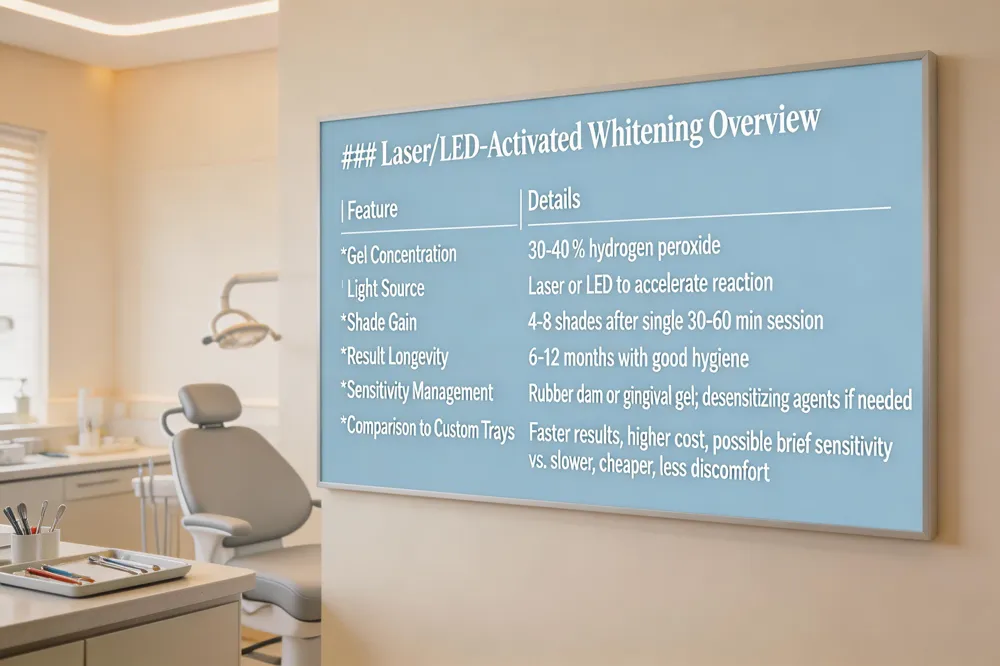 Laser or LED‑activated whitening is an in‑office procedure that uses a high‑concentration peroxide gel (often 30‑40% hydrogen peroxide) and a light source to speed the bleaching reaction. Clinical data show a typical 4‑8 shade improvement after a single 30‑to light‑minute session, with results visible immediately and lasting 6‑12 months when good oral‑hygiene habits are maintained.
Comparison with custom trays
Custom‑fit take‑home trays, prescribed by a dentist, contain a lower‑strength gel (about 10‑22% carbamide peroxide, equivalent to 3‑5% hydrogen peroxide) and are worn for several hours daily or overnight. They achieve a slower, more gradual brightening—usually 1‑3 shades over 2‑4 weeks—but are less expensive and allow flexibility. Because the trays are molded to each bite, they provide even coverage and can be reused for touch‑ups.
Potential sensitivity and safety measures
Both methods can cause temporary tooth sensitivity and mild gum irritation. In‑office laser whitening mitigates these risks with protective barriers (rubber dam or gingival gel) and by controlling exposure time. At‑home trays reduce gum contact by fitting precisely, and dentists often prescribe desensitizing agents or lower‑strength gels for sensitive patients.
Laser whitening vs. trays
Laser whitening delivers rapid, dramatic results in one visit but costs more and may cause brief sensitivity. Custom trays offer a gradual, cost‑effective approach with less discomfort, ideal for patients who prefer home treatment and can commit to daily wear.
Laser teeth whitening before and after 1 session
A single session can lighten teeth 4‑8 shades within minutes; most patients notice a brighter smile instantly. The effect can last several months, though a mild sensitivity may linger up to 48 hours. Results vary based on original staining and oral‑care practices.
Managing Sensitivity and Safety: Pain, Side Effects, and Best Practices
Sensitivity & Safety Guidelines
| Issue | Recommended Approach |
|---|---|
| Post‑Whitening Sensitivity | Use desensitizing toothpaste, potassium nitrate flu, fluoride gels, OTC NSAIDs |
| Screening | Dental exam to rule out cavities, gum disease, extensive restorations |
| Contraindications | Pregnancy/nursing, children <16, severe existing sensitivity |
| Protective Measures | Rubber dam, gingival barrier, lower‑strength gels for sensitive patients |
| FAQ Summary | • Pain? – Procedure painless, temporary sensitivity possible<br>• Enamel safety? – No permanent loss when supervised<br>• Professional vs. At‑home safety? – Professional is safer due to controlled concentration and monitoring |
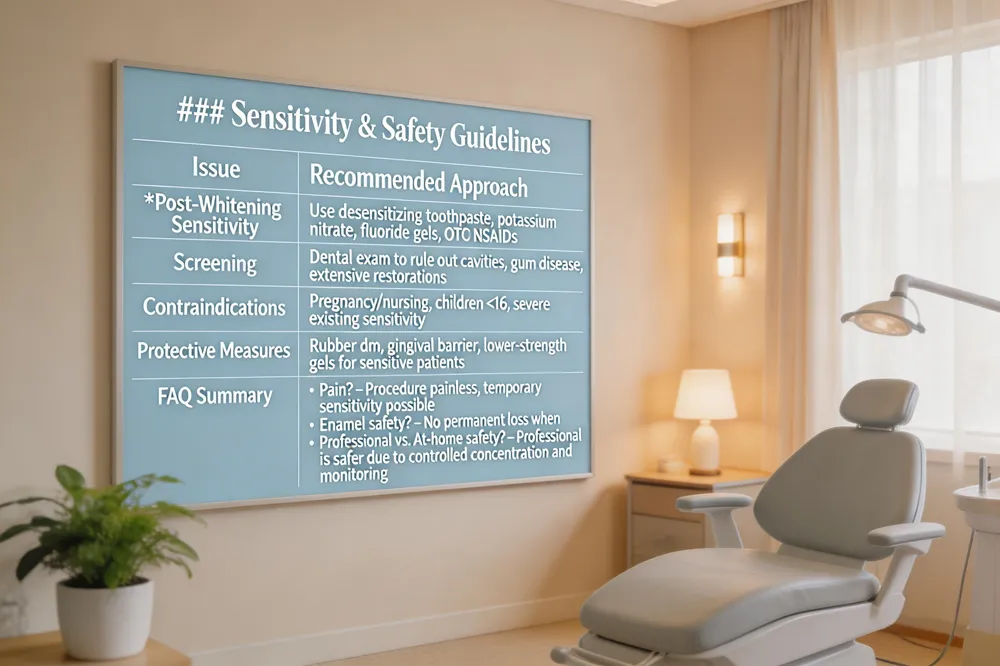 Whitening is a popular cosmetic option, but patients often wonder about discomfort and safety. Most people experience only mild, temporary tooth sensitivity after a bleaching session, typically lasting 24‑48 hours. The procedure itself is not painful; dentists use protective barriers and gentle application techniques to keep you comfortable.
Typical discomfort during/after whitening – Sensitivity occurs because peroxide briefly irritates the nerves in the enamel. It is usually short‑lived and does not indicate permanent damage.
Methods to reduce sensitivity – Post‑whitening gels, desensitizing toothpaste, potassium nitrate or fluoride treatments, and over‑the‑counter pain relievers can alleviate the mild ache. custom‑fit trays and lower‑strength peroxide concentrations also help.
Screening for contraindications – Before any whitening, a dental exam identifies cavities, gum disease, untreated decay, or extensive restorations that could increase the risk of irritation. Pregnant or nursing individuals, children under 16, and patients with severe existing sensitivity should receive professional clearance.
FAQs
- Is teeth whitening painful? No; the procedure is painless, though temporary sensitivity may occur and can be managed with gels or toothpaste.
- Is teeth whitening safe for enamel? Yes, when used correctly and under professional supervision, it does not damage enamel.
- Is teeth whitening safe? Generally safe, with temporary sensitivity and gum irritation as the most common side effects.
- Is professional teeth whitening safer than at‑home? Professional treatment is safer because a dentist controls peroxide concentration, uses protective barriers, and screens for oral‑health issues, reducing the risk of irritation or uneven results.
Choosing the Best At‑Home Kit and Maintenance Strategies
At‑Home Kit Recommendations & Maintenance
| Kit | Peroxide Type & Strength | Approx. Treatment Time | Notable Feature |
|---|---|---|---|
| Opalescence Go | 10‑15 % hydrogen peroxide (pre‑filled trays) | 5‑7 days (daily) | Fast, dentist‑approved |
| Crest 3D Whitestrips | 6 % hydrogen peroxide (strip) | 14‑20 days (daily) | Affordable, mess‑free |
| Lumineux Strips (Low‑Strength) | 5 % hydrogen peroxide + potassium nitrate | 10‑14 days | Sensitivity‑friendly |
3‑3‑3 Rule: Brush 3 × day (3 min each), replace brush every 3 months, use soft bristles at 45° angle.
Result Longevity: Professional in‑office ≈ 1‑3 years; custom at‑home trays ≈ 6‑12 months; OTC kits ≈ 3‑6 months.
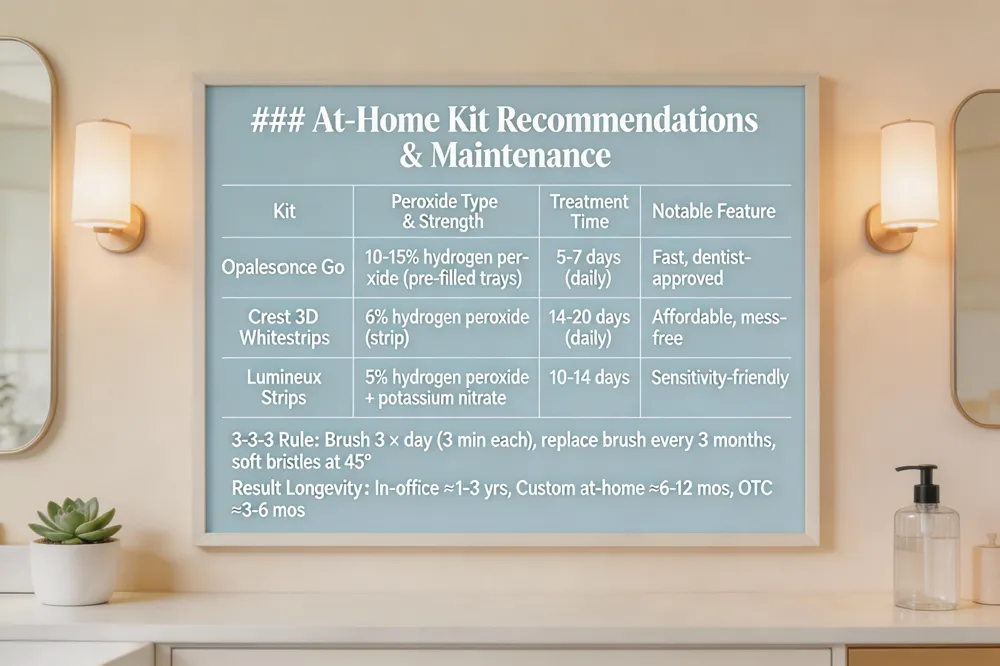 When you decide to brighten your smile at home, start with a dentist‑approved product. The Opalescence Go pre‑filled trays (10‑15 % hydrogen peroxide) are the top choice for fast, lasting results in 5‑7 days, while Crest 3D Whitestrips offer an affordable, mess‑free alternative that works well for most users. For those with sensitivity, look for formulas that add potassium nitrate or xylitol, such as the low‑strength Opalescence Go or Lumineux strips.
Maintain your new shade with the 3‑3‑3 rule: brush three times a day (after meals and before bedtime) for a full three minutes, replace your toothbrush every three months, and use a soft‑bristled brush at a 45° angle to the gumline. This routine removes plaque, lets fluoride strengthen enamel, and keeps bristles effective.
How long will the brightness last? Professional in‑office whitening can keep teeth white for up to three years, but most patients notice a vibrant shade for about one year. Custom at‑home trays prescribed by a dentist typically hold results for six months to a year. Over‑the‑counter kits fade faster, usually within a few months.
Remember: whitening is not permanent. Longevity depends on diet, oral hygiene, and avoiding stain‑causing foods and tobacco. Regular cleanings, proper brushing, and occasional touch‑up treatments will help you enjoy a lasting, radiant smile. Choose ADA‑approved products for safety and efficacy, and always consult your dentist before beginning any whitening regimen.
Putting It All Together: A Practical Guide for Shreveport Residents
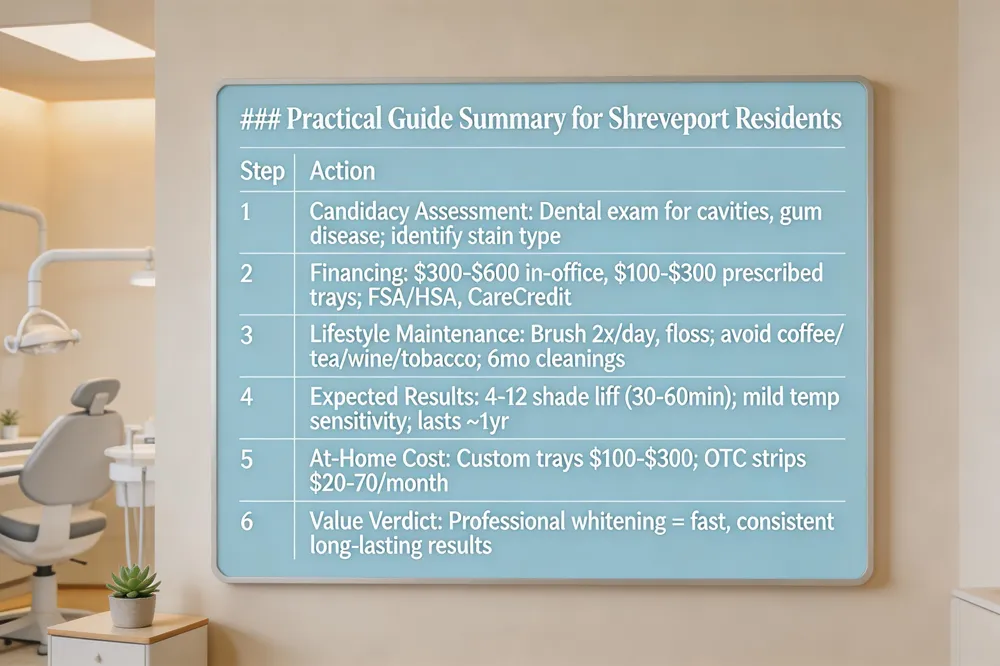
Practical Guide Summary for Shreveport Residents
| Step | Action |
|---|---|
| 1. Candidacy Assessment | Dental exam to check for cavities, gum disease, restorations; identify stain type |
| 2. Financing | Expect $300‑$600 for in‑office, $100‑$300 for dentist‑prescribed trays; consider FSA/HSA, CareCredit, office financing |
| 3. Lifestyle Maintenance | Brush twice daily, floss, fluoride toothpaste; avoid coffee, tea, red wine, tobacco; use straw; regular cleanings every 6 months |
| 4. Expected Results | In‑office: 4‑12 shade lift in 30‑60 min; sensitivity mild/temporary; results last ~1 year with care |
| 5. At‑Home Kit Cost | Custom trays $100‑$300; OTC strips $20‑$70/month |
| 6. Value Verdict | Professional whitening offers rapid, consistent results; worthwhile for those seeking fast, lasting brightening |
 Assessing candidacy with a dental exam
Before any bleaching, a dentist checks for cavities, gum disease, and existing restorations. Healthy enamel and gums are essential; untreated decay or active periodontitis must be treated first. The exam also identifies the stain type—yellow extrinsic stains respond best, while deep intrinsic discoloration may need alternative cosmetic options.
Assessing candidacy with a dental exam
Before any bleaching, a dentist checks for cavities, gum disease, and existing restorations. Healthy enamel and gums are essential; untreated decay or active periodontitis must be treated first. The exam also identifies the stain type—yellow extrinsic stains respond best, while deep intrinsic discoloration may need alternative cosmetic options.
Financing and insurance considerations Professional whitening is cosmetic, so most dental plans do not cover it. In‑office sessions typically run $300‑$600, while dentist‑prescribed take‑home kits cost $100‑$300. Flexible‑spending accounts, CareCredit, or office‑based financing can ease the expense. Over‑the‑counter kits are cheaper ($20‑$100) but lack custom fit and professional supervision.
Maintaining results with lifestyle choices Long‑lasting brightness hinges on daily habits: brush twice, floss, use a fluoride toothpaste, and rinse after coffee, tea, or red wine. Avoid tobacco and limit dark beverages—use a straw when possible. Schedule regular cleanings every six months and consider periodic touch‑up trays from your dentist to extend the shade for 6‑12 months.
Professional teeth whitening before and after A single 30‑60 minute office visit can lift 4‑12 shades, turning yellowish or brownish teeth into a uniformly bright smile. Sensitivity is mild and temporary; results can endure several months with proper care.
Take‑home teeth whitening kit from dentist cost Custom trays with professional‑strength gel range $100‑$300, offering even whitening and reduced gum irritation compared with OTC strips.
Is teeth whitening worth it? If you desire rapid, noticeable brightening and have healthy teeth, professional whitening offers faster, more consistent results than DIY kits, making the higher cost worthwhile for many patients.
Professional teeth whitening results On average, in‑office treatment lightens teeth 7‑8 shades, with effects lasting about a year when oral‑hygiene and diet are maintained.
Conclusion
Professional in‑office whitening remains the safest and most durable option. Dentists control peroxide concentration, protect gums with barriers, and monitor sensitivity, resulting in deeper enamel penetration and shade improvements that can last 12‑24 months or longer with good oral‑care. At‑home kits are a good choice for patients who have mild extrinsic stains, a limited budget, or prefer gradual whitening; custom‑fit trays prescribed by a dentist offer better fit and lower risk than over‑the‑counter strips, while plain OTC products may cause uneven results and higher irritation. For Shreveport residents, the key points are: schedule a dental exam before any whitening, discuss lifestyle habits that cause stains, choose professional treatment for dramatic, long‑lasting change, and use professionally made take‑home trays for maintenance or when cost is a concern. Consistent oral hygiene, avoiding coffee, tea, red wine, and tobacco, and regular cleanings will help preserve the bright smile.