Why Dental X-Rays Matter for Your Child’s Smile
Seeing the Unseen: Why Children Need Dental X-Rays
Dental X-rays are a vital tool in pediatric dentistry because they reveal what a visual exam cannot. Cavities between teeth, infections at the root, impacted teeth, and jaw development issues are often hidden beneath the gum line or between tight contacts. Early detection through X-rays allows dentists to treat these problems before they become painful or require extensive procedures. For example, a small cavity caught on a bitewing X-ray can be filled with a simple restoration, while a missed cavity may lead to a root canal or extraction. X-rays also track the eruption of permanent teeth, ensuring they come in properly and identifying space issues early—potentially reducing the need for braces later.
Safe as Sunshine: Digital X-Rays and Minimal Radiation
Modern pediatric dental offices use digital X-ray technology, which emits up to 90% less radiation than traditional film systems. In fact, a single set of bitewing X-rays exposes your child to about the same amount of radiation they receive from natural background sources in one day. To put that in perspective, the dose is less than what they get from a few minutes of sunlight or a short airplane flight. Safety protocols are rigorous: your child will wear a lead apron and a thyroid collar to protect the body and thyroid gland from scatter radiation. Dentists follow the ALARA principle (As Low As Reasonably Achievable) and the Image Gently campaign guidelines, tailoring exposure settings to each child’s size and age. The American Academy of Pediatric Dentistry and the American Dental Association endorse these measures, confirming that when used appropriately, dental X-rays are safe for children.
The Right Timing: When Should Your Child Get Their First X-Ray?
There is no single “right age” for a child’s first dental X-ray. Instead, it depends on individual development and risk factors. Most children receive their first bitewing X-rays around ages 4 to 6, when the back teeth begin to touch each other. At that point, cavities can form between these tight contacts, and a visual exam alone cannot detect them. However, some children may need X-rays earlier—as young as 2 or 3—if the dentist suspects a problem, such as a toothache, swelling, or a family history of dental disease. A pediatric dentist will perform a clinical exam and a caries risk assessment before deciding to take X-rays. Low-risk children may only need them every 1 to 2 years, while high-risk children may require them every 6 to 12 months. Always feel free to ask your dentist, "Are my child's back teeth touching? Is it time for X-rays?"
Types of X-Rays and What They Reveal
Pediatric dentists use several types of X-rays, each for a specific purpose:
- Bitewing X-rays capture the upper and lower back teeth in one image. They are the most common type and excel at finding cavities between teeth and early signs of gum disease.
- Periapical X-rays show the entire tooth from crown to root, including the surrounding bone. They help diagnose abscesses, impacted teeth, and root infections.
- Panoramic X-rays provide a broad view of the entire mouth—all teeth, jaws, sinuses, and nasal area. These are useful for assessing overall development, locating unerupted teeth, and planning orthodontic treatment.
- Occlusal X-rays capture the full arch of teeth, often used for younger children to evaluate tooth development and detect extra or missing teeth.
During the appointment, your child will sit or stand still while a small sensor or film is placed in their mouth. The exposure lasts only a few seconds and is completely painless. The dentist then reviews the digital images on a screen and discusses any findings with you.
Preparing Your Child for a Positive Experience
A little preparation goes a long way to reduce anxiety. Use simple, positive language: "The dentist is going to take a special picture of your teeth to make sure they are healthy. It will be quick and won't hurt at all." You can even practice at home by having your child pretend to hold a small object near their mouth while counting to three. Bringing a comfort item—a stuffed animal or favorite toy—can also help. Many pediatric dental offices use the “tell, show, do” technique: they explain the process, show the equipment, and then perform the X-ray. Parents are typically encouraged to stay in the room, wearing a lead apron, to provide reassurance. Scheduling the appointment when your child is well-rested and not hungry makes cooperation easier. Afterward, praise their bravery and offer a small reward, like a sticker or a trip to the park.
The Bigger Picture: Long-Term Benefits
Regular dental X-rays are an essential part of preventive care. They enable early detection of problems, which means simpler, less costly treatments. For instance, detecting an impacted tooth early can allow an orthodontist to guide its eruption with a simple appliance rather than requiring surgical removal later. X-rays also monitor the growth of the jaw and the succession of baby teeth by permanent teeth, ensuring a healthy foundation for a lifetime smile. By understanding the safety and necessity of dental X-rays, parents can make informed decisions that protect their child’s oral health today and tomorrow.
When Should Your Child Get Their First Dental X-Ray?

When Do Kids Typically Get Their First Dental X‑rays?
The American Academy of Pediatric Dentistry (AAPD) recommends that a child’s first dental X‑ray be taken when the dentist identifies a clinical need, rather than at a specific age. For most children, this occurs around age 5‑6, when the first permanent molars begin to erupt. However, if your child shows early signs of tooth decay, has a history of cavities, or is at high risk for dental disease, the dentist may recommend X‑rays as early as age 3‑4. Routine screening is not needed for every toddler; X‑rays are reserved for cases where the visual exam cannot detect hidden problems.
What Factors Influence the Timing of a Child’s First X‑ray?
The decision to take X‑rays is based on individual risk factors, not a fixed schedule. The AAPD advises dentists to evaluate each child’s unique needs, including:
- Contact between back teeth touching: When a child’s back baby teeth begin to touch, bitewing X‑rays can reveal cavities forming between those tight contacts.
- Caries risk: Children with poor oral hygiene, frequent sugary snacks, a family history of dental problems, or existing cavities may need earlier and more frequent imaging.
- Developmental concerns: X‑rays help monitor the eruption of permanent teeth, detect impacted or missing teeth, and assess jaw growth for potential orthodontic issues.
Your pediatric dentist will perform a clinical exam and a caries risk assessment at each visit to decide whether X‑rays are necessary. Parents should feel comfortable discussing their child’s risk profile and asking questions like, "Are my child’s back teeth touching? Do we need to start flossing and take X‑rays?"
How Do Bitewing X‑rays Help Detect Hidden Cavities?
Bitewing X‑rays are the most common first type of dental X‑ray for children. They capture images of the upper and lower back teeth, revealing the surfaces between teeth that a visual exam cannot reach. This allows the dentist to detect early decay, bone loss from gum disease, and monitor the space available for incoming permanent teeth. The procedure is quick and painless—your child simply bites down on a small sensor or film holder while the X‑ray machine takes a picture that lasts only a few seconds.
Why Is the Timing Based on Clinical Need Rather Than Age?
Every child develops at their own pace, and their oral health needs vary. The AAPD emphasizes that age alone should not determine when to take X‑rays. Instead, the dentist considers factors such as the child’s dental history, the presence of cavities, oral hygiene habits, and the stage of tooth eruption. This personalized approach ensures that X‑rays are used only when the diagnostic benefit outweighs the minimal radiation exposure, following the ALARA (As Low As Reasonably Achievable) principle. Modern digital X‑ray technology further reduces radiation by up to 90% compared to traditional film, making them safe for children when used appropriately.
Common Types of Pediatric Dental X‑rays
| Type of X‑ray | What It Shows | When It’s Used |
|---|---|---|
| Bitewing | Upper and lower back teeth; detects cavities between teeth and bone loss | Most common first X‑ray; when back teeth touch |
| Periapical | Entire tooth from crown to root; shows root infections, abscesses | For individual tooth problems or trauma |
| Panoramic | Full‑mouth view of teeth, jaws, sinuses, and nasal area | For overall development, impacted teeth, orthodontic planning |
| Occlusal | View of the entire dental arch | For detecting extra teeth, jaw fractures, or palate abnormalities |
How Can You Prepare Your Child for Their First X‑ray?
Preparing your child can make the experience positive. Use simple, positive language: “The dentist will take a special picture of your teeth to make sure they are healthy.” Let your child know it’s quick and painless, and that you will be nearby. Practice staying still with a toy camera at home. Bring a comfort item like a stuffed animal, and schedule the appointment when your child is well‑rested and not hungry. Many pediatric dental offices, like Loud Family Dental, create a welcoming environment with friendly staff and distraction techniques to help children feel at ease.
What Happens After the X‑ray?
After the images are taken, the dentist reviews them immediately on a screen. They will explain any findings to you in simple terms and recommend treatments or monitoring if needed. There are no restrictions on activities after the X‑ray—your child can resume their normal day. Early detection of dental issues through X‑rays can prevent more extensive and costly treatments later, supporting a lifetime of healthy smiles.
Are Dental X-Rays Safe for Young Children?
Low Radiation Doses and Modern Digital Technology
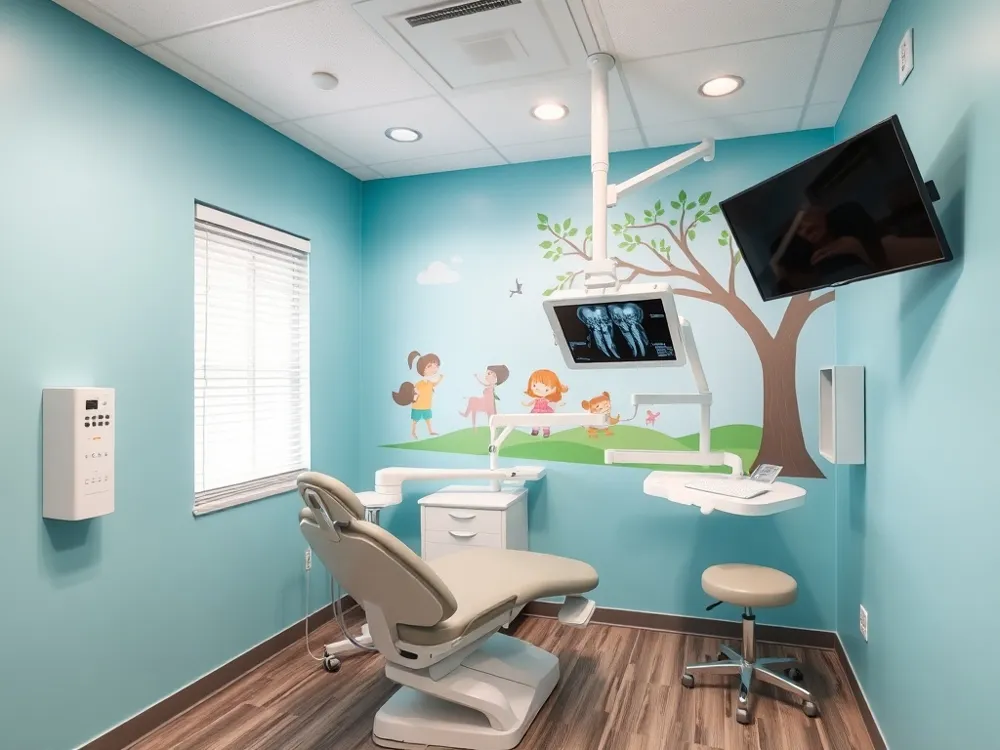
Yes, dental X‑rays are safe for children as young as 3 years old when proper precautions are taken. Modern digital X‑ray systems emit up to 90% less radiation than traditional film‑based X‑rays, making them an especially safe choice for young patients. The amount of radiation from a single digital dental X‑ray is comparable to just a few minutes of natural background radiation—less than what a child receives from sunlight in an average day. Pediatric dentists are trained to use the lowest possible exposure settings and child‑sized sensors, ensuring that the imaging process is both quick and minimally invasive. Because the diagnostic benefits of detecting hidden cavities, monitoring tooth development, and identifying early orthodontic issues far outweigh the negligible risk, dentists confidently recommend these X‑rays when clinically necessary.
Safety Gear: Lead Aprons and Thyroid Collars
To further minimize any potential exposure, pediatric dental offices always provide protective gear. Your child will wear a lead apron over the chest and lap, along with a thyroid collar to shield the delicate thyroid gland. These barriers absorb scatter radiation and are standard practice for every pediatric X‑ray. Many parents also ask if they can stay in the room during the procedure—and the answer is yes. The parent can wear a lead apron as well, providing comfort and reassurance while the image is captured in just a few seconds. This combination of modern equipment and protective shielding ensures that radiation exposure is kept to an absolute minimum.
The ALARA Principle: X‑Rays Only When Needed
Dentists follow the ALARA principle—As Low As Reasonably Achievable—which means X‑rays are taken only when there is a clear diagnostic need. The decision to take an X‑ray is based on a child’s individual risk factors, such as oral hygiene habits, family history of cavities, and clinical findings from a visual exam. For a low‑risk child, bitewing X‑rays may be needed only once every 12 to 24 months, while a high‑risk child might require them every 6 to 12 months. This individualized approach ensures that no child receives unnecessary radiation. Professional guidelines from the American Academy of Pediatric Dentistry (AAPD) and the American Dental Association (ADA) emphasize that X‑rays should never be taken solely because of age or insurance coverage—only when the information will directly improve patient care.
Minimal Exposure: Comparable to Everyday Background Radiation
A single bitewing X‑ray delivers a radiation dose equivalent to just a few days of natural background exposure—far less than what you would experience on a short airplane flight. For perspective, a round‑trip cross‑country flight exposes passengers to about 0.03 millisieverts, while a set of four bitewing X‑rays totals approximately 0.004 millisieverts. This low dose, combined with the use of digital sensors that require even shorter exposure times, makes pediatric dental X‑rays one of the safest routine diagnostic tools available. The Image Gently campaign, endorsed by over 80 health organizations, specifically promotes adjusted pediatric protocols that further reduce radiation for children.
Child‑Friendly Techniques for a Comfortable Experience
Pediatric dentists use specially designed equipment to make the process as easy as possible for young children. Small, flexible sensors (size 0 or size 1) fit comfortably in a child’s mouth, and the actual exposure often takes less than one second. Many offices also employ the “tell, show, do” technique: the dentist explains the procedure in simple language, lets the child touch and examine the sensor, and then gently positions it before capturing the image. Parents can help by staying calm, using a positive tone, and bringing a comfort item like a favorite toy. These strategies keep children still, which reduces the need for repeated X‑rays and keeps exposure as low as possible. With these modern safeguards and a caring team, even a very young child can have a safe and stress‑free first dental X‑ray experience.
How Pediatric Dentists Perform X-Rays Comfortably and Safely
Low-Radiation Digital X-Rays for a Safe Experience
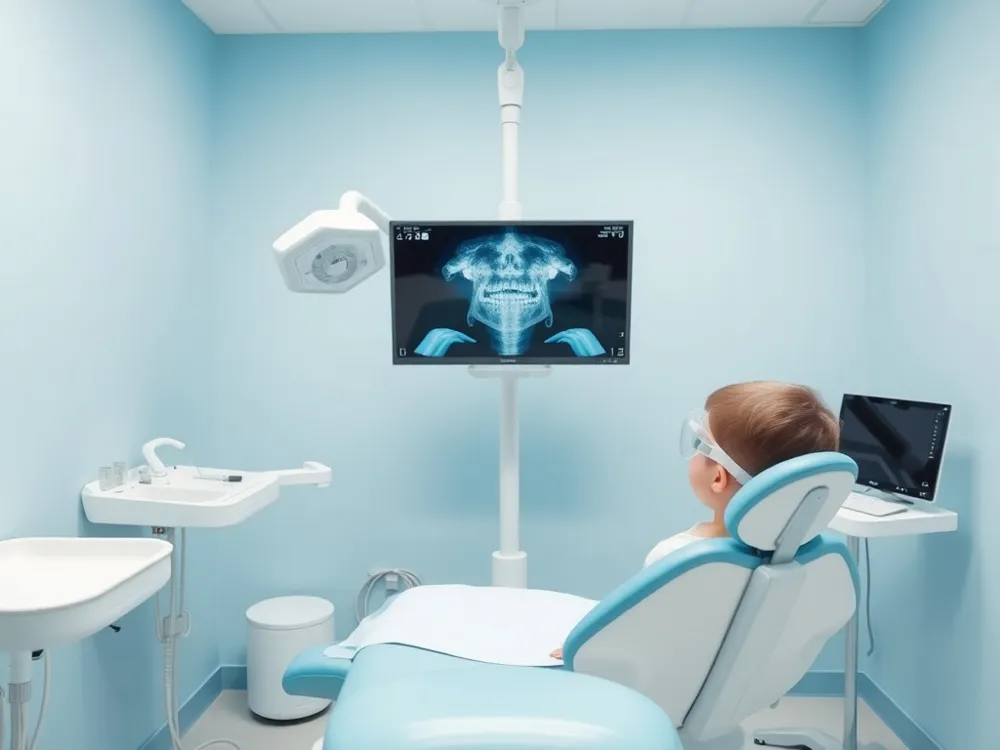
Pediatric dentists rely on modern digital X-ray systems that emit up to 90% less radiation than traditional film, making them safe for children. For bitewing X-rays, the child gently bites down on a small sensor or film holder, capturing the upper and lower back teeth in one image. For panoramic X-rays, the child stands still while the machine rotates around the head, providing a full view of the teeth, jaws, and sinuses. The exposure lasts only a few seconds per image, and children wear a lead apron and thyroid collar to shield sensitive tissues. Dentists follow the ALARA principle—As Low As Reasonably Achievable—and adjust settings based on the child's age and size. The radiation dose from a single bitewing is less than what a child receives from natural background radiation in one day, offering parents peace of mind.
A Painless, Quick Procedure Explained Step by Step
Pediatric dentists make the X-ray process comfortable by explaining each step using age-appropriate language. Many use the “tell, show, do” technique: first, they tell the child what will happen in simple terms; then, they show the equipment, letting the child touch the sensor or film; finally, they perform the X-ray. This builds trust and reduces anxiety. For young children, dentists select the smallest film size (size 0 or 1) to fit the mouth comfortably. If a child has a sensitive gag reflex, a pinch of salt on the tongue or gentle rubbing of the palate can help. The entire procedure is painless and typically takes just a few minutes, with the child remaining still for only a few seconds at a time. Positive reinforcement, such as praising bravery and offering a small reward like a sticker, encourages cooperation.
Parental Presence and Comfort Items to Ease Anxiety
Parents are welcome to stay in the room during the X-ray, wearing a lead apron to protect themselves. The parent’s presence provides emotional security, especially for toddlers. For children under three, the child may sit on the parent’s lap while the parent gently stabilizes the body. Many clinics also encourage children to bring a favorite toy or blanket for comfort. Before the visit, parents can prepare their child by explaining that the X-ray is a quick, safe “picture” of the teeth. Role-playing with a toy camera at home and scheduling the appointment when the child is well-rested can further ease anxiety. The friendly staff uses distraction techniques and cheerful conversation to keep the child calm during the fast imaging process.
Reviewing Results: What Happens After the X-Ray
After the images are captured, the dentist reviews them on a computer screen and explains the findings in simple terms. They point out any cavities between teeth, monitor the development of permanent teeth, and check for issues like impacted teeth or jaw alignment problems. If treatment is needed, the dentist discusses options and schedules follow-up appointments. There are no restrictions on normal activities after the X-ray—children can eat, play, and return to their daily routine immediately. The dentist may also recommend the frequency of future X-rays based on the child’s caries risk: low-risk children may only need them every 12–24 months, while high-risk children may require them every 6–12 months. This individualized approach ensures that every child receives just the right amount of diagnostic imaging for optimal oral health.
Understanding Your Rights: Can You Refuse Dental X-Rays?
Can I Refuse Dental X-Rays for My Child?
Yes, as a parent, you have the legal right to refuse dental X-rays for your child. Pediatric dentists must obtain informed consent before taking any radiographs, meaning they will discuss the purpose, risks, benefits, and any alternatives. If after this discussion you decide to decline, that choice is respected and documented. Many parents have concerns about radiation, and an open conversation with your dentist can help address those fears while ensuring you fully understand what your decision means for your child’s oral health.
What You Might Miss Without X-Rays
Dental X-rays are the only way to see structures hidden beneath the gums and between tight tooth contacts. Without them, your dentist cannot reliably detect early cavities between teeth, infections at the root tip, abscesses, impacted teeth, cysts, or abnormalities in jaw bone development. For example, a periapical X-ray reveals the entire tooth from crown to root, making it essential for diagnosing abscesses or root fractures. A panoramic X-ray shows the full mouth, including emerging permanent teeth, sinuses, and the jaw joints. Visual exams are valuable but miss many problems. Choosing to refuse X-rays means accepting that some hidden conditions may go undiagnosed until they cause pain or require more invasive treatment.
Why Dentists Recommend X-Rays: Individual Need, Not Routine
The American Dental Association and the American Academy of Pediatric Dentistry stress that X-rays should be prescribed based on each child’s individual circumstances, not as a blanket routine. Your dentist will evaluate your child’s age, cavity risk, oral hygiene habits, family dental history, and tooth development before recommending imaging. For a low-risk child with open contacts between primary teeth, the dentist may decide X-rays are not needed. For a child with a history of cavities, crowded teeth, or poor hygiene, X-rays provide critical information for early intervention. This personalized approach ensures that when an X-ray is suggested, it is because the diagnostic benefit clearly outweighs the minimal radiation exposure.
The Safety of Modern Dental X-Rays
Modern digital X‑ray systems use up to 90% less radiation than traditional film. A typical set of four bitewing X‑rays delivers a radiation dose comparable to a few hours of natural background radiation or a short airplane flight. Protective lead aprons and thyroid collars are always used to shield your child’s body and thyroid gland. Pediatric dentists follow the ALARA principle—As Low As Reasonably Achievable—by using the smallest exposure settings, the fastest image receptors, and beam collimation. National campaigns like Image Gently promote these safety measures specifically for children. When performed according to professional guidelines, dental X‑rays are considered safe for children of all ages.
Alternatives and Open Communication
If you still have reservations after discussing the recommended X-ray, there are alternatives worth exploring. You can ask your dentist to explain precisely what condition they are looking for and why a visual exam is insufficient. Depending on the situation, the dentist may agree to increased clinical monitoring—checking the area more frequently during regular visits—combined with preventive treatments such as fluoride varnish applications or dental sealants. Intraoral photographs can also document suspicious areas for later comparison. However, these alternatives provide less certainty than X-rays. Some conditions, like an abscess or an impacted tooth, simply cannot be ruled out without imaging. Maintaining an open dialogue with your pediatric dentist allows you to weigh the risks and benefits together and make a decision that feels right for your family.
The Value of Early Detection
Choosing to allow recommended X-rays can save your child from more extensive treatments later. Early detection of a small cavity means a simple filling; a missed cavity can lead to pulp infection, root canal, or extraction. Similarly, identifying an impacted or missing permanent tooth early allows for orthodontic planning that may reduce the need for braces or surgery. Regular X-rays also help track the eruption of adult teeth, ensuring adequate space and proper alignment. By understanding both your rights and the diagnostic power of X-rays, you can make an informed choice that supports your child’s lifelong oral health.
What Do X-Rays Reveal About Baby vs. Permanent Teeth?
Baby Teeth: Checking for Hidden Decay and Proper Root Resorption
Dental X‑rays of baby (primary) teeth are used primarily to detect cavities that are not visible during a routine clinical exam. Because baby teeth have thinner enamel than permanent teeth, decay can progress quickly, so early detection is critical. X‑rays also allow the dentist to monitor the health of the roots as they naturally resorb (melt away) to make room for permanent teeth. This helps confirm that primary teeth are being lost at the correct time and that there is enough space for the incoming adult teeth to erupt without crowding or shifting.
Radiographs can also reveal issues like abscesses or infections at the root tips of baby teeth, which may go unnoticed until they cause pain or swelling. By catching these problems early, the dentist can intervene with treatments such as pulpotomies or stainless steel crowns, preserving the baby tooth until it is ready to fall out naturally.
Permanent Teeth: Tracking Eruption and Guiding Orthodontics
X‑rays of permanent teeth serve a different set of purposes. These images track the eruption sequence of new teeth, ensuring that each tooth appears in the correct order and position. They can detect impacted teeth (teeth that are stuck under the gum) or congenitally missing teeth (buds that never developed). Panoramic X‑rays are especially useful for seeing all the teeth in one image, including developing wisdom teeth, and for evaluating jaw growth and alignment for orthodontic needs.
By identifying impactions or lack of space early, the dentist can refer your child to an orthodontist for interceptive treatment—such as space maintainers or expanders—that can shorten or even eliminate the need for braces later. Permanent‑tooth X‑rays also check for developmental anomalies, like extra teeth or abnormal root shapes, that could cause future problems.
Healthy vs. Unhealthy Teeth on X‑Ray: What the Shades Mean
On a dental X‑ray, healthy teeth appear uniformly radiopaque (white to light gray) with a smooth, continuous enamel outline. The pulp chamber and root canals show up as naturally dark voids because they are less dense, but these should be well‑defined and free of sharp dark spots. Unhealthy teeth, on the other hand, display radiolucent (dark) areas where mineral has been lost.
- Early decay appears as small, dark triangles between teeth (on bitewings) or on chewing surfaces.
- Deep decay into dentin looks like larger dark patches that may approach the pulp chamber.
- Abscess or infection at the root tip shows as a rounded dark shadow in the bone surrounding the root—this indicates periapical radiolucency.
- Bone loss from gum disease is seen as a decrease in the height or density of the alveolar bone, making it appear darker adjacent to the tooth roots.
- Metal fillings, crowns, or orthodontic wires appear as the brightest white structures because they block X‑rays completely.
These contrasts allow dentists to diagnose problems that are invisible to the naked eye, such as cavities between teeth, hidden abscesses, or early bone loss. The ability to see these subtle changes is why dental X‑rays are so valuable for children’s long‑term oral health.
| Feature | Healthy Appearance | Unhealthy Appearance |
|---|---|---|
| Tooth crown | Uniform white/gray, smooth enamel | Dark spots (decay) — small triangles in enamel, larger patches in dentin |
| Tooth root | Smooth, uniform density | Dark shadow at tip (abscess) |
| Bone around teeth | Even height, dense white/gray | Decreased height, darker zones (bone loss) |
| Pulp chamber | Natural dark void, well‑defined | Disrupted by dark decay extending toward pulp |
| Metal restorations | Bright white | Bright white (normal, but may show recurrent decay at edges) |
By understanding these differences, parents can see why X‑rays are not just routine but essential for catching problems early—whether the tooth is a temporary baby tooth or a permanent one that will last a lifetime. Your dentist at Loud Family Dental will always explain what the images show and how they guide the best care for your child.
Making Your Child’s First X-Ray a Positive Experience
Why Your Child’s First Dental X-Ray Matters
Dental X‑rays are a routine and essential part of pediatric oral care. They allow dentists to see what the naked eye cannot—cavities between teeth, impacted teeth, jaw development issues, and the health of permanent teeth that haven’t erupted yet. Early detection through X‑rays means smaller problems can be treated before they become bigger, saving your child from more invasive procedures later. For most children, the first bitewing X‑rays are recommended when the back primary teeth begin to touch each other, typically around age three. However, the exact timing is based on your child’s individual needs and risk factors, not just age.
How Loud Family Dental Makes It Comfortable
At Loud Family Dental in Shreveport, Louisiana, the team specializes in making every child feel safe and at ease. From the moment you walk in, the friendly staff greets your child and explains each step in simple, reassuring language. The clinic uses modern digital X‑ray technology, which emits up to 90% less radiation than traditional film X‑rays, making it especially safe for young patients. During the procedure, your child wears a lead apron and thyroid collar to shield the body from any scatter radiation. The actual exposure lasts only a few seconds, and the image appears instantly on a screen—no waiting, no discomfort.
The team also employs child‑friendly techniques to reduce anxiety. They use the “tell, show, do” method: first explaining, then letting the child see and touch the sensor, and finally performing the X‑ray. Distraction techniques, such as talking about the child’s favorite cartoon or counting down, help keep little ones still. For toddlers, parents are often invited to sit with their child on their lap, providing extra comfort and gentle restraint if needed. The goal is to turn a potentially scary moment into a quick, positive experience.
Preparing Your Child at Home
A little preparation goes a long way. Start by explaining the X‑ray in simple, positive terms. Say something like, “The dentist is going to take a special picture of your teeth. It’s super fast—just a few seconds—and it doesn’t hurt. You’ll get to wear a cool vest, and I’ll be right there with you.” Avoid using words like “pain” or “shot.” Practice staying still by pretending with a toy camera or a game of “statue.”
Bring a comfort item like a favorite stuffed animal or blanket to the appointment. Schedule the visit when your child is well‑rested and not hungry—a tired or hungry child is more likely to be fussy. On the day of the appointment, stay calm and positive yourself; children pick up on parents’ emotions. If your child is anxious, the dental team can also offer a pre‑visit tour to familiarize them with the office and equipment.
The Bigger Picture: Early Detection and Peace of Mind
The real benefit of pediatric dental X‑rays is the peace of mind that comes from knowing your child’s oral health is on track. Detecting a small cavity early means a simple filling instead of a root canal. Monitoring the eruption of permanent teeth helps catch orthodontic issues early, potentially shortening the time in braces later. X‑rays also reveal hidden infections, abscesses, or cysts that could cause pain or damage if left untreated.
Children at low risk for cavities may need X‑rays only once every 12–24 months, while those at higher risk may need them every six months. The American Academy of Pediatric Dentistry and the American Dental Association both emphasize that X‑rays should be taken only when clinically necessary—never as a routine at every visit. This individualized approach ensures your child gets exactly the care they need without unnecessary exposure.
After the X‑ray, there are no restrictions. Your child can resume normal activities immediately. The dentist will review the images with you, explain any findings, and recommend next steps if treatment is needed. You’ll also learn how to maintain good oral hygiene at home, including when to start flossing (once the back teeth touch).
By choosing a pediatric‑focused practice like Loud Family Dental, you’re setting the stage for a lifetime of positive dental visits. The combination of professional expertise, gentle techniques, and clear communication helps your child feel comfortable and confident. And you’ll have the reassurance that you’re taking proactive steps to protect their smile.