Introduction to Modern Orthodontics
Overview of Orthodontic Treatments
Orthodontics focuses on correcting misaligned teeth and jaw structures to improve oral health and smile aesthetics. Common treatments include traditional metal braces, ceramic braces, lingual braces, and clear aligners. Each method uses controlled forces to gradually move teeth into healthier positions, enhancing function and confidence.
The Rise of Clear Aligners
Clear aligners, such as Invisalign, have gained popularity as a discreet, comfortable alternative to braces. Made from smooth, removable plastic, they allow for easier cleaning, no food restrictions, and faster treatment times for many mild-to-moderate cases. Their nearly invisible appearance makes them especially appealing to teens and adults alike.
Patient Age Groups for Orthodontic Care
Orthodontic solutions are effective across all ages. Early treatment methods like Invisalign First and Phase 1 therapies support jaw development in children. Teens benefit from tailored options with compliance aids, while adults appreciate clear aligners for professional and social convenience. Overall, modern orthodontics offers personalized approaches for every stage of life.
Orthodontic Treatment Options: Traditional Braces, Ceramic Braces, and Clear Aligners
What are the three main types of orthodontic treatments?
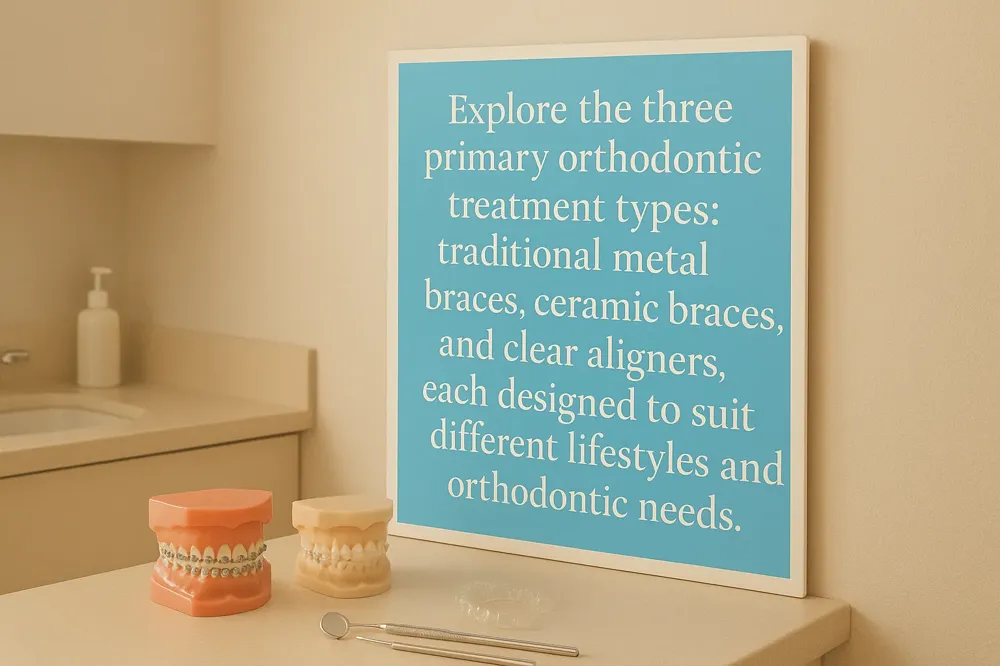
Orthodontic care commonly involves three primary treatment types: traditional metal braces, ceramic braces, and clear aligners such as Invisalign.
How does each treatment work?
Traditional metal braces attach metal brackets to the teeth, connected by wires that apply constant pressure to gradually move teeth into better positions. These braces are highly effective for a broad range of dental issues, including complex bite problems.
Ceramic braces operate similarly to metal braces but use tooth-colored or transparent brackets, providing a less noticeable alternative. They combine the strength and control of metal braces with improved aesthetics, ideal for patients concerned about visible hardware.
Clear aligners, including Invisalign, consist of a series of custom-made, nearly invisible plastic trays worn over the teeth. These trays are removable and gently shift the teeth with controlled pressure. Their removability facilitates easier oral hygiene and unrestricted eating, appealing especially to adults and teens.
Who is suitable for each option and what should be considered?
Traditional braces are often recommended for children and teens with moderate to severe orthodontic needs due to their durability and effectiveness in complex cases.
Ceramic braces suit patients seeking discreet treatment with complex dental issues, though they may require more diligent care to avoid staining.
Clear aligners are well-suited for mild to moderate misalignments in teens and adults who prioritize aesthetics and convenience but require consistent daily wear (typically 20–22 hours).
Orthodontic professionals consider factors such as the severity of dental misalignment, patient lifestyle, age, and treatment goals to recommend the most appropriate option. Personalized consultations and digital imaging assist in creating the best treatment plan for each individual's needs.
Clear Aligners for Teens: Features, Benefits, and Suitability
At what age is orthodontic treatment with clear aligners typically recommended?
Orthodontic treatment with clear aligners is generally recommended once the majority of baby teeth have been lost, typically between ages 11 to 13. Early orthodontic assessments may start around 7 to 10 years to identify potential needs, but clear aligners are most suitable for teenagers and adults with fully erupted permanent teeth. Clear aligners appeal to teens for their discreet and removable nature, providing a convenient alternative to traditional braces. Individual evaluation by an orthodontist is vital to ensure treatment appropriateness.
Can teenagers, such as a 14-year-old, effectively use Invisalign?
Yes, 14-year-olds and similar-age teens can effectively undergo Invisalign treatment, given they maintain the recommended wear time of about 22 hours daily. Invisalign offers removable, clear trays that enhance comfort and lifestyle flexibility—allowing easier eating, oral hygiene, and sports participation. It is effective for addressing common teen orthodontic concerns such as crowding, spacing, and bite corrections. Orthodontic consultation is crucial to confirm Invisalign suitability and whether traditional braces might be preferred for more complex cases.
What is the difference between Invisalign for teens and adults?
While both teen and adult Invisalign use the same clear aligner material and 3D digital customization, Invisalign Teen includes additional features to support adolescent patients. These include blue compliance indicators that fade with consistent wear to help track adherence, and eruption tabs designed to accommodate newly emerging adult teeth. Teen packages also offer more replacement aligners given the higher likelihood of loss or damage. Adults typically receive standard aligners without these features as they're expected to maintain higher compliance and have fully developed dentition. Both treatments provide effective and discreet tooth alignment options tailored to their unique patient needs.
In summary, Invisalign for teens is a convenient, aesthetic, and efficient orthodontic option that incorporates special features to accommodate growth and encourage compliance while delivering results comparable to traditional braces. Proper orthodontic assessment ensures the best treatment choices for each teen’s smile development.
Comparing Clear Aligners and Traditional Braces: Advantages, Limitations, and Treatment of Overbites
What are the advantages and disadvantages of clear aligners compared to traditional braces?
Clear aligners offer notable advantages over traditional braces, particularly in appearance and comfort. They are transparent and nearly invisible, making them appealing for patients desiring discreet orthodontic treatment. Made from smooth, BPA-free plastic, they reduce gum and cheek irritation often caused by metal brackets and wires.
Aligners are removable, allowing patients to eat without restrictions and maintain normal oral hygiene by brushing and flossing more effectively. This removability also supports better periodontal health during treatment, as clear aligners do not trap plaque like brackets can.
However, clear aligners require strict patient compliance, typically needing 20 to 22 hours of daily wear. Noncompliance can prolong treatment or reduce effectiveness. They may not be suitable for complex orthodontic cases requiring precise root torque or extensive tooth movement. Additionally, aligners can be lost or damaged, particularly by active teens, warranting allowances for replacements.
Traditional braces, while more visible and potentially less comfortable, provide superior control over tooth movements, including complex corrections. They do not depend on patient compliance for wear time, as they are fixed appliances. Braces are often preferred for severe malocclusions or skeletal issues.
How do clear aligners compare to traditional braces in treating overbites?
Both clear aligners and braces can effectively treat overbites, but their applicability varies by severity and cause. Clear aligners work best for mild to moderate overbites caused by dental positioning. They offer a comfortable, aesthetic option with often shorter treatment durations and fewer office visits.
Braces provide enhanced biomechanical control that can manage more severe overbites, especially those involving skeletal jaw discrepancies. They enable precise adjustments of tooth torque and occlusal contacts that aligners may find challenging to achieve. Complex cases may also require auxiliaries like elastics or expanders combined with braces for optimal results.
Successful overbite correction with clear aligners depends heavily on patient adherence to prescribed wear time and may involve attachments to improve force application.
Patient compliance and treatment outcomes
Treatment success with clear aligners hinges on consistent wear and diligent oral hygiene. Compliance indicators in some teen aligner systems help encourage wear time monitoring. In contrast, braces apply continuous force regardless of patient behavior but may come with greater discomfort and hygiene challenges.
Orthodontists generally recommend treatment modalities after evaluating individual dental conditions, lifestyle factors, and patient preferences to ensure effective outcomes. For patients in Shreveport, Louisiana, consulting with local providers at Loud Family Dental can guide choice based on personalized assessment.
These considerations empower patients to make informed decisions balancing aesthetics, comfort, treatment complexity, and lifestyle compatibility.
Emerging Trends and Technology in Orthodontics: A Look Ahead to 2025
What are some of the latest trends and technological advancements in orthodontics expected by 2025?
Orthodontics is rapidly evolving with exciting innovations set to transform patient care by 2025. Treatments are becoming smaller, sleeker, and more discreet across all appliance types, including metal, ceramic, lingual braces, and Clear Aligners like Invisalign. These advancements promote enhanced aesthetics without sacrificing treatment effectiveness.
Digital orthodontic tools, such as 3D scanning in orthodontics and virtual treatment planning, are now standard and will continue to improve. Teleorthodontics and Virtual Consultations offers remote monitoring and virtual consultations, increasing convenience and accessibility for patients. These technologies allow orthodontists to provide personalized care plans with greater precision and efficiency.
AI integration in orthodontic treatment is accelerating treatment customization and outcome prediction. AI enables better analysis of tooth movement, more accurate aligner design, and real-time monitoring of progress. With these tools, orthodontists can adapt plans promptly, reducing treatment time and improving results.
Material science advancements for aligners focus on developing aligner plastics and bracket materials that are more durable, flexible, and comfortable. These enhancements minimize irritation and mouth sores while maintaining effective tooth movement.
Overall, the convergence of advanced materials, digital technologies, and AI promises orthodontic care that is more patient-friendly, precise, and efficient, resulting in better experiences and outcomes for patients seeking straighter smiles.
Choosing the Right Orthodontic Treatment for You
Benefits of Clear Aligners
Clear aligners like Invisalign offer a nearly invisible, comfortable, and convenient option for straightening teeth. They are removable, which allows for easier oral hygiene and no food restrictions. Patients often experience fewer office visits and less discomfort compared to traditional braces. Their custom fit and smooth BPA-free plastic design minimize irritation.
Importance of Professional Consultation
Selecting the best orthodontic treatment depends on individual dental needs, lifestyle, and preferences. A qualified orthodontist can evaluate the severity of your dental issues and recommend suitable options, ensuring effective and safe treatment.
Personalized Plans at Loud Family Dental
At Loud Family Dental in Shreveport, Louisiana, patients receive customized treatment plans tailored to their goals, whether choosing clear aligners or other orthodontic methods. Advanced digital scanning and expert guidance help craft an approach that fits your unique smile and lifestyle.