Why Prompt Home Care Matters
Dental trauma can quickly turn a minor inconvenience into a serious problem, so acting within minutes is essential. Immediate steps—rinsing with warm water, applying a cold compress, and keeping a knocked‑out tooth moist—reduce inflammation, limit bacterial exposure, and preserve the periodontal‑ligament cells needed for successful re‑implantation. To be ready, keep a small emergency kit at home that includes a clean gauze pad, a small container for milk or saline, a soft toothbrush or floss, over‑the‑counter pain relievers (ibuprofen or acetaminophen), a teaspoon of salt for rinses, and dental wax or sugar‑free gum for covering jagged edges. Seek professional care right away if you experience uncontrolled bleeding, severe or worsening pain, swelling that does not improve, fever, a foul taste, or if a tooth has been out of its socket for more than 30‑60 minutes. These signs indicate infection or structural damage that only a dentist can properly address.
Handling a Knocked‑Out Tooth (Avulsion)
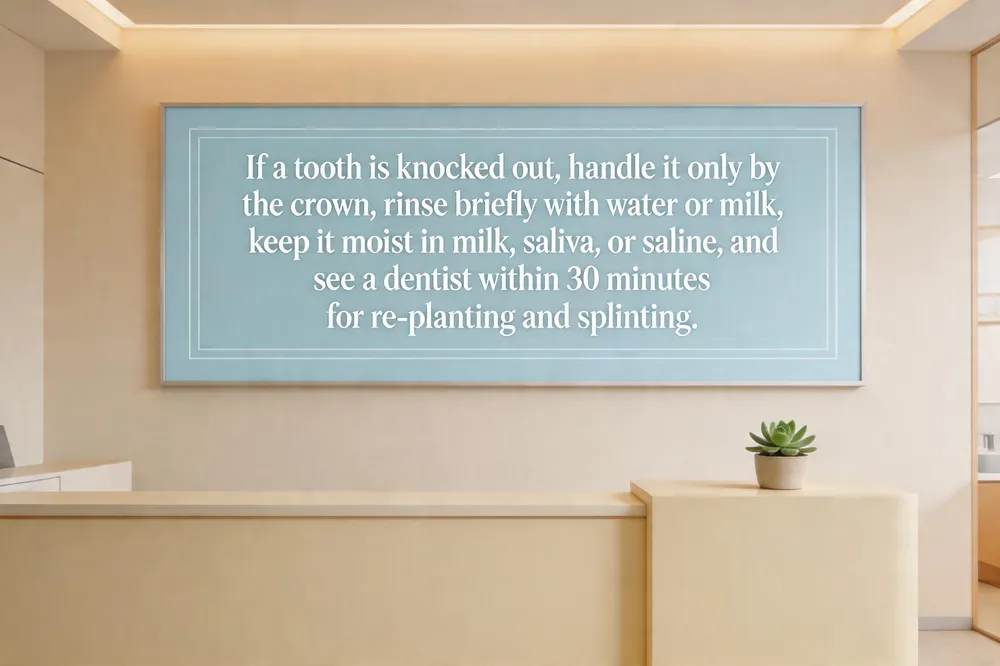 A dental avulsion is the complete displacement of a permanent tooth from its socket, tearing the periodontal ligament. Immediate action is crucial: If a tooth is knocked out, handle it by the crown only, rinse briefly with water or milk, and either re‑insert it gently into the socket (bite on gauze to hold it) or store it moist in milk, saliva, or saline. Milk is ideal because its balanced pH, proteins, calcium and mild antibacterial properties keep ligament cells viable, buying time for professional care. A dentist will clean the tooth and socket, re‑plant the tooth, and splint it to adjacent teeth for several days while the ligament re‑attaches (typically 3‑4 weeks). Seek a dentist within 30 minutes; if unavailable, an urgent‑care clinic can help, but the ER is reserved for severe facial trauma, uncontrolled bleeding, or airway risk. Do not use household glue—only dentist‑approved temporary cement is acceptable. If a fragment falls out, keep it moist in milk or saliva, protect sharp edges with wax or gauze, and contact an emergency dental office (e.g., Loud Family Dental in Shreveport) promptly for definitive treatment.
Managing a Chipped or Broken Tooth
 Rinse the injured area with warm salt water (warm salt water) to clean debris and reduce inflammation. Apply a cold compress to the cheek for 10‑15 minutes at a time; this eases swelling and numbs pain. If a sharp edge remains, protect it temporarily with dental wax or a piece of sugar‑free chewing gum until the dentist can see you. For a quick, short‑term fix, a clean fingernail file or emery board can be used to smooth jagged edges—hold the file flat, make light strokes, and stop as soon as the surface feels even. Dental wax is a soft, pliable material that can be molded over the smoothed area to shield the tongue and cheek.
How can I fix a cracked front tooth? A cracked front tooth is usually restored with dental bonding; larger fractures may need a veneer or crown, and if the pulp is involved a root‑canal treatment precedes the final restoration. Schedule a cosmetic‑dentist appointment promptly.
Home remedy for a broken tooth with an exposed nerve? Rinse gently with warm salt water, use a cold compress, and apply clove‑oil or ibuprofen for temporary relief. Seek urgent dental care; the tooth needs professional treatment.
How to file down a sharp tooth at home safely? Use a fine‑grit fingernail file or emery board, filing lightly until the edge is smooth, then cover with dental wax. This is only a temporary measure—see a dentist soon.
What is dental wax and when is it used? Dental wax is a soft, non‑toxic material that can be rolled into a ball and pressed onto sharp tooth fragments, braces, or orthodontic wires to protect soft tissue. Replace it every day or two.
A piece of my tooth fell out – what should I do? Rinse, locate the fragment, keep it moist in milk or saliva, and avoid chewing on that side. Contact Loud Family Dental immediately for emergency evaluation and definitive repair.
Dealing with Decayed or Lost Teeth
 When a permanent tooth falls out because of severe decay, stay calm. Apply gentle pressure with clean gauze or a damp tea bag to the socket for 10‑15 minutes to stop bleeding; if bleeding continues, call an emergency dentist. Rinse the mouth with warm salt water to keep the area clean, avoiding alcohol‑based rinses. If the tooth is still present, handle it only by the crown and keep it moist in milk, saline, or your saliva—though a decayed tooth is rarely re‑plantable, preserving it helps the dentist assess the socket. Schedule a dental visit promptly for a definitive plan (implant, bridge or partial denture) and to monitor for infection.
For a 4‑year‑old who loses a baby tooth, let it fall out naturally. Rinse gently with warm water or a mild salt‑water solution, and reassure the child that some bleeding is normal. Keep the area clean, avoid vigorous brushing, and contact a pediatric dentist to check for spacing issues or the need for a space maintainer. If a tooth is knocked out by injury, handle it by the crown, rinse briefly, and store it in milk before seeing a pediatric emergency dentist within 30 minutes.
A dentist can re‑implant a knocked‑out permanent tooth if it arrives promptly, or otherwise replace the missing tooth with an implant, bridge, or removable denture, while also treating any underlying gum disease or decay.
Pain Management and Home Remedies
 When a broken tooth exposes the nerve, avoid DIY fixes; instead, rinse gently with warm salt‑water (½ tsp salt per cup of warm water) several times daily to cleanse the area and reduce inflammation. Apply a cold compress to the cheek for 10‑minute intervals to numb pain and limit swelling. For short‑term relief, place a few drops of clove oil on a cotton ball against the exposed surface, and take an OTC analgesic such as ibuprofen as directed.
The 3‑3‑3 rule is a simple oral‑health mantra: brush three times a day, brush each session for about three minutes, and see your dentist every three months. This disciplined timing helps keep plaque at bay and catches problems early.
Finding affordable or free dental care in Shreveport? Start with the Health Insurance Marketplace for coverage, explore sliding‑scale clinics like David Raines Community Health Centers, or apply to the Dental Lifeline program for low‑income patients. Local nonprofits such as Give Kids A Smile® and community health centers also offer reduced‑cost or free services.
If a dental emergency strikes and you have no dentist, stay calm. Control pain with a cold compress, rinse with warm salt‑water, and use over‑the‑counter dental cement to seal a lost filling temporarily. Call a local emergency‑dental hotline or urgent‑care center for same‑day treatment; for severe bleeding, infection, or airway threat, go directly to the nearest emergency department. Keep a list of nearby emergency dentists for future reference and schedule a follow‑up with your regular dentist as soon as possible.
When to Seek Professional Care and Local Resources
 Choosing a dentist in Shreveport means looking for a practice that offers both routine care and rapid emergency response. Loud Family Dental, Shreveport Dental Solutions, Southern Roots Dentistry, and Dr. Chris Mott’s office all provide after‑hours scheduling and same‑day appointments for urgent issues. While none of these offices stay open 24 hours, they each have an on‑call line or can direct you to a nearby urgent‑care clinic when their regular hours end.
If you experience a knocked‑out tooth, severe bleeding, or facial swelling, call your dentist immediately. Most dental offices can re‑implant an avulsed tooth if you arrive within 30 minutes; the emergency room is reserved for life‑threatening conditions such as uncontrolled airway‑compromising bleeding or major facial fractures. For non‑life‑threatening trauma, a dental clinic or urgent‑care center is the appropriate venue.
In a true emergency—persistent severe pain, uncontrolled bleeding, or signs of infection—go to the nearest emergency department. Keep the tooth moist in milk or saliva, avoid touching the root, and seek professional care as soon as possible.
Key Takeaways and Next Steps
When a dental emergency occurs, act fast to protect the tooth and ease pain. Rinse the mouth with warm salt water, apply a cold compress to the cheek for 10‑15 minutes, and take an OTC NSAID such as ibuprofen. If a tooth is knocked out, pick it up by the crown, rinse gently with milk or saline, and either re‑insert it into the socket or keep it moist in cold milk or the patient’s saliva. For a chipped or broken tooth, smooth sharp edges with dental wax or a piece of sugar‑free gum and avoid chewing on that side. These steps buy time, but they are not a substitute for professional care. A dentist should see a knocked‑out tooth within 30‑60 minutes, and any chipped, loose, or painful tooth within the same day or 24 hours to prevent infection and ensure proper restoration. Loud Family Dental in Shreveport is prepared to provide same‑day emergency appointments, emergency dentalimplant‑out and, and definitive treatment for all dental traumas. Call 602‑942‑4260 for immediate assistance.