Introduction
Implant maintenance is the cornerstone of long‑term oral health. By keeping the implant site clean and monitoring the surrounding tissue, patients dramatically reduce the risk of peri‑implantitis—a leading cause of early failure. Studies consistently show that well‑maintained implants achieve success rates above 95 % for ten years and remain functional for 20‑30 years or more. Regular brushing with a soft‑bristled brush, daily flossing or interdental cleaning, and the use of an alcohol‑free antimicrobial mouth rinse control bacterial plaque that can erode bone support. Coupled with routine professional cleanings, radiographic checks, and lifestyle choices such as quitting smoking, these habits preserve bone integration and keep the prosthesis stable for a lifetime. Consistent follow‑up appointments every six months further ensure any early signs of inflammation are caught promptly.
Essential Daily Oral Hygiene for Implants
Daily Oral‑Hygiene Checklist for Implants
| Step | Recommended Action | Frequency / Notes |
|---|---|---|
| Brushing | Soft‑bristled (electric or manual) toothbrush, gentle circular motions, non‑abrasive fluoride toothpaste | 2 × daily, ≥ 2 min each session |
| Flossing / Interdental cleaning | Implant‑safe floss or interdental brushes (0.4‑1.5 mm) | Daily, under prosthesis |
| Antimicrobial rinse | Alcohol‑free antibacterial mouthwash (e.g., chlorhexidine or essential‑oil) | 1‑2 × daily |
| Specialized tools (optional) | Titanium RotoBrush, plastic scalers (professional) | Quarterly professional debridement |
| Professional cleaning | Full‑mouth prophylaxis, ultrasonic scaler (implant‑safe) | 2 × yearly |
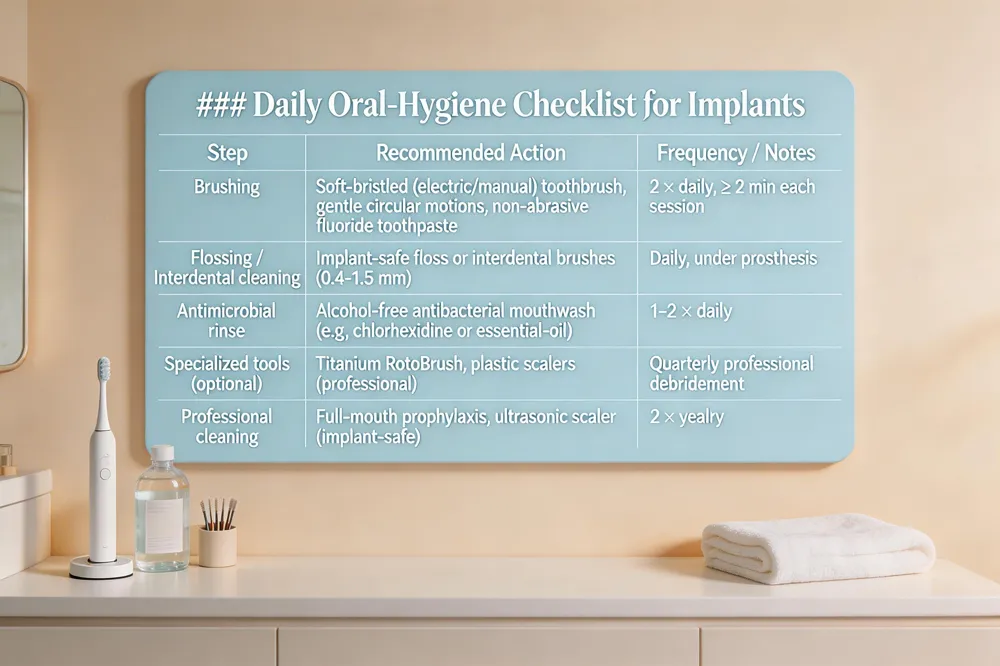 Maintaining dental implants starts with a consistent at‑home routine. Brushing technique and frequency – Brush twice daily with a soft‑bristled (electric or manual) toothbrush, using gentle circular motions for at least two minutes along the crown and gumline; a non‑abrasive fluoride toothpaste protects the implant surface. Flossing and interdental cleaning – Daily floss or implant‑safe interdental brushes (0.4‑1.5 mm) and a low‑pressure water flosser remove plaque from hard‑to‑reach areas beneath the prosthesis. Antimicrobial mouth rinses – An alcohol‑free antibacterial rinse (e.g., chlorhexidine or essential‑oil formula) used once or twice daily reduces bacterial load and helps prevent peri‑implantitis. Specialized cleaning tools – In addition to a soft brush, use implant‑specific floss, interdental brushes, and a water‑flosser; dentists may employ titanium RotoBrush thread cleaners or plastic scalers for professional debridement.
Do tooth implants need cleaning every day? Yes. Daily brushing, flossing or interdental cleaning, and an antimicrobial rinse keep plaque at bay; professional cleanings twice a year complete the regimen.
How to clean dental implants at home? Rinse, brush with a soft brush and non‑abrasive toothpaste, floss or water‑floss, and finish with an antimicrobial mouthwash.
Dental implant cleaning tools? Soft‑bristle electric brush, implant‑safe floss, interdental brushes, water flosser, and, for dentists, titanium RotoBrush or plastic implant scalers.
Post‑Surgery Home Care and the 3‑3‑3 Rule
Post‑Surgery Home Care & 3‑3‑3 Rule
| Day / Period | Care Action | Details |
|---|---|---|
| 0‑1 hr | Gauze pressure | Firm pressure 30‑60 min; replace as needed |
| 0‑24 hr | No rinsing/spitting | Keep head elevated, avoid suction |
| Day 2‑7 | Gentle brushing | Soft‑bristled brush away from implant, 2‑3 × daily warm salt‑water rinse (½ tsp/cup) |
| First 48 hr | Ice packs | 15 min on/15 min off |
| First 48‑72 hr | Skip dairy | Reduce bacterial film |
| Ongoing | 3‑3‑3 Rule | Brush 3 × day, 3 min each, replace toothbrush head every 3 months |
| Diet (first 4 weeks) | Soft foods, avoid hot liquids, straws, crunchy/sticky foods | Prevent trauma |
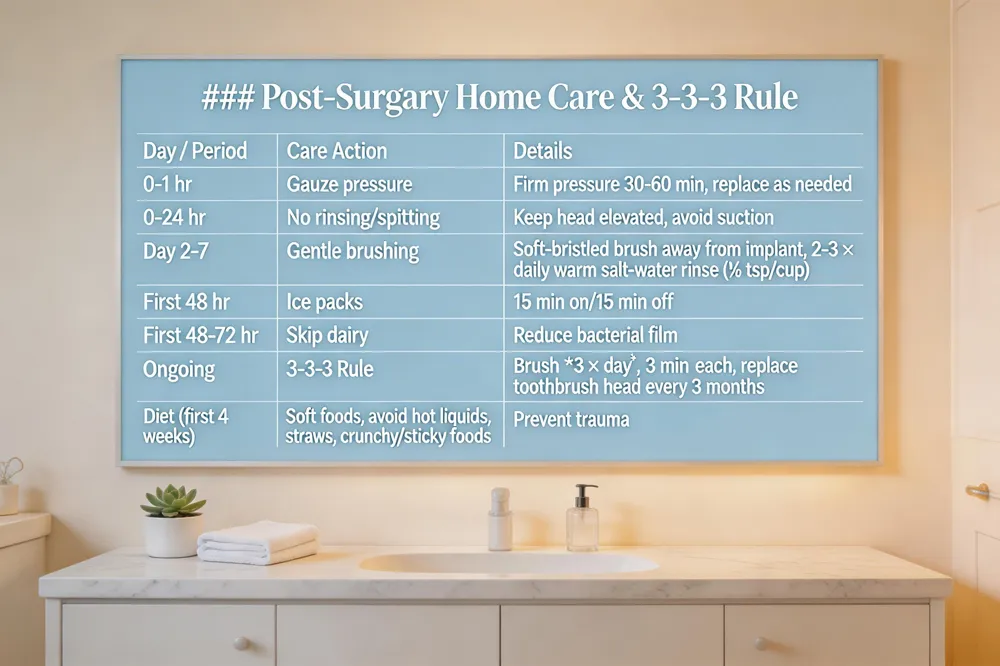 Immediate post‑operative instructions – Keep gauze on the site with firm pressure for 30‑60 minutes, swapping as needed; if bleeding continues, a damp tea bag can help. Keep your head elevated, avoid spitting, sucking, or rinsing for the first 24 hours. Begin gentle brushing on day 2, using a soft‑bristle brush away from the implant, and rinse with warm salt water (½ tsp salt per cup) 2‑3 times daily. Ice packs for the first 48 hours, then moist heat, plus prescribed pain meds and antibiotics with food. The 3‑3‑3 rule – Brush three times a day, for three minutes each session, and replace your toothbrush (or head) every three months. This simple mnemonic boosts plaque removal and gum health beyond the basic twice‑daily routine. Dietary considerations – Follow a soft‑food diet for the first few days (smoothies, yogurt, applesauce) and avoid hot liquids, straws, crunchy or sticky foods for at least four weeks. Skip dairy for the first 48‑72 hours to reduce bacterial film and inflammation, and stay well‑hydrated. If bleeding, pain, swelling, or any unusual symptoms worsen, contact your dental office promptly.
Lifestyle Factors That Influence Implant Longevity
Lifestyle Factors & Their Impact on Implant Longevity
| Factor | Impact on Implants | Recommended Action |
|---|---|---|
| Smoking | ↓ blood flow, triples peri‑implantitis risk | Quit or never start |
| Alcohol (excess) | Dry oral tissues, impairs healing | Limit intake |
| Nutrition | Calcium, D, protein, C support bone health | Balanced diet rich in these nutrients |
| Bruxism | Excessive load → component fracture | Night guard (custom) |
| Hard / Sticky foods | Mechanical overload, crown fracture | Avoid ice, hard candy, pens, sticky items |
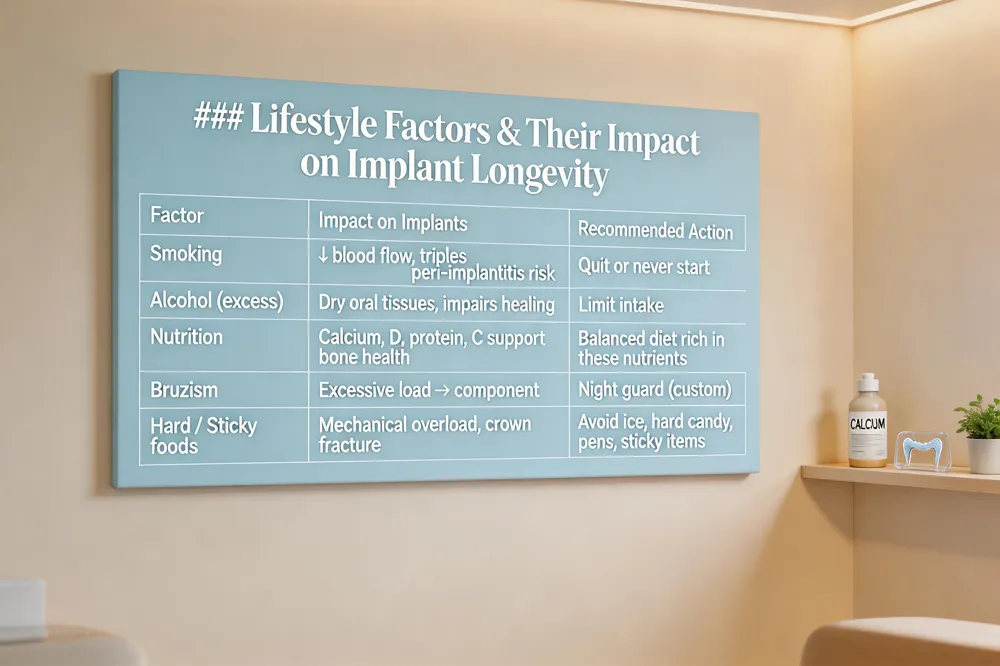 Good daily habits are the cornerstone of long‑lasting dental implants.
Smoking and alcohol – Tobacco narrows gum blood flow, delays healing and triples the risk of peri‑implantitis; quitting (or never starting) and limiting alcohol, which dries oral tissues, dramatically improve implant survival.
Nutrition and bone health – A diet rich in calcium, vitamin D, protein and vitamin C supports the jawbone that anchors the titanium post. Adequate nutrients help maintain osseointegration and reduce bone loss over time.
Managing bruxism and hard foods – Grinding exerts excessive force on the abutment and crown; a custom night guard protects the restoration. Avoid chewing ice, pens, hard candies, or sticky foods that can fracture the crown or overload the implant.
How can I make my dental implants last longer? Choose a skilled dentist, brush twice daily with a soft brush, floss or use a water flosser, rinse with an alcohol‑free antimicrobial mouthwash, attend professional cleanings at least twice a year, quit smoking, protect against grinding, and eat a balanced, bone‑supportive diet.
Do dental implants require a lot of maintenance? They need consistent daily care—brushing, flossing, and occasional mouthwash—plus regular professional check‑ups every six months; no extraordinary effort, but routine vigilance is essential.
Can a dental implant last 30 years? Yes, with proper hygiene, regular dental visits, avoidance of smoking, and a healthy lifestyle, many implants endure three decades or more, while the prosthetic crown may need periodic replacement.
Professional Care, Costs, and Decontamination
Professional Care, Typical Costs & Decontamination Protocol
| Service | Frequency | Approx. Cost (USD) | Notes |
|---|---|---|---|
| Routine check‑up & cleaning | 2 × yearly | $150‑$300 per visit | Includes clinical exam, X‑ray |
| Component replacement (abutment/screw) | As needed | $200‑$500 per appointment | Depends on part |
| Prosthetic crown replacement | 10‑15 yr | $1,000‑$2,000 | May require new crown |
| Peri‑implantitis (mild) | As needed | $200‑$500 | Non‑surgical therapy |
| Peri‑implantitis (surgical) | As needed | $1,000‑$3,000 | Surgical intervention |
| Bone grafting | As needed | $600‑$2,500 | For deficient bone |
| Decontamination (professional) | At each cleaning | Included in visit | Mechanical (ultrasonic scaler, titanium curettes) + chemical rinse (0.2 % chlorhexidine or 0.5 % povidone‑iodine) |
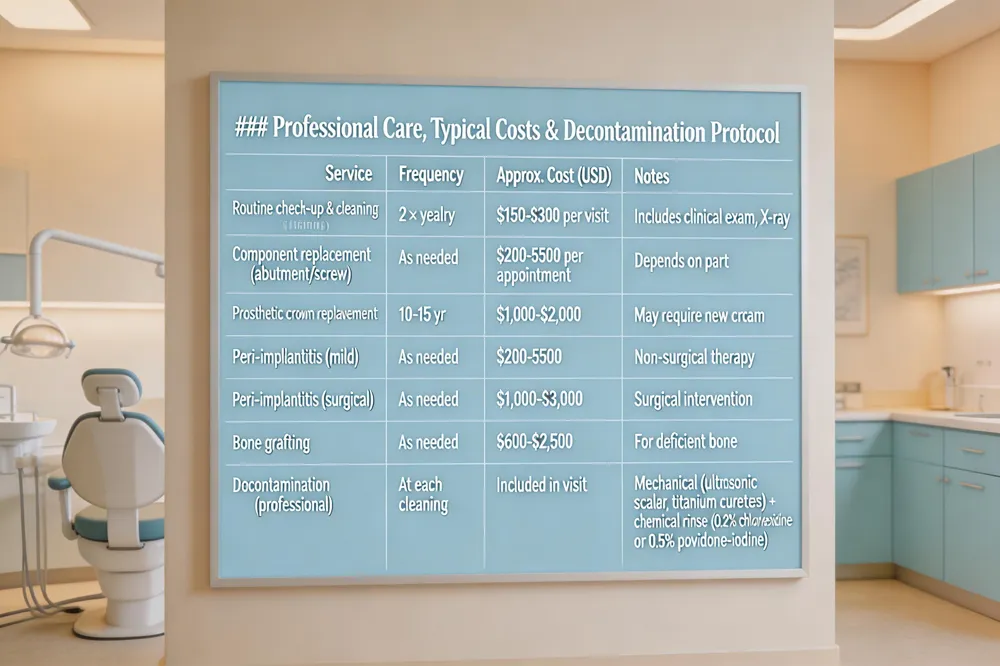 Routine check‑ups and radiographs are the backbone of a healthy implant program. Most dentists recommend a professional cleaning and a clinical exam at least twice a year, with periapical or panoramic X‑rays to monitor bone levels and detect early peri‑implant disease.
Dental implant maintenance cost varies, but a typical visit (cleaning, exam, X‑ray) runs $150‑$300; twice‑yearly visits total $300‑$600 annually. If a component such as an abutment or screw requires replacement, fees rise to $200‑$500 per appointment. The prosthetic crown usually lasts 10‑15 years and may need replacement for $1,000‑$2,000. Peri‑implantitis treatment ranges from $200‑$500 for mild cases to $1,000‑$3,000 for surgical intervention; bone grafting when needed, costs $600‑$2,500. Preventive visits are often covered by dental insurance, while prosthetic and surgical fees are typically out‑of‑pocket.
Implant decontamination starts with gentle mechanical disruption of biofilm using implant‑safe ultrasonic scalers, titanium curettes, or low‑pressure air‑abrasion. This is followed by a chemical rinse—0.2 % chlorhexidine, 0.5 % povidone‑iodine, or citric‑acid solution—to kill residual bacteria. Adjunct laser therapies (Er:YAG, diode, photodynamic) or ozone can further disinfect without altering the implant surface.
For full‑mouth implants, brush twice daily with a soft‑bristled or electric brush and a non‑abrasive toothpaste, use interdental brushes, or a water flosser to clean under the prosthesis, and rinse with an alcohol‑free antimicrobial mouthwash. Schedule professional cleanings every six months, avoid smoking and hard foods, and contact your dentist promptly if you notice swelling, pain, or persistent bad breath.
All‑on‑X and Fixed‑Arch Implant Maintenance
All‑on‑X / Fixed‑Arch Maintenance Checklist
| Maintenance Step | Frequency | Key Tips |
|---|---|---|
| Brushing (soft‑bristled) | 2 × daily | Gentle circular motions along gumline & under prosthesis |
| Interdental cleaning (brushes, unwaxed floss tape, water‑flosser) | Daily | Clean around each implant post |
| Antimicrobial mouthwash | 1‑2 × daily | Alcohol‑free, to reduce bacterial load |
| Professional recall (first year) | Every 3‑4 months | Cleaning, soft‑tissue probing, radiographs |
| Professional recall (after year 1) | Every 4‑6 months | Same as above, monitor bone levels |
| Night guard (if bruxism) | Ongoing | Custom‑made, wear nightly |
| Dietary caution | Ongoing | Avoid ice, hard candy, nuts, sticky foods |
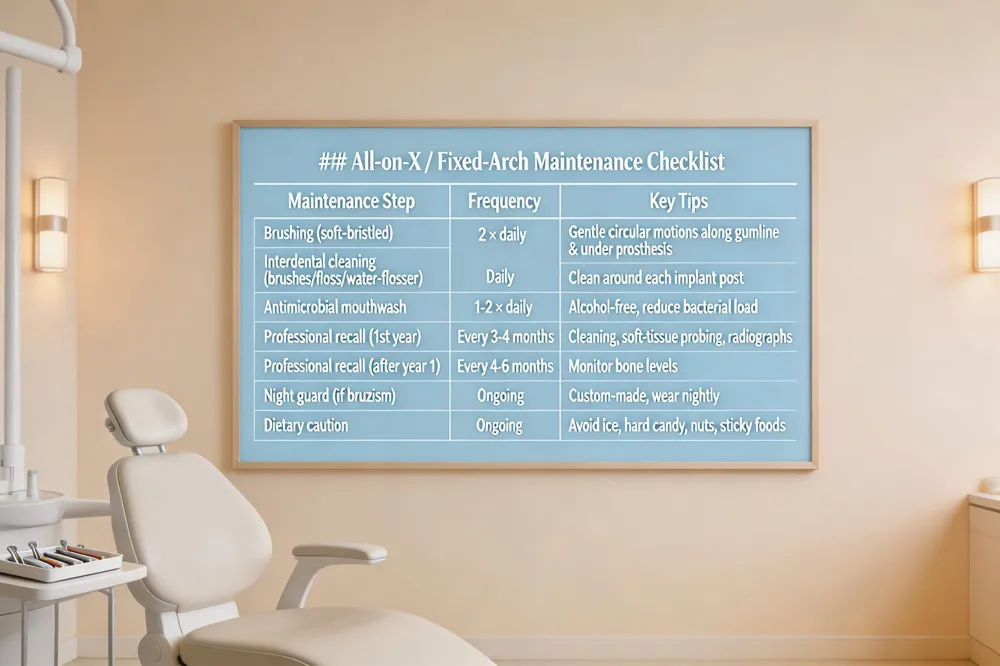 Specific oral‑hygiene steps for full‑arch prostheses
Brush twice daily with a soft‑bristled brush and non‑abrasive fluoride toothpaste, using gentle circular motions along the gumline and under the prosthetic arch. Clean between implant posts with interdental brushes, unwaxed floss tape, or a low‑pressure water flosser. Finish with an alcohol‑free antimicrobial mouthwash to lower bacterial load.
Recall schedule for All‑on‑X patients
During the first year, schedule professional maintenance every 3‑4 months; thereafter, a 4‑6‑month recall (cleaning, soft‑tissue probing, radiographs) is ideal for monitoring bone levels and prosthetic wear.
Protecting the prosthetic from hard foods and bruxism
Avoid ice, hard candy, nuts, and other crunchy items that can crack the crown or stress the abutments. If you grind your teeth, wear a custom nightguard to distribute forces evenly and protect the restoration.
All‑on‑X maintenance
For All‑on‑X (full‑arch) implants, brush twice daily with a soft‑bristled brush and non‑abrasive fluoride toothpaste, taking care to clean around the implant posts and under the prosthetic arch. Use interdental brushes, unwaxed floss tape, or a low‑pressure water flosser to remove plaque between the implants, and rinse with an alcohol‑free antimicrobial mouthwash to reduce bacterial load. Schedule professional maintenance every 3–4 months during the first year after placement, then every 4–6 months for regular cleanings, probing of soft‑tissue health, and radiographic checks. Avoid smoking, excessive alcohol, and hard foods that could stress the prosthesis, and follow any specific post‑operative instructions from your dentist. With diligent home care and regular professional recall visits, the titanium implants can last a lifetime while the prosthetic teeth typically require evaluation or replacement after 10–15 years.
What I wish I knew before dental implants?
I wish I had known that getting a dental implant is a multi‑step process that can take several months, because bone healing and integration don’t happen overnight. The procedure itself is usually painless with local anaesthesia, and the post‑operative discomfort is mild and short‑lived—much less than many expect. Good oral health, a strong jawbone, and habits like smoking or uncontrolled diabetes dramatically affect success, so a thorough pre‑screening and possibly bone grafting are often required. After the implant is placed, daily care is just like caring for natural teeth—regular brushing, flossing, and dental check‑ups are essential to prevent gum disease and ensure longevity. Finally, choosing an experienced dentist who explains each step and sets realistic expectations makes the whole journey far less stressful and far more rewarding.
Conclusion
Your implant’s long‑term health depends on simple, consistent habits you can practice every day. Brush twice daily with a soft‑bristled toothbrush and a non‑abrasive fluoride toothpaste, using gentle circular motions along the gumline. Floss or use an interdental brush or water flosser each night to remove debris from hard‑to‑reach areas. Rinse once or twice with an alcohol‑free antimicrobial mouthwash to lower bacterial load. Avoid hard, sticky or very sugary foods, quit smoking, and limit alcohol to protect gum blood flow. Finally, schedule professional cleanings and radiographic check‑ups at least twice a year at Loud Family Dental, where the team will monitor bone levels, address any early signs of inflammation, and keep your smile thriving for years to come together always.