Why Your Toothbrush Isn't Enough
The 40% You're Missing: Why Interdental Cleaning Matters
You diligently brush twice a day, yet your toothbrush can only reach about 60% of your tooth surfaces. The remaining 40%—the hidden areas between teeth where plaque and food debris accumulate—are left untouched. This plaque is a sticky, bacteria-laden film that, if not removed, hardens into tartar and can lead to gum inflammation, cavities, and persistent bad breath.
Cleaning these interdental spaces is not just an optional extra; it is an essential part of maintaining a healthy mouth. The spaces between teeth account for roughly 30% of all tooth surfaces, and they are the perfect hiding place for cavity-causing bacteria. Neglecting them puts even the best brushing routine at a serious disadvantage.
Enter the Interdental Brush: A Designed Solution
Interdental brushes are small, specifically designed tools that clean where a regular toothbrush cannot. They typically feature a soft, flexible core (often coated wire) and soft nylon filaments. Available in a wide range of sizes and shapes—from straight to angled designs—they are made to fit snugly between teeth without causing damage to delicate gums or root surfaces.
Unlike dental floss, which can sometimes glide over plaque or snap into the gums, interdental brushes physically scrub plaque off the tooth surfaces. Their bristles are soft enough to be gentle on sensitive gum tissue but effective at disrupting the biofilm structure that forms between teeth. For many patients, especially those with larger gaps, braces, or dental appliances, they are far easier to use and more comfortable than traditional floss.
Research supports their effectiveness. Studies published in the European Journal of Oral Sciences and other reputable journals show interdental brushes are the most effective tool for cleaning interdental spaces, outperforming dental floss in plaque removal and in reducing gingivitis.
Consistency is Key: Preventing Gum Disease, Cavities, and Bad Breath
To truly benefit from interdental brushes, consistency is vital. Here is how daily use directly impacts your oral health:
- Prevents Gum Inflammation: Plaque between teeth irritates the gums, causing gingivitis. Daily interdental cleaning disrupts this plaque at the gumline, reducing redness, swelling, and bleeding. Healthy gums are the foundation of a healthy smile.
- Reduces Cavities: The bacteria in interdental plaque produce acids that erode tooth enamel, causing cavities between teeth. Removing this plaque daily significantly lowers your risk.
- Fights Bad Breath: The bacteria that cause bad breath thrive in the warm, hidden spaces between teeth. Removing food particles and plaque with an interdental brush freshens your breath naturally.
Your dental professional can help you select the correct brush size for each space in your mouth—often you may need two or three different sizes. The goal is a brush that fits snugly with the plastic-coated wire not touching the teeth, and with soft bristles engaging the tooth surface. Do not force the brush; if it resists, choose a smaller size. Once a day, ideally in the evening before bed, gently move the brush back and forth a few times in each space. Rinse the brush after cleaning each gap to avoid transferring bacteria. With regular use, any initial bleeding should subside within three to seven days as your gums become healthier.
Using an interdental brush daily, alongside your regular brushing, is a simple, highly effective way to protect your smile and support comprehensive family oral care.
| Benefit | How Interdental Brushes Help | Why It Matters for Your Health |
|---|---|---|
| Gum Disease Prevention | Removes plaque at the gumline, reducing inflammation and bleeding. | Prevents gingivitis from progressing to periodontitis, a leading cause of tooth loss. |
| Cavity Reduction | Cleans hidden tooth surfaces where a toothbrush cannot reach. | Significantly lowers the risk of cavities forming between teeth. |
| Bad Breath Control | Removes food debris and bacteria responsible for malodour. | Promotes fresher breath and a healthier mouth environment. |
| Comfort and Ease | More comfortable and easier to use than floss, especially for those with braces, implants, or limited dexterity. | Encourages consistent daily use, leading to better oral health outcomes. |
What Are Interdental Brushes and How Do They Work?
What Are Interdental Brushes and How Do They Work?
Interdental brushes are small, bristled tools specifically designed to clean the tight spaces between your teeth—the areas a regular toothbrush cannot reach. While a standard toothbrush only cleans about 60% of your tooth surfaces, the remaining 40% (the sides of your teeth) are prime spots for plaque to hide, leading to cavities and gum disease. These brushes are made to slide into those gaps, removing plaque and food debris from below the contact point where two teeth meet.
A Closer Look at Interdental Brush Construction
An interdental brush typically consists of a central core—either a thin metal wire or a flexible elastomer—surrounded by soft nylon filaments or rubber bristles. This design allows the brush to be both sturdy enough to clean effectively and gentle enough to avoid damaging your gums. They come in various shapes: straight brushes for front teeth, bendable or angled brushes for back molars, and even conical or tree-shaped designs for different gap sizes.
Choosing a brush with soft bristles is essential. The bristles contact the delicate root structure of your teeth, which is softer than the enamel on the crown. Hard or stiff bristles can wear down the root surface and irritate gums. The ideal brush should have bristles that are soft enough to be comfortable but firm enough to remove plaque. The plastic-coated wire found on many brushes ensures that the metal core doesn't scratch your tooth surfaces or gum tissue.
How They Work: Physically Disrupting Plaque Biofilm
The key to interdental brushes' effectiveness is their ability to physically disrupt the sticky bacterial film called plaque. Think of plaque as a tough, organized biofilm that adheres firmly to teeth. Mouthwash alone cannot break this film, as it simply glides over the surface. An interdental brush, when gently inserted and moved back and forth a few times, physically scrapes and breaks apart the plaque structure. This mechanical action is the most reliable way to remove the bacteria that cause cavities, gum inflammation (gingivitis), and bad breath.
Here’s a simple way to understand it:
- A toothbrush cleans the front, back, and top of your teeth.
- Interdental brushes clean the two hidden sides between your teeth.
- Floss slides along the gap, but interdental brush bristles actively scrub the tooth's surface.
Matching the Brush to Your Mouth: Size Matters
Because every mouth is unique, you may need more than one size of interdental brush. Gaps between front teeth are often narrower, while spaces between back molars tend to be wider. A brush that is too small won't clean effectively; one that is too large will be uncomfortable and may force your gum tissue apart. A good rule of thumb is to choose a brush that fits snugly but slides in easily—the bristles should engage the tooth surface, but the wire should not rub against the sides of your teeth.
Your dentist or dental hygienist can professionally measure your interdental spaces and recommend the right sizes for each area. They can also demonstrate the correct technique: insert the brush gently at a 90-degree angle, move it back and forth a few times, and then rinse. If you don't have access to a professional, a mixed-pack of brushes (like those from TePe) can help you experiment to find what works best.
When to Use Interdental Brushes
Most dental professionals recommend using interdental brushes once a day, ideally in the evening before brushing. This timing ensures you remove the day's buildup before sleep, when saliva production decreases and bacteria can multiply more easily. For beginners, it's best to use a mirror and start with the larger gaps. If you experience slight bleeding the first few times, don't worry—this is normal and a sign that your gums are inflamed from plaque. With consistent daily use, the bleeding should stop within a week as your gums become healthier.
Key points to remember:
- Interdental brushes are for physically removing plaque, not just dislodging food.
- Soft bristles are crucial to protect root surfaces.
- A dental professional is your best guide for correct sizing and technique.
- Using the wrong size can be ineffective or uncomfortable, so don't hesitate to ask for help. If you find the process challenging, consider a curved rubber-bristle pick (like GUM Soft-Picks) which are often more comfortable for beginners and people with sensitive gums.
| Feature | Purpose | Why It Matters |
|---|---|---|
| Soft bristles | Clean delicate root surfaces | Prevents abrasion and gum irritation |
| Plastic-coated wire | Protects tooth enamel and gums | Avoids scratching implants or healthy teeth |
| Varied sizes | Fit different gap widths | Ensures effective cleaning without force |
| Angled or bendable neck | Reach back molars | Improves access to hardest-to-clean areas |
| Physical scraping action | Disrupts biofilm | Removes plaque that mouthwash cannot |
Choosing the Right Size: A Snug Fit Without Force
How do I choose the correct size of interdental brush?
Selecting the correct size is the most important step for safe and effective cleaning. A brush that is too small will not remove plaque, while one that is too large can injure delicate gum tissue. The goal is a snug fit where the bristles gently contact all sides of the tooth, but the plastic-coated wire never rubs against teeth or gums.
What is the smallest interdental brush size available?
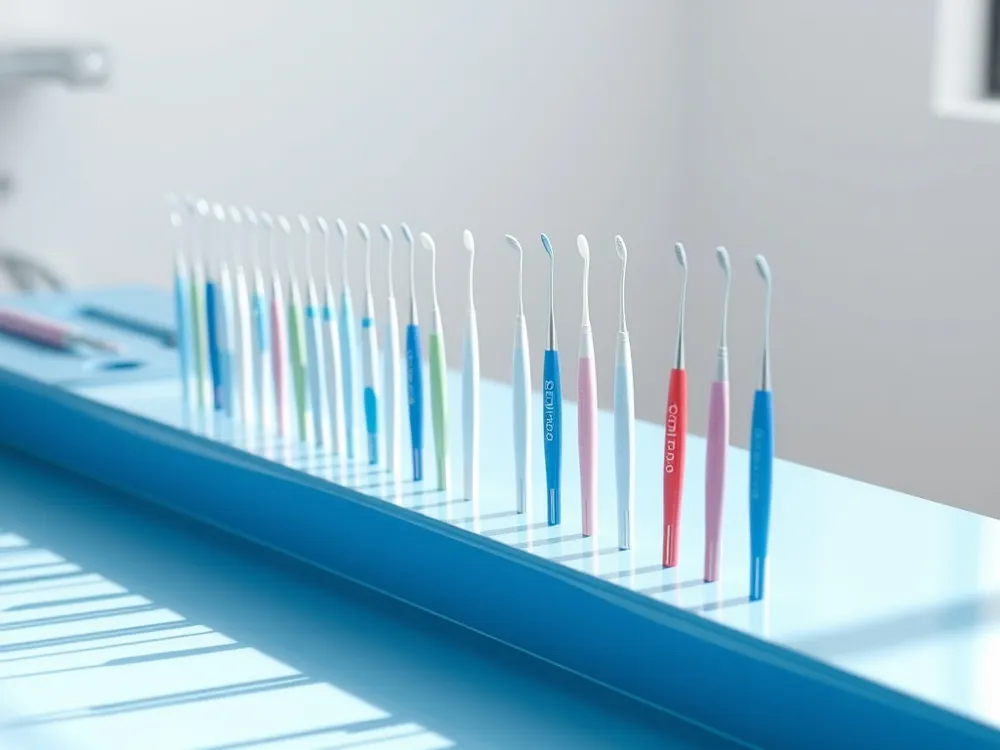
The smallest commonly available size is ISO 0, measuring about 0.4 mm in diameter. TePe’s corresponding brush is color-coded pink. This ultra-fine size is designed for the tightest gaps. It is wise to start with this smallest size and gradually move up until you feel gentle resistance from the bristles.
Starting your size selection process
Begin by looking in a mirror. Insert the smallest brush (ISO 0, 0.4 mm) gently between your teeth near the gum line. If it slides through with no bristle contact, it is too small. Try the next size. Continue increasing the size until the bristles engage the tooth surface snugly. If you have to force the brush or if the wire touches the teeth, the brush is too large. Go back down a size.
Why multiple sizes are often necessary
Most people need two to three different brush sizes because gaps vary throughout the mouth. The spaces between molars are usually wider, while front teeth have narrower gaps. A mixed pack, such as the TePe Mix Pack, provides an assortment of sizes and is an excellent starting point for discovering what works for you. You might need a larger brush for back teeth and a smaller one for front teeth.
The role of a dental professional
A dentist or dental hygienist can professionally measure your interdental spaces using special tools. They can recommend the exact sizes and shapes needed for each area in your mouth. This personalized guidance ensures you are using the most effective and comfortable brushes, especially if you have braces, implants, or other dental work.
Step-by-step sizing checklist
- Start small: Begin with the smallest available size (ISO 0, 0.4 mm).
- Check the fit: Insert gently. Bristles should fit snugly; the wire must not touch teeth or gums.
- Go up gradually: If the brush slides in too easily, move to a slightly larger size.
- Do not force: If you feel pain or need to push, the brush is too large. Size down.
- Use a mirror: Always check the fit visually during the first few uses.
- Try a mixed pack: If unsure, a variety pack helps you find the right sizes at home.
- Consult a dentist: For a tailored recommendation, especially with complex dental work.
| Brush Size (ISO) | Diameter (mm) | Color Code (TePe) | Recommended for |
|---|---|---|---|
| 0 | 0.4 | Pink | Very narrow gaps, front teeth |
| 1 | 0.45 | Orange | Narrow gaps |
| 2 | 0.5 | Red | Medium gaps |
| 3 | 0.6 | Blue | Medium to larger gaps |
| 4 | 0.7 | Yellow | Larger gaps, back teeth |
| 5 | 0.8 | Green | Broad gaps, molars |
| Mixed Pack | 0.4 – 0.8 | Assorted | Starting point for beginners |
Final thoughts on sizing
Choosing the correct size is the foundation of a successful interdental routine. A properly fitting brush is comfortable, effective, and safe. It removes plaque without damaging teeth or gums. Remember, you may need multiple sizes, and a professional can provide the most accurate recommendations. Starting with a mixed pack is a practical and effective way to find your perfect fit.
Step-by-Step Technique: From Front Teeth to Back Molars

Step-by-Step Technique: From Front Teeth to Back Molars
Understanding proper interdental cleaning technique ensures thorough plaque removal while protecting delicate gum tissue. A regular toothbrush cleans approximately sixty percent of tooth surfaces, leaving the remaining third in the interdental spaces. These hidden areas require targeted intervention to prevent inflammation, cavities, and persistent bad breath. Interdental brushes provide a straightforward solution when patients follow consistent, gentle practices tailored to their specific dental anatomy.
How can I use an interdental brush on my back teeth?
Back teeth present unique access challenges due to their position and the curvature of the dental arch. For optimal results, select an interdental brush with a curved or angled handle to improve reach. Gently insert the brush between your molars, using a back-and-forth or rocking motion without forcing it. If using a small brush, you can carefully curve its soft neck with your finger to access tight spaces. For larger brushes, slightly bending the wire can help, but always ensure the bristles touch the tooth surfaces without the wire scraping. Practice daily, and your hygienist can guide you on size and technique for the best results.
When cleaning posterior tooth surfaces, approach the area from both the cheek side and the tongue side. The cheek approach works effectively for most lower molars, while upper molars often require a tongue-side approach for complete biofilm disruption. Small brushes, typically color-coded pink, orange, red, or blue, allow users to gently curve the soft neck and apply light finger pressure to navigate tight contact points. Larger brushes in posterior regions require slightly bending the coated wire to match the dental arch curve. Avoid straightening or aggressively bending the wire at unnatural angles, as this compromises the brush integrity and shortens its usable lifespan.
Angled and L-shaped brush designs, such as the TePe Angle model, feature a longer flat handle and a precisely angled head to navigate posterior spaces with greater control. These tools provide a stable ergonomic grip, allowing patients to clean from both external and internal directions without wrist strain. The angled head maintains a straight insertion path even when targeting molars, reducing hand fatigue during thorough sessions. Always rinse the brush head with water after cleaning each space to prevent transferring food particles or bacteria to adjacent areas.
What is the best way to use interdental brushes?
To use interdental brushes most effectively, first choose the correct size that fits snugly without forcing, and you may need different sizes for different gaps in your mouth. Gently insert the brush between your teeth at a slight angle, then move it back and forth a few times to remove plaque and debris. Use the brush once daily, ideally before brushing your teeth, and avoid using toothpaste with it since abrasives can damage the brush. For hard-to-reach areas like molars, an L-shaped brush or curving the neck can improve access. Replace the brush when the bristles become worn to maintain effectiveness.
Begin by holding the interdental brush between your thumb and index finger in a relaxed pencil grip. This position offers superior control and prevents excessive pressure during insertion. Position the brush tip at a gentle angle against the adjacent teeth, then glide it into the space just below the contact point. The plastic-coated wire should slide smoothly without contacting the tooth enamel or gingival margin. Once positioned, execute full-length back-and-forth strokes two to three times per gap. This horizontal motion efficiently scrapes away bacterial biofilm that string floss often pushes past. Do not scrub vigorously, as dental plaque is soft and detaches easily with light, consistent pressure.
Front teeth typically require a straight interdental brush model. Insert the brush gently and move it the full length of the interdental space several times. Because anterior spaces are usually uniform and accessible, straight designs provide the most straightforward cleaning path. Posterior regions, conversely, often demand multiple brush sizes to accommodate varying gap widths. The bristles should contact both tooth surfaces snugly, but the wire must never rub against adjacent enamel. If you experience resistance or discomfort, switch to a smaller diameter immediately.
Scheduling interdental cleaning in the evening aligns with natural salivary flow reduction during sleep, allowing the removal of all accumulated daily debris before rest. Apply a specialized cleaning gel containing chlorhexidine and fluoride rather than standard toothpaste, as abrasive compounds can degrade soft nylon filaments and reduce cleaning efficiency. Store your brushes in a ventilated travel case to maintain hygiene between uses. Discard any brush where bristles fray, collapse, or fuse with the wire core. Regular replacement ensures consistent plaque disruption and maintains optimal periodontal protection.
| Brush Configuration | Primary Application Area | Technique Modification Required |
|---|---|---|
| Straight Design | Front teeth and small anterior gaps | Full-length horizontal strokes only |
| Curved Neck Small | Tight posterior contacts | Gentle neck curve with finger pressure |
| Wire-Bend Large | Wide molar spaces | Slight wire curve; avoid sharp angles |
| Angled Head | Deep molar and distal surfaces | Hold at 90 degrees; approach from cheek or tongue |
Adhering to these structured guidelines transforms interdental brushing into a predictable, low-effort maintenance task. Consistent daily practice, paired with appropriately sized tools, establishes a highly effective defense against gingival inflammation and interproximal decay.
Optimizing Your Routine: Before Brushing and Daily Use
How many times a day should I use interdental brushes?
For most people, using an interdental brush once daily is sufficient to maintain good oral hygiene. The evening is often recommended because it removes plaque and food debris accumulated throughout the day, preventing bacteria from working on your teeth overnight. However, if you have braces, permanent retainers, dental bridges, or periodontal disease, your dentist may advise using it twice a day or after meals to manage increased plaque buildup. Regardless of frequency, always use a gentle technique and replace the brush when bristles become frayed, usually every week to ten days. Consistency is more important than frequency, so choose a routine you can stick with daily. For personalized advice, consult your dental professional.
Should I use interdental brushes before or after brushing my teeth?
Most dentists recommend using interdental brushes before brushing your teeth. This sequence helps loosen plaque and food debris from between your teeth, allowing your toothbrush and fluoride toothpaste to remove them more effectively. Using them first ensures that the fluoride from your toothpaste can better reach the spaces between teeth for added protection. While the most important thing is to clean between your teeth daily, using interdental brushes beforehand optimizes your overall oral hygiene routine. For best results, gently insert the brush between each gap, move it back and forth a few times, then proceed with regular brushing.
Should I put toothpaste on my interdental brush?
It is generally not recommended to put toothpaste on your interdental brush. Toothpaste contains abrasives that can cause significant dentin wear over time, especially when used with the mechanical action of the brush. Interdental brushes are designed for mechanical cleaning of debris and plaque, and using them dry or with water is sufficient and safe. If you prefer a cleaning agent, consider a non-abrasive gel like one with chlorhexidine and fluoride, which can be applied to the brush to aid in plaque control and gum health. For optimal oral health, use your interdental brush without toothpaste, and always rinse your mouth thoroughly afterward.
What about initial bleeding or gum soreness?
It is normal for gums to bleed slightly or feel tender when you first start using interdental brushes. This is a sign of inflammation caused by existing plaque buildup. With regular daily use, this bleeding should diminish and typically resolve within three to seven days as your gums become healthier. If bleeding persists beyond a week, you may be using the wrong size brush or too much force. In that case, switch to a smaller size or consult your dental professional to ensure your technique is correct. Continued bleeding could indicate a need for a professional evaluation.
| Routine Step | Recommendation | Why It Matters |
|---|---|---|
| When to use | Once daily, preferably in the evening; twice daily or after meals may be needed for braces or periodontal disease. | Maximizes plaque removal and prevents overnight bacterial activity. |
| Brushing order | Use interdental brush before brushing teeth. | Loosens debris so fluoride toothpaste can reach between teeth effectively. |
| Toothpaste use | Do not use regular toothpaste; use water or a non-abrasive gel if desired. | Avoids dentin abrasion from toothpaste abrasives. |
| Bleeding gums | Normal initially; should resolve in 3–7 days of daily use. | Sign of inflammation that reduces as gums get healthier. |
| Consistency | More important than exact timing or frequency. | Builds a habit that protects gums and prevents disease. |
Cleaning, Care, and Common Questions Answered
Maintaining your interdental brushes and using them correctly are key to getting the most out of your daily routine. This section answers common questions about care, safety, and how interdental brushes compare to floss.
How do I clean my interdental brushes?
After each use, rinse the brush thoroughly under warm running water to remove food particles and plaque. Gently shake off the excess water and let the brush air dry completely in a clean, covered container to prevent bacterial growth. Avoid using harsh chemicals or storing the brush while it is still damp. For a deeper clean, you can occasionally soak the brush in a mild antibacterial mouthwash for a few minutes, then rinse thoroughly. Replace the brush every 1–2 weeks or sooner if the bristles become bent or worn, and never share your interdental brush with others.
How often should I replace my interdental brush?
Most manufacturers recommend changing your interdental brush every 1 to 2 weeks. However, you should replace it sooner if the bristles become frayed, bent, or lose their shape. A worn brush cannot clean effectively because the bristles can no longer reach into the grooves and depressions of your tooth surfaces. Regularly checking the condition of your brush ensures it continues to remove plaque efficiently.
Do interdental brushes cause gaps between teeth?
No, interdental brushes do not cause gaps between your teeth. When used correctly, they simply clean the natural spaces that already exist, removing plaque and debris that may have made those spaces appear smaller. The key is proper sizing—forcing a brush that is too large can cause gum trauma, but choosing the right size ensures safe and effective cleaning. In fact, regular use helps maintain healthy interdental spaces by preventing plaque buildup that can lead to gum disease and recession. Proper technique is safe and beneficial.
Interdental brushes vs. floss: which is better for plaque removal?
Interdental brushes generally outperform floss for plaque removal, especially in individuals with larger interdental spaces. Clinical studies show that interdental brushes remove significantly more plaque and reduce gum inflammation more effectively than floss. However, floss may still be necessary for very tight spaces where a brush cannot fit. For most people, interdental brushes are the more effective and preferred choice for reducing plaque and improving gum health. Both tools, when used correctly and consistently, are valuable additions to your oral care routine.
What are the potential disadvantages of interdental brushes?
Potential disadvantages are minimal when you use the correct size and gentle technique. Using a brush that is too large or forcing it can cause gum soreness or minor bleeding, but this usually resolves within a few days as your gums become healthier. Some people may need multiple sizes for different gaps in their mouth, which adds a small step to the process. Choosing a brush with a plastic-coated wire can help avoid any discomfort from the metal core. Always consult your dentist if you experience persistent discomfort.
Can I use interdental brushes with braces?
Yes, interdental brushes are highly effective for cleaning around braces, brackets, and wires. Choose a smaller size or an angled brush to better access tight spaces around orthodontic appliances. Insert the brush gently with a light back-and-forth motion to avoid damaging wires or gums. Medium-sized brushes often work well for cleaning under the archwire. For the best fit, consult your orthodontist or dentist to determine the ideal size and technique for your specific braces.
Where can I find a size chart for interdental brushes?
You can find size charts for brands like TePe directly on their official website, where they provide a detailed guide with color-coded sizes. These charts are also available on product packaging and in mixed packs that let you test different sizes. The general rule is to start with the smallest size and work up until the bristles fit snugly without the wire touching your teeth or gums. For personalized assistance, your dental provider can measure your interdental spaces and recommend the right sizes. Using the chart ensures you choose a brush that cleans effectively without causing discomfort.
| Question | Key Point | Action Step |
|---|---|---|
| How to clean interdental brushes? | Rinse after each use, air dry in clean container. | Replace every 1–2 weeks or when bristles fray. |
| Do they cause gaps between teeth? | No, they clean existing spaces safely. | Use the correct size to avoid gum trauma. |
| Interdental brushes vs. floss? | Brushes are generally more effective for plaque removal. | Floss still needed for very tight gaps. |
| Can I use them with braces? | Yes, they clean around brackets and wires. | Choose smaller or angled sizes and consult your dentist. |
| Where to find size charts? | Online (e.g., TePe), on packaging, or in mixed packs. | Have your dentist measure your spaces for a perfect fit. |
Take the Next Step Toward Healthier Gums
Building a Simple, Powerful Habit
Adopting interdental brushing is one of the most effective steps you can take for your oral health. Brushing alone only cleans about 60% of your tooth surfaces, leaving the spaces between teeth vulnerable to plaque buildup. This hidden plaque is a primary cause of gum inflammation, cavities, and bad breath.
Interdental brushes are small, easy-to-use tools designed to clean these hard-to-reach areas. Once you find the correct size, the technique is straightforward: gently insert the brush between two teeth and move it back and forth a few times. Most people only need to do this once a day, ideally in the evening.
This routine quickly becomes a natural part of your day. It is far more effective at removing sticky plaque from between teeth than traditional floss, and it is gentler on your gums. Because plaque is soft, you never need to scrub or use force—just light, controlled movements are enough to break up the bacterial film and keep your mouth healthy.
Personalized Guidance for Your Unique Smile
The most important factor in successful interdental cleaning is choosing brushes that fit you correctly. Every mouth is different, and you may need two to three different sizes to clean all the spaces between your teeth. A brush that is too small won't clean effectively, while one that is too large can be uncomfortable or even damage your gums.
At Loud Family Dental, our team can professionally measure your interdental spaces and recommend the right sizes for your unique needs. We also provide a hands-on demonstration, showing you exactly how to angle the brush and move it for maximum plaque removal. Many patients find this personalized instruction makes all the difference in building a confident, effective routine.
Even if you have braces, implants, bridges, or other dental work, interdental brushes are an excellent choice. The soft, flexible bristles can clean around wires and brackets without causing damage, helping you maintain gum health throughout your treatment.
Care for Every Age and Ability
We believe everyone deserves a healthy smile, and interdental brushing is suitable for patients of all ages. Children can start cleaning between their teeth as soon as they have two teeth that touch. For teenagers with braces, interdental brushes make cleaning around brackets much easier than traditional floss.
For adults, especially those with arthritis, limited dexterity, or other physical challenges, interdental brushes are a game-changer. The handle provides a comfortable grip and better control than string floss, making it possible to maintain thorough oral hygiene independently.
Our team will work with you to find the tools and techniques that fit your lifestyle and ability. Whether you need a longer handle for better reach, a brush with a curved neck for back teeth, or a rubber pick for extra-gentle cleaning, we have options to help you succeed.
Start Your Journey to Better Gum Health
You do not have to navigate interdental cleaning alone. Our experienced team at Loud Family Dental is here to guide you every step of the way. We offer comprehensive care for the whole family, from routine checkups to advanced restorative treatments, all in a friendly, welcoming environment.
Taking care of the spaces between your teeth is one of the most important things you can do to prevent gum disease, keep your teeth strong, and maintain fresh breath. With the right tools and a little practice, it becomes a simple, rewarding part of your daily routine.
Are you ready to take the next step toward healthier gums and a brighter smile? Call Loud Family Dental today to schedule your appointment. Let our Shreveport family dentists help you find the perfect interdental brush and show you how easy it is to protect your smile for life.