Why Early Dental Care Matters
Establishing a dental home by a child's first birthday creates a familiar, trusting environment where the dentist can monitor growth, count emerging teeth, and catch early signs of decay. Early visits provide preventive benefits such as guidance on proper brushing, fluoride use, and nutrition, while also teaching parents how to avoid baby‑bottle tooth decay. By introducing gentle oral‑health habits and positive experiences, families set the stage for lifelong confidence in dental care and healthier smiles throughout childhood and beyond.
Timing the First Visit: Age and Scheduling
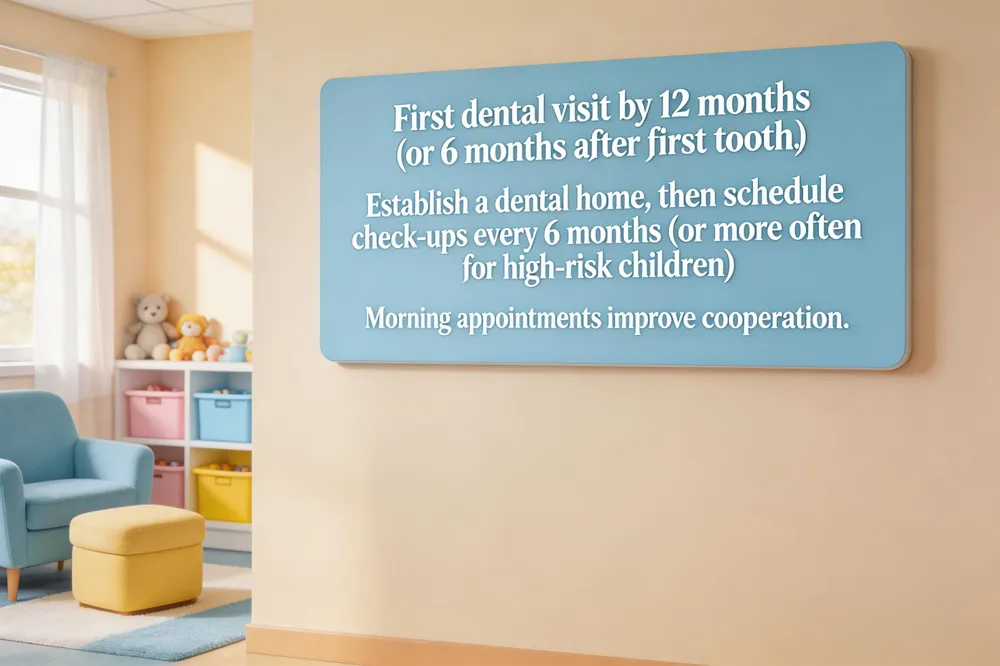 Children should have their first dental visit by 12 months of age, or within six months after the first tooth erupts. This early appointment establishes a “dental home,” lets the dentist check oral development, and provides fluoride guidance to prevent early decay. After the initial exam, the dentist typically recommends a check‑up every six months (or more often if the child is at high risk). Regular six‑month visits allow the professional to monitor tooth eruption, apply preventive treatments, and reinforce brushing and nutrition habits.
Morning appointment advantages – Scheduling the first visit in the morning helps young children stay alert, cooperative, and less irritable, which can make the 30‑45‑minute exam smoother for both child and dentist.
Q: At what age should a child's first dental visit be?
A: The American Academy of Pediatric Dentistry, the American Dental Association and other leading health organizations all recommend that a child’s first dental visit occur by age 12 months, or within six months after the first tooth erupts. Early detection of decay also allows for non‑surgical interventions, such as silver diamine fluoride or fluoride varnish, which can prevent the need for more extensive treatment later.
Q: When should children first see a dentist for regular examinations?
A: Children should have their first dental visit by the time they turn one year old, or when the first tooth appears, to establish a baseline of oral health and catch any early problems. After this initial exam, the dentist will typically recommend a regular check‑up every six months, though the exact interval may be adjusted based on the child’s specific needs.
What to Expect at the First Appointment
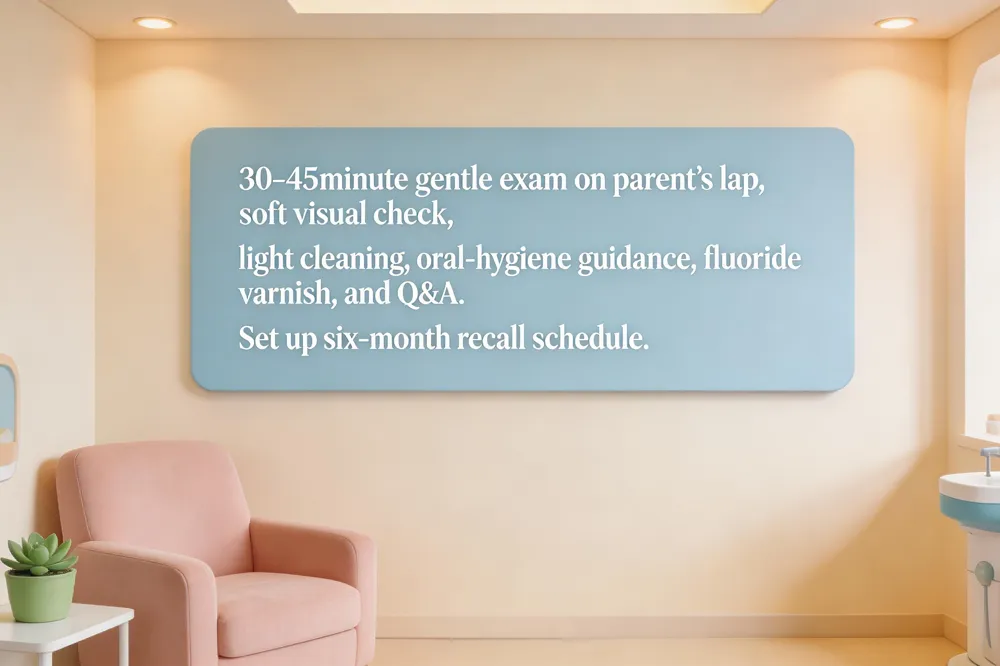 The first dental visit for a baby usually lasts 30‑45 minutes and is designed to be gentle and reassuring. The dentist will perform a soft visual exam of the gums, any erupted teeth, and the jaw, often with the child on a parent’s lap. A light cleaning is done with a tiny brush or gauze to remove plaque and to show how to wipe gums before teeth appear. Parents receive clear oral‑hygiene guidance: use a soft‑bristled brush, apply a rice‑grain‑size amount of fluoride toothpaste when the first tooth shows, switch to a pea‑sized amount after age three, limit sugary drinks, and learn best practices for pacifier or bottle use. Fluoride treatment is safe and highly recommended; a low‑concentration varnish applied by the dentist strengthens enamel and reduces decay risk, especially for high‑risk children. The clinician will answer any questions, discuss teething comfort, and set a schedule for six‑month check‑ups to keep the child’s smile healthy and confident.
Preparing Your Toddler for a Successful Visit
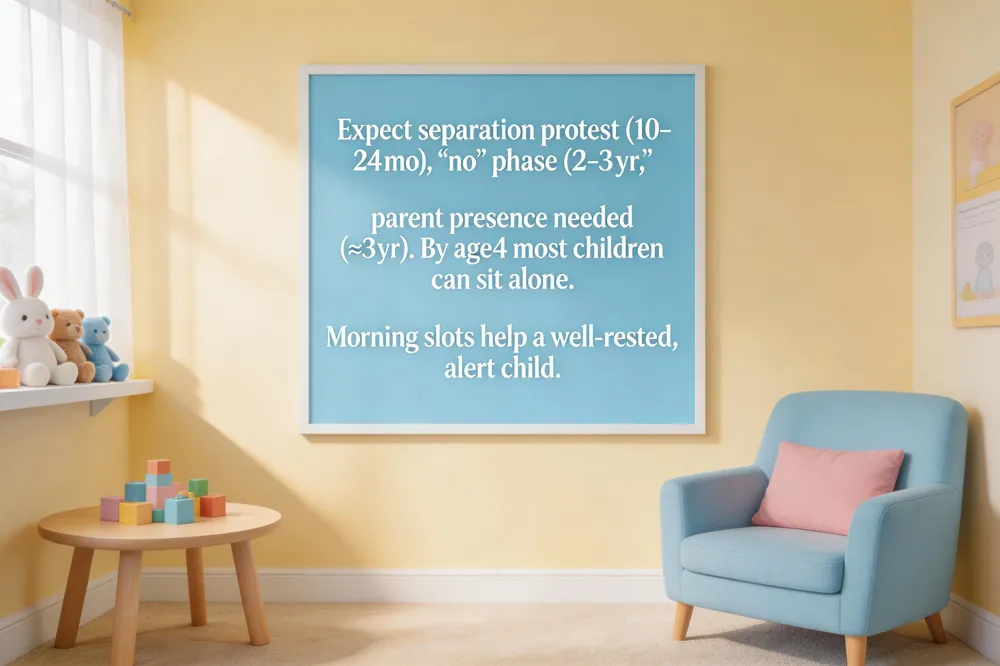 Age‑specific expectations help you stay realistic: toddlers 10‑24 months may protest separation, 2‑3‑year‑olds often say “no”, while 3‑year‑olds may need a parent’s presence for procedures; by age 4 most children can sit in another room. Scheduling the appointment in the morning takes advantage of a well‑rested, alert child, reducing irritability and improving cooperation. Together, these strategies turn a routine check‑up into a confidence‑building adventure.
Key Oral‑Health Rules and Eruption Benchmarks
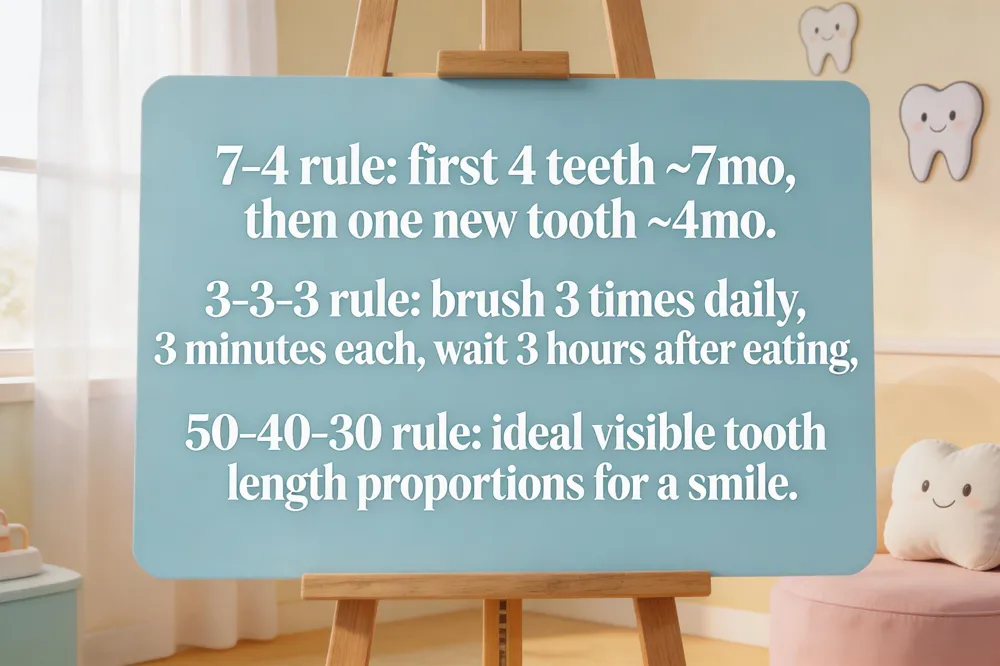 The 7‑4 rule is a quick guideline that links a child’s age in months to the typical timing of primary‑tooth eruption. It says the first four baby teeth usually appear around seven months, and then, new tooth tends to come in about every four months. This helps parents and dentists anticipate normal development, though individual differences are common.
The 3‑3‑3 rule is a simple oral‑hygiene mnemonic: brush three times a day, brush for three minutes each session, and wait three hours after eating before bedtime (or avoid late‑night snacking). While most dentists recommend twice‑daily brushing for two minutes, this rule emphasizes frequent, thorough cleaning and gives saliva time to neutralize acids, supporting healthier teeth and gums.
The 50‑40‑30 rule describes the ideal proportion of visible tooth length in an aesthetic smile: 50 % of the central incisor height, 40 % of the space between central and lateral incisors, and 30 % of the space between the lateral incisor and canine. Following these benchmarks can guide both preventive care and smile design.
Finances, Insurance, and Local Access in Shreveport
 Do I need dental insurance for my infant in Louisiana?
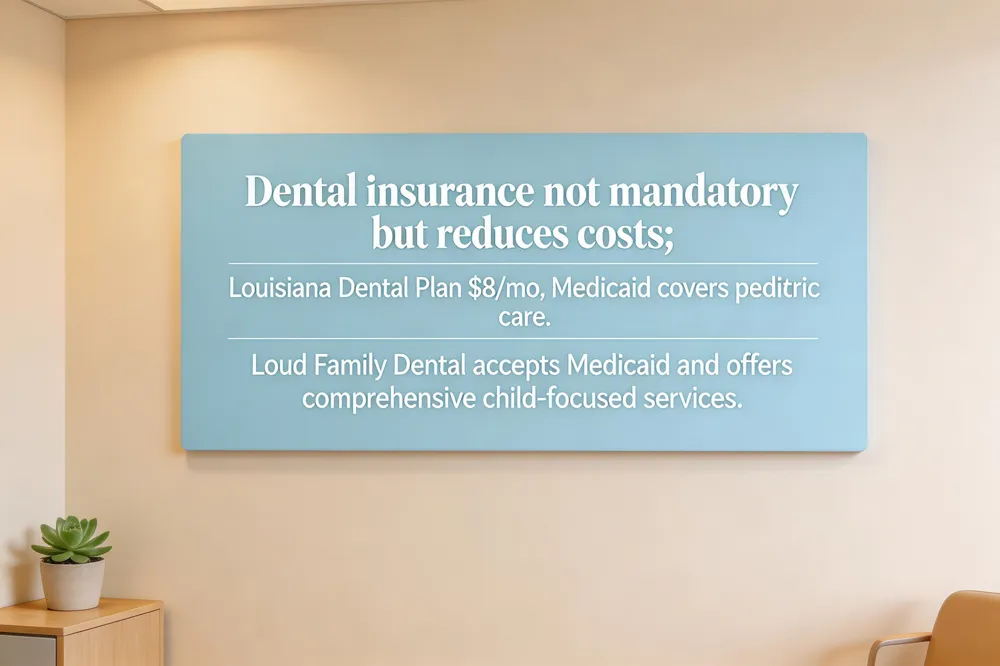
Dental insurance is not mandatory, but it dramatically reduces out‑of‑pocket costs for preventive care—exams, cleanings, fluoride varnish, and early interventions. Low‑cost options such as the Louisiana Dental Plan start at about $8 per month, offer no annual limits, and cover pre‑existing conditions. Medicaid‑eligible families receive comprehensive pediatric dental benefits at no cost. Enrolling before the first visit maximizes savings and ensures timely care.
Does Loud Family Dental accept Medicaid for children?
Yes. Loud Family Dental, a community‑oriented practice in Shreveport, accepts Medicaid for pediatric patients, providing affordable access to routine exams, cleanings, sealants, and emergency services.
Are there pediatric dental services near me in Shreveport?
Loud Family Dental offers a full suite of child‑focused services, from preventive check‑ups to fluoride treatments and behavior‑management techniques. Its welcoming, kid‑friendly environment makes it an ideal “dental home” for families.
My child hasn't been to the dentist—what should I do?
Schedule an appointment promptly. The dentist will conduct a gentle exam, discuss feeding and oral‑hygiene habits, and develop a personalized preventive plan to get your child on track. Early visits also allow the team to address any missed milestones and set up a regular six‑month recall schedule.
Building a Lifetime of Healthy Smiles
Regular six‑month check‑ups keep the dentist informed about growth, catch early decay, and reinforce a calm routine. At home, brush twice daily with a soft brush, using a rice‑grain fluoride toothpaste for younger kids and a pea‑size amount after age three, and limit sugary snacks. Stay in touch with your pediatric dentist, ask questions, and follow the personalized prevention plan for a lifetime of healthy smiles.