Introduction
This article is designed to help patients understand how to keep a dental bridge healthy and functional for years to come. Proper care of a bridge is essential not only for preserving the restoration itself but also for protecting the natural teeth and gums that support it. By following simple daily habits—such as brushing with a soft‑bristled brush, using floss threaders or interdental brushes, and avoiding hard or sticky foods—patients can prevent plaque buildup, gum disease, and decay around the abutment teeth. Regular professional check‑ups and cleanings further ensure that any early signs of trouble are caught and treated promptly. In short, diligent oral hygiene and routine dental visits are the keys to a long‑lasting, comfortable bridge.
Essential Oral Hygiene Practices
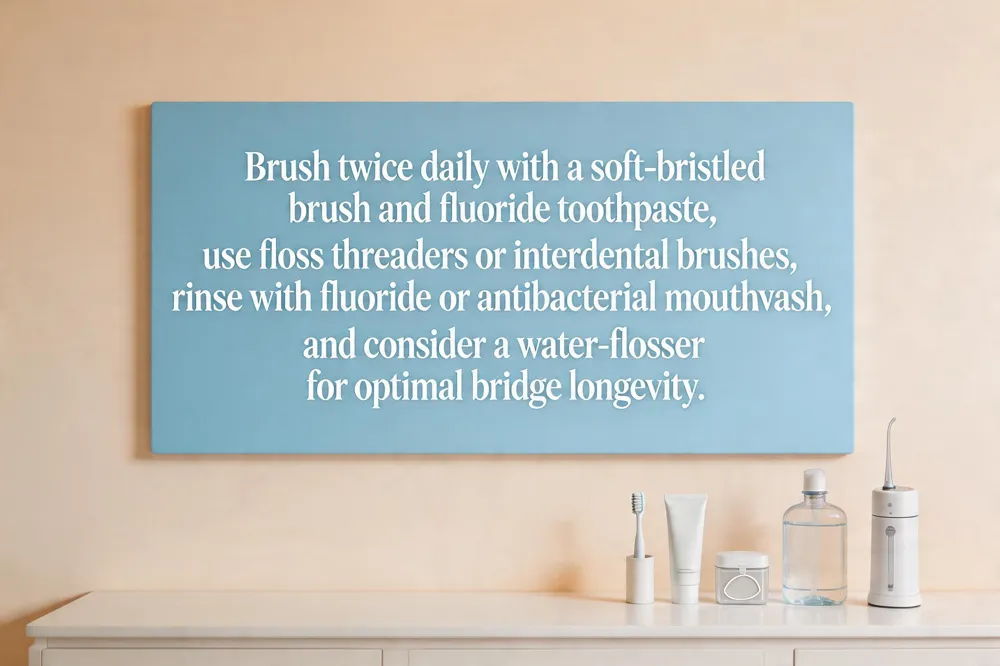 A dental bridge can last 10‑15 years when you keep it clean and protect the supporting teeth.
Brushing technique – Use a soft‑bristled brush and non‑abrasive fluoride toothpaste twice a day. Brush in gentle circular motions, paying special attention to the gum line and the edges of the crowns that hold the bridge.
Flossing methods – Regular floss can’t reach under a bridge. Use a floss threader, Super Floss, or an interdental brush to slip under the pontic and clean the hidden space. A water‑flosser (Waterpik) with a Plaque Seeker tip also flushes out debris and reduces bacterial load.
Mouthwash usage – Rinse daily with an alcohol‑free, fluoride‑containing or antibacterial mouthwash to strengthen the natural teeth and keep gum inflammation low.
Common questions
- How to care for a permanent dental bridge? Brush twice daily, floss with a threader or interdental brush, rinse with fluoride mouthwash, avoid hard or sticky foods, wear a nightguard if you grind, and see the dentist every six months.
- Dental bridge cleaning at home? Brush, floss under the pontic with a threader or interproximal brush, use a water flosser if needed, finish with an antibacterial rinse.
- Dental bridge cleaning tools? Soft‑bristled brush, floss threader/Super Floss, interdental brushes, water‑flosser, fluoride mouthwash.
- Floss threader for bridge? It guides floss beneath the bridge’s embrasures, removing plaque where a toothbrush can’t reach. Learn more.
- Does a Waterpik clean under a bridge? Yes – its pressurized water reaches the pontic area and helps dislodge food particles. Details.
- Is it hard to clean under a dental bridge? It feels tricky at first, but with a threader or interdental brush it becomes a quick daily habit.
- Dental bridge cleaner? Combine brushing, flossing, water‑flossing, and an antibacterial rinse; occasional soak in a professional‑grade appliance cleaner can remove stubborn buildup. Professional cleaning advice.
Specialized Cleaning Tools and Techniques
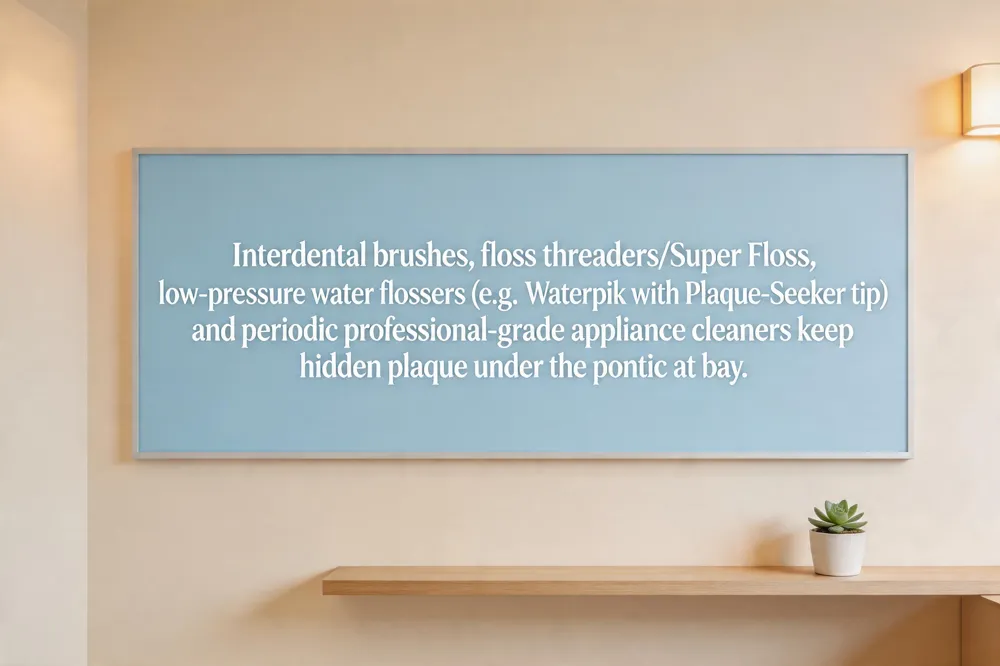 Keeping a dental bridge clean requires more than a regular brush. A soft‑bristled toothbrush with non‑abrasive fluoride toothpaste is the foundation, but the real secret lies in the specialized tools that reach under the pontic and around the abutment teeth.
Interdental brushes slide into the tight spaces beside the bridge, sweeping away plaque that a toothbrush misses. Choose a size that fits snugly without forcing the brush.
Floss threaders (or Super Floss) provide a flexible loop or stiff tip that lets you pull floss beneath the bridge, cleaning the gum line and the sides of the supporting crowns.
Water flossers such as the Waterpik are safe and effective for bridges. Using a low‑to‑medium pressure (10–30 psi) and a thin tip like the Plaque‑Seeker, the pulsating stream reaches under the pontic and along the gumline, dislodging food particles without scratching the material.
Professional cleaners—including dental picks with rubber tips and occasional soaking in a dental appliance cleaner—remove stubborn buildup that home tools can’t eliminate.
Answers to common questions:
- Water flosser for dental bridge: It safely reaches under the bridge, preventing gum inflammation and secondary decay.
- How to clean a dental bridge - YouTube: Look for reputable dentist videos (e.g., Dr. Michael Nugent) that demonstrate brushing, floss threading, and water‑flossing.
- How to clean underneath a bridge with a Waterpik: Brush first, then use a low‑pressure setting and a 45‑degree angle to spray beneath the pontic.
- Dental bridge cleaning tools: Combine a soft brush, interdental brushes, floss threaders, and a water flosser daily.
- Dental bridge cleaner: Use an antibacterial mouthwash and, periodically, a professional‑strength appliance cleaner to break down stubborn plaque.
Regular use of these tools, along with six‑month dental check‑ups, helps the bridge last its full 5‑15‑year lifespan.
Diet, Lifestyle, and Immediate Post‑Placement Care
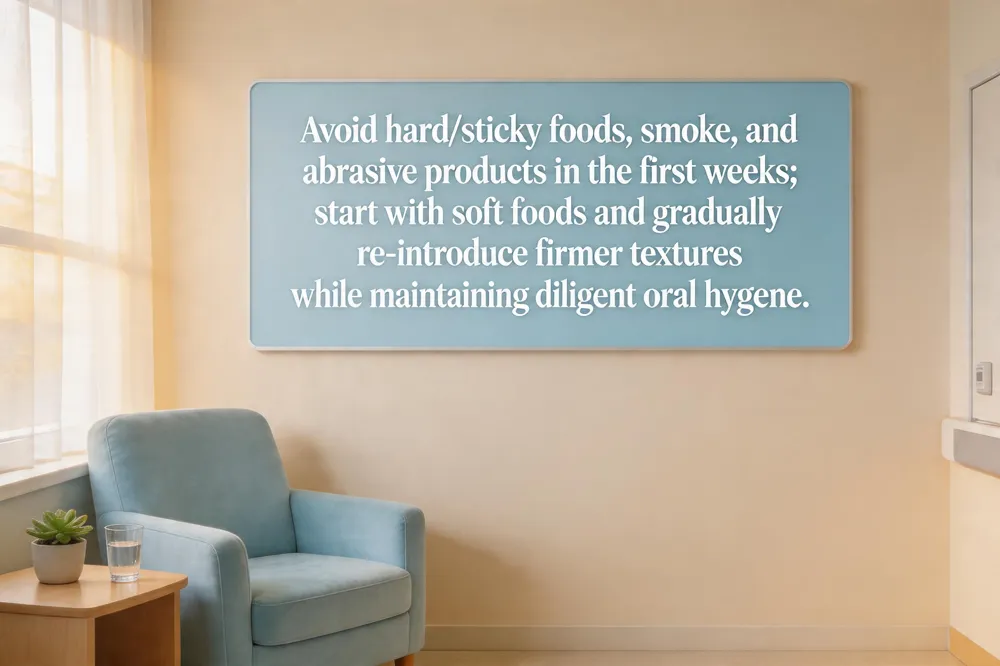 A dental bridge requires careful early care to protect the restoration and surrounding tissues.
What not to do after a dental bridge?
Avoid hard or sticky foods (chewing hard, crunchy, or sticky foods such as ice, nuts, popcorn, caramel, gum, candy) and never use the bridge side to pry open objects.
Skip brushing, flossing, or interdental cleaning around the bridge, and stay away from abrasive toothpaste, whitening agents, and extreme hot or cold drinks if sensitivity is present.
Smoking should be avoided because it impairs healing and irritates gums.
How long after a dental bridge can I eat?
Soft foods such as soup, yogurt, mashed potatoes, or scrambled eggs can be eaten immediately.
For the first 24–48 hours, stick to soft textures; after two days gradually re‑introduce firmer foods, but wait at least a week before nuts, raw vegetables, or steak, and two weeks before a completely normal diet.
Contact your dentist if pain or movement occurs.
Dental bridge recovery time
Usually mild soreness heals within a few days; normal eating and speaking resume in one to two weeks, with full bite comfort often achieved by the end of the second week. Maintaining good oral hygiene speeds recovery.
Dental bridge problems
Decay on supporting teeth, gum inflammation, bridge looseness, bite issues, food trapping, sensitivity, or rare nerve irritation can arise.
Regular six‑month check‑ups, professional cleanings, and diligent home care (brushing twice daily, flossing with threaders or interdental brushes (flossing with threaders, and water flossing) prevent these complications. Promptly address any pain, shifting bite, or visible changes.
What is the 3‑3‑3 rule for teeth?
Take three 200 mg ibuprofen tablets (600 mg total) every three hours for up to three days to control inflammation and temporary toothache. After three days, or if pain persists, see a dentist; this rule is only a short‑term relief measure.
Professional Care, Costs, and Long‑Term Planning
 Regular check‑ups are essential for a durable bridge. The American Dental Association recommends a professional cleaning and exam at least every six months so the dentist can assess the fit, remove hardened plaque, and detect early decay or gum disease.
Cost considerations vary by material, design, and location. In the United States a single‑unit bridge typically costs $2,000–$5,000; Maryland‑style (resin‑bonded) bridges run $1,500–$2,500; implant‑supported bridges range $5,000–$15,000 depending on the number of implants. Without insurance the out‑of‑pocket price reflects the full listed cost, while most dental plans cover 50‑80 % of medically necessary bridges.
Implant vs. bridge: A bridge is a non‑surgical, quicker, and less expensive option that requires reshaping adjacent teeth, whereas an implant involves surgery, preserves jawbone density, and can last a lifetime. Implants have a higher initial cost and longer treatment timeline but avoid compromising healthy teeth.
Bridge lifespan: Properly maintained bridges last 5–15 years; implant‑supported bridges can extend to 30 years or more. Factors influencing longevity include material, location (front vs. back), oral‑hygiene habits, and avoidance of hard or sticky foods.
Maintenance: Brush twice daily with a soft‑bristled brush and fluoride toothpaste, floss or use a floss threader each day, rinse with an antibacterial mouthwash, and consider a water flosser. Promptly address any looseness, pain, or gum changes with your dentist. With diligent care and routine professional visits, a dental bridge can serve you for many years.
Additional Resources and FAQ
 Removable bridge care: Remove the bridge, rinse with warm water, scrub with a soft‑bristled denture brush and non‑abrasive cleanser, avoid regular toothpaste. Soak overnight in a denture‑cleaning solution or keep it hydrated in water when not worn. Clean surrounding teeth and gums daily and schedule regular check‑ups.
Flossing techniques: Use a floss threader or Super Floss. Tie floss to the loop, guide it under the bridge, and make up‑and‑down motions around each abutment. For limited dexterity, a low‑pressure water flosser or a small interdental pick can complement floss. Rinse with antibacterial mouthwash.
YouTube tutorials: Search “How to clean a dental bridge” and watch videos from reputable dentists (e.g., Dr. Michael Nugent). They demonstrate brushing with a soft brush, using a threader or interproximal brush, and finishing with a mouthwash. Regular professional cleanings are also essential.
Conclusion
Key takeaways: a dental bridge can serve you for 5‑15 years when you brush twice a day with a soft‑bristled brush and fluoride toothpaste, floss daily using floss threaders, interdental brushes or a water flosser, and avoid hard, sticky or overly acidic foods that can damage the restoration. Regular professional cleanings and X‑ray checks help catch decay or gum disease early, and any signs of looseness, pain, or bleeding should prompt an immediate call to your dentist.
We encourage you to schedule your next check‑up now—our team at (610) 347‑8302, 601 Williamsburg Dr., Broomall, PA, is ready to keep your bridge healthy and your smile bright.