Understanding the Oral Toll of Tobacco
Smoking harms the mouth in many ways. It narrows blood vessels, cutting oxygen and nutrients to gums, which weakens the immune response and encourages plaque buildup. Nicotine, tar, and other chemicals stain enamel yellow or brown, erode the protective layer, and dry the mouth, allowing bacteria to thrive and cavities to form. These effects together raise the risk of gum disease, tooth loss, oral cancers, and persistent bad breath. Because damage often begins silently, routine dental exams are vital. Professional cleanings remove tartar and surface stains, while screenings can catch early signs of periodontal disease or precancerous lesions. Early intervention improves healing after quitting and restores oral health more effectively. Dentists also provide oral‑hygiene guidance, fluoride treatments, and referrals for cessation programs, ensuring a comprehensive plan to reverse tobacco‑related damage.
Immediate Effects and Quick Fixes
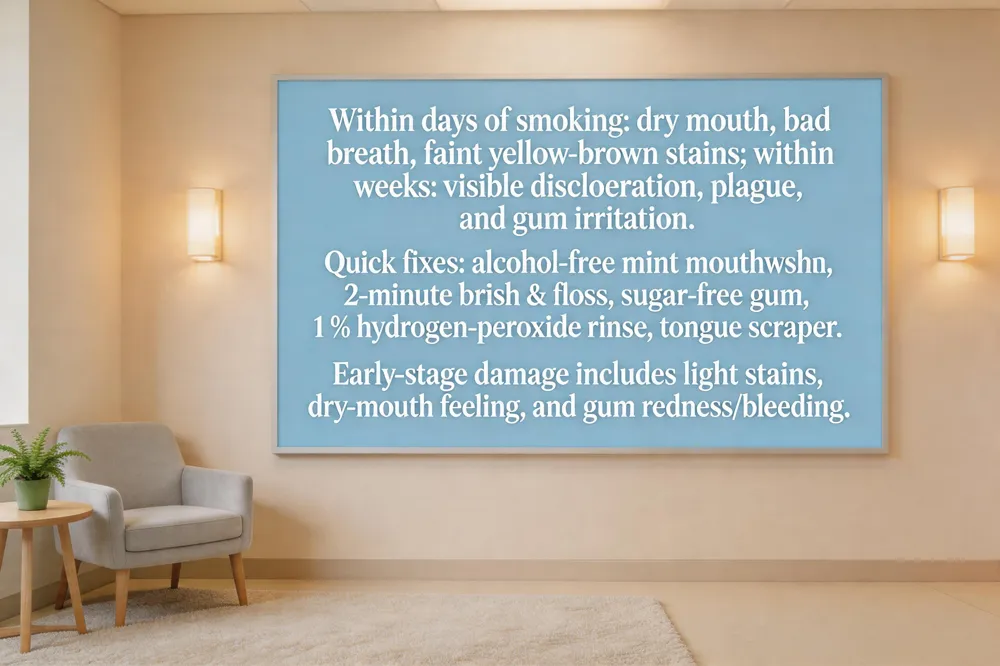 Smoking can start to affect your teeth almost right away—within a few days you may notice a dry mouth, persistent bad breath and the first faint yellow‑brown stains on the enamel. Visible discoloration often appears after one to two weeks of regular use, while plaque buildup and gum irritation can develop over several weeks to months. To mask a cigarette smell instantly, rinse with an alcohol‑free mint mouthwash, brush teeth and tongue for at least two minutes, floss, and chew sugar‑free gum or use a lozenge to stimulate saliva. A quick swish of a 1 % hydrogen‑peroxide rinse or a tongue scraper adds extra freshness. Early‑stage smokers’ teeth typically show light yellow or brown stains, a dry‑mouth feeling, and early gum redness or bleeding due to reduced blood flow. Smoking’s nicotine and tar stain enamel, weaken immunity, promote plaque, and cut off nutrients to gums, doubling the risk of periodontitis, accelerating decay, and increasing bone loss that can lead to loose teeth and oral cancer. Quitting early halts further damage and allows the mouth to begin healing.
Staining, Discoloration, and Aesthetic Restoration
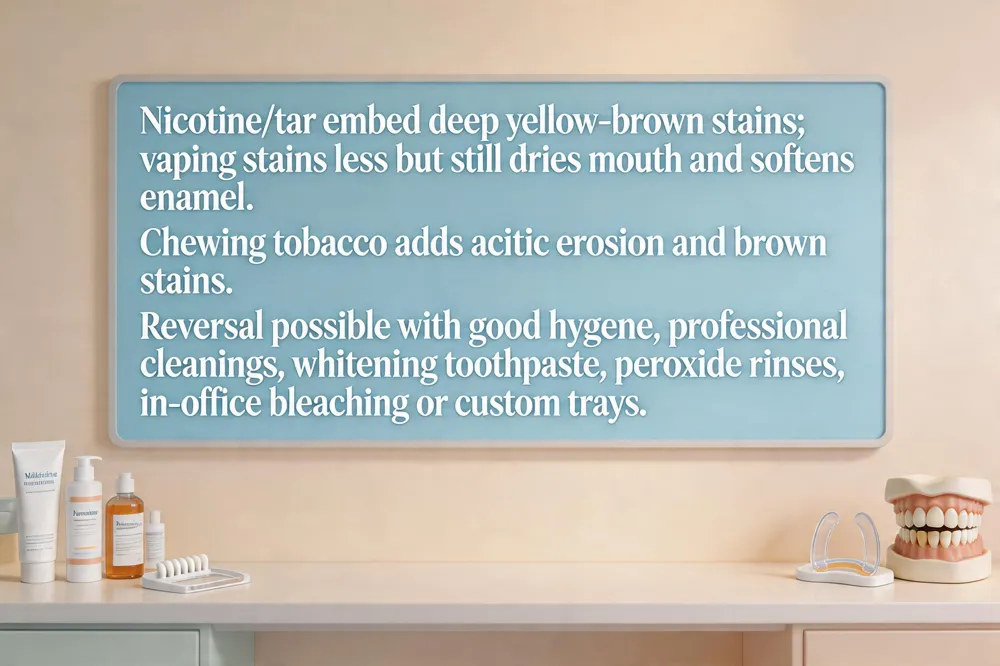 Nicotine and tar cling to enamel, penetrating its microscopic pores and forming deep yellow‑brown stains that regular toothbrushes cannot erase. Vaping produces a lighter aerosol, so it stains less aggressively, but propylene glycol and glycerin still dry the mouth, lower enamel hardness, and leave an acidic film that encourages decay and mild discoloration.
Chewing tobacco tooth damage – The acidic, abrasive particles erode enamel, cause brown or yellow stains, and dry the mouth, leading to plaque buildup, gum recession, and higher cavity risk. Chronic use also raises oral cancer odds.
Smokers teeth before and after quitting – Before quitting, teeth appear dull and stained, gums are inflamed, and breath is foul. Within a week of quitting, blood flow improves, saliva returns, and stains stop forming; months later gums reattach, and professional cleanings plus whitening can brighten the smile.
Is it possible to reverse smoker’s teeth? – Yes. Good hygiene, regular cleanings, whitening toothpaste, and peroxide rinses lift surface stains; in‑office bleaching or custom trays address deeper discoloration, delivering a noticeably brighter smile.
Is vaping as bad for your teeth as smoking? – Vaping is less staining but still causes dry mouth, enamel erosion, and increased cavity risk; quitting all nicotine products remains the safest route.
How to restore smoking damage to teeth? – 1) Quit smoking. 2) Schedule a dental check‑up. 3) Get a professional cleaning. 4) Pursue whitening or restorative treatments for lasting aesthetic improvement.
Gum Health, Periodontal Disease, and Healing
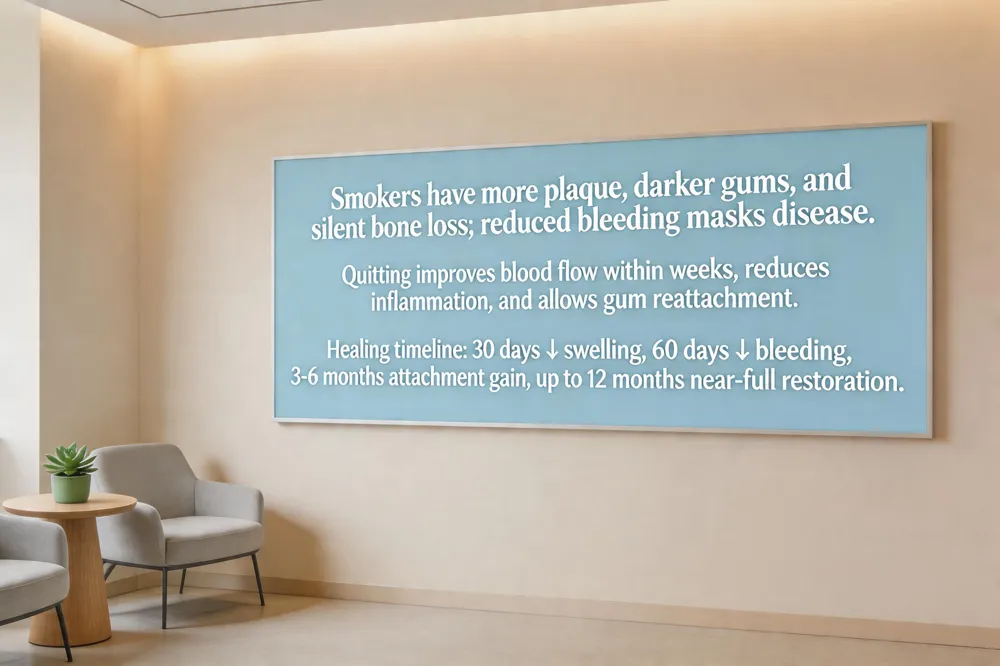 Smokers mouth vs non smoker: Smokers show more plaque, yellow/brown stains, and higher gum inflammation. Unique changes like smoker’s melanosis, nicotinic stomatitis, and black hairy tongue are rare in non‑smokers. Reduced blood flow masks bleeding, allowing silent bone loss and tooth loss. Non‑smokers generally have pink, healthier gums with lower plaque and staining.
Smokers gums vs normal gums: Nicotine constricts vessels, darkening gums and slowing healing. This leads to recession, bone loss, and twice the risk of gingivitis/periodontitis. Non‑smokers’ gums respond better to routine hygiene and dental care.
Smoking and periodontal disease: Tobacco doubles gum disease risk, impairs blood flow, suppresses immunity, and accelerates tissue destruction. Healing after procedures is slower, and bone loss is common.
If I stop smoking will my gums repair: Yes. Within weeks, blood flow improves, inflammation drops, and bleeding lessens. Months of abstinence can restore attachment and reduce disease, though severe loss may need professional intervention.
Smokers gums treatment: Scaling, root planing, antimicrobial rinses, and regular cleanings are essential. Quitting smoking dramatically boosts treatment success and tissue regeneration.
How long for gums to heal after quitting smoking: Noticeable improvement starts within 30 days; swelling subsides by 60 days; significant attachment healing occurs between 3‑6 months, with near‑full restoration possible by 12 months.
Oral Cancer, Tongue Issues, and Comprehensive Care
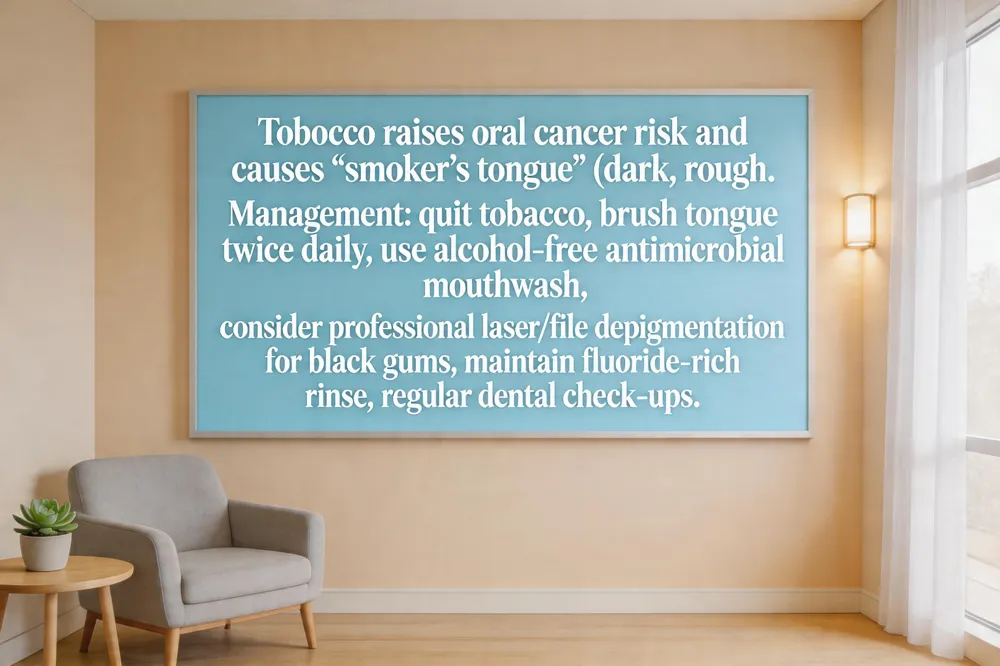 Tobacco use dramatically raises the risk of oral cancers, especially on the lips, tongue, gums and throat, and it also causes a distinctive “smoker’s tongue”—a darkened, rough surface that can harbor bacteria and bad breath. The first step in treating smoker’s tongue is to quit all tobacco products, then brush the tongue gently twice daily with a soft‑bristled brush or scraper and use an alcohol‑free, antimicrobial mouthwash such as Listerine Total Care or TheraBreath. For black gums, quitting smoking stops excess melanin production; a professional cleaning followed by laser or diamond‑shaped file depigmentation can restore a pink hue. Swapping to a fluoride‑rich antimicrobial rinse (e.g., Crest Pro‑Health Multi‑Protection) helps combat plaque, dry mouth, and stains. Finally, regular dental check‑ups, diligent brushing twice daily with a smoker‑specific toothpaste, daily flossing, and staying hydrated are essential habits that protect gums, reduce cancer risk, and support overall oral health.
Putting It All Together: A Roadmap to a Healthier Smile
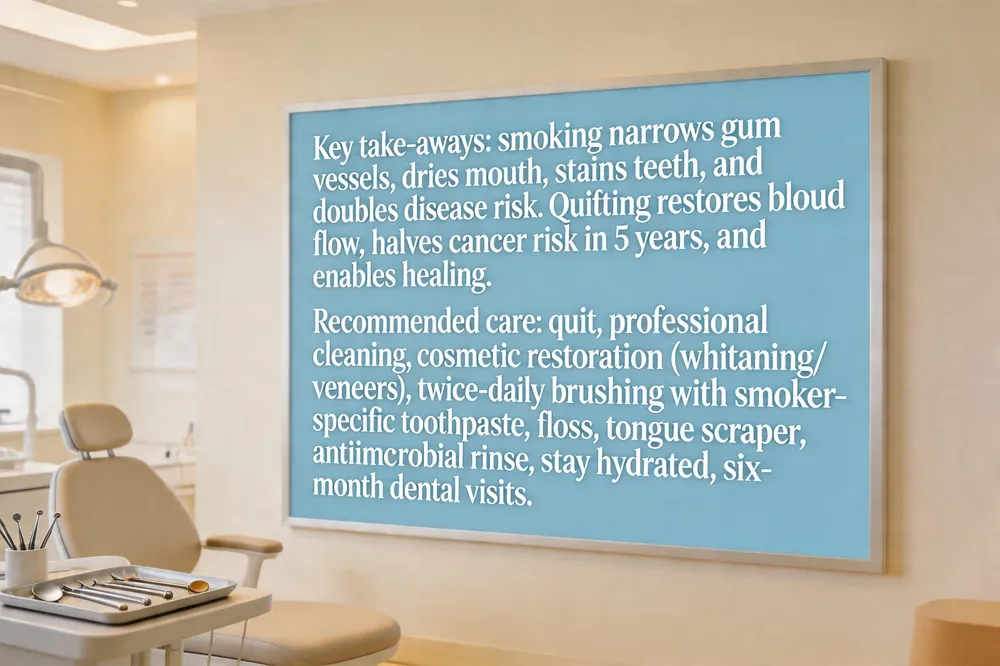 Key Take‑aways
Smoking narrows gum blood vessels, weakens immunity, dries the mouth and stains teeth, leading to gum disease, decay, and oral cancer. Quitting restores blood flow, improves healing, and halves cancer risk within five years.
Key Take‑aways
Smoking narrows gum blood vessels, weakens immunity, dries the mouth and stains teeth, leading to gum disease, decay, and oral cancer. Quitting restores blood flow, improves healing, and halves cancer risk within five years.
How to restore smoking damage to teeth? Quit smoking – the essential first step. Schedule a dental check‑up, see a hygienist for deep cleaning, then pursue cosmetic restoration (whitening, veneers) to lift stains.
Is it possible to reverse smoker's teeth? Yes. Surface stains improve with good hygiene, whitening toothpaste, or peroxide rinses. Deep discoloration often requires in‑office bleaching or custom‑tray bleaching for noticeable results.
How should smokers take care of their teeth? Brush twice daily with a stiff‑bristled or, floss, use a tongue scraper, and choose a smoker‑specific toothpaste. Add antimicrobial mouthwash, stay hydrated, and attend professional cleanings every six months (or more often).
What is the best thing for smokers' teeth? Stop smoking. Follow up with regular cleanings, personalized whitening, and diligent at‑home care (soft brush, fluoride toothpaste, floss, rinse after cigarettes). Limit staining foods and drinks.
Resources at Loud Family Dental We offer smoking‑cessation counseling, nicotine‑replacement guidance, routine exams, scaling, root planing, and professional whitening to support your journey toward a healthier, brighter smile.
Take the First Step Today
Smoking narrows blood vessels, depriving gums of oxygen and nutrients, which leads to plaque buildup, gingivitis, and periodontitis. It also stains enamel with nicotine and tar, dries the mouth, causes bad breath, and raises the risk of oral cancer and tooth loss. Quitting reverses many of these effects: blood flow improves within weeks, gum inflammation drops, healing after procedures speeds up, and new stains fade with professional cleanings. Dental professionals can guide you through nicotine‑replacement therapy, counseling, and personalized oral‑hygiene plans to keep your mouth healthy during the transition. At Loud Family Dental we offer comprehensive exams, deep cleanings, scaling and root planing, whitening, and restorative options, all tailored to your needs. Let us partner with you to restore a fresh, confident smile and enjoy lasting oral wellness for life.