Introduction
Losing a tooth does more than create an empty space in the mouth; it can affect chewing efficiency, speech clarity, facial aesthetics, and even self‑esteem. Gaps may cause neighboring teeth to drift, lead to bone resorption, and result in a sunken‑face appearance that makes many patients feel self‑conscious about smiling or eating. Dental implants address these issues by replacing the missing root with a biocompatible titanium post that fuses to the jawbone through osseointegration. This stable foundation supports a custom‑crafted crown that looks, feels, and functions like a natural tooth, preserving bone health, preventing tooth shifting, and restoring full chewing power. By offering a permanent, fixed solution that eliminates the discomfort and insecurity of removable dentures, implants not only improve oral function but also boost confidence and overall quality of life.
Understanding the Need for Implants
 Dental tooth loss is far more common than many people realize. By age 17, roughly 7 % of Americans have already lost at least one permanent tooth, and the rate climbs sharply in adulthood—about 69 % of people aged 35‑44 have experienced tooth loss. By the time they reach 50, the average American has lost around 12 teeth, most often due to untreated cavities or periodontal disease, both of which are largely preventable with good oral hygiene, regular professional cleanings, and a healthy diet.
When we look at older adults, the impact becomes even clearer. According to the National Institute of Dental and Craniofacial Research, 17.3 % of Americans aged 65 and older are completely edentulous—meaning they have no remaining teeth. In other words, roughly one in six seniors have lost all of their natural teeth, while the remaining 82.7 % retain at least one tooth, often with gaps that affect chewing, speech, and confidence.
The loss of teeth not only compromises chewing efficiency and speech clarity but also leads to bone resorption, shifting of adjacent teeth, and a sunken facial appearance—all of which can erode self‑esteem and social comfort. Dental implants address these functional and aesthetic concerns by replacing missing roots with biocompatible titanium posts that fuse to the jawbone, preserving bone health, stabilizing the bite, and delivering a natural‑looking smile that restores confidence.
The Implant Journey: From Consultation to Crown
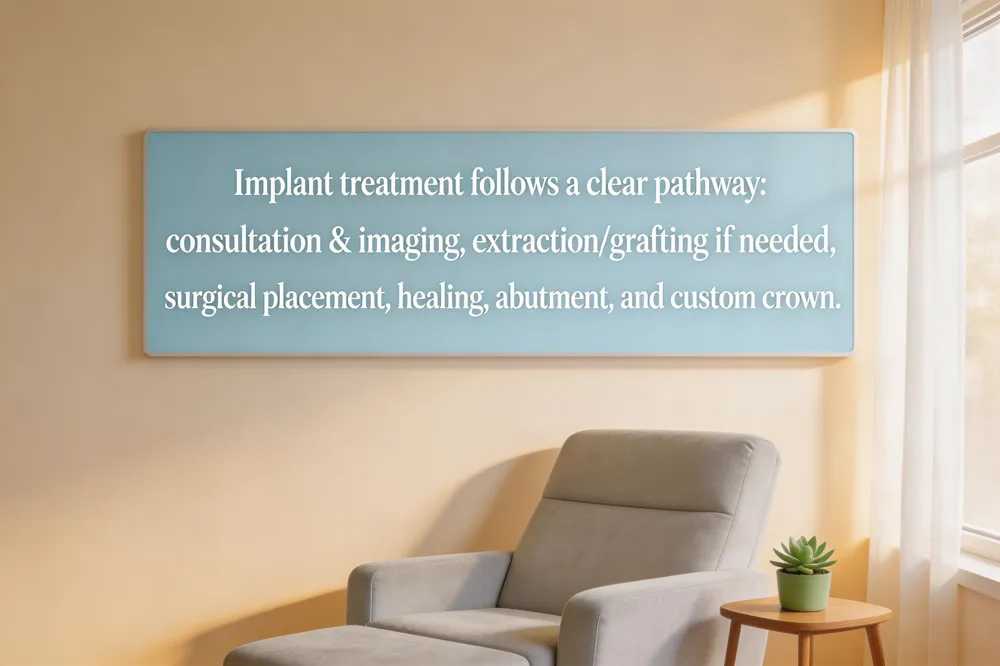 Getting a dental implant is a step‑by‑step process that can be broken down into a few clear stages. First, a comprehensive consultation with 3‑D imaging evaluates your oral health, bone volume and overall suitability. If a tooth still needs removal, a gentle extraction is performed, followed by a bone graft when the jaw lacks enough density to support the implant. During the surgical appointment a titanium post is placed into the jawbone, and then a healing period of several weeks to months allows osseointegration—bone growing tightly around the post. Once the implant is stable, an abutment is attached to connect the post to the final restoration. Finally, a custom‑crafted crown (or bridge) is secured on the abutment, completing the permanent, natural‑looking tooth replacement.
What are the stages of getting a dental implant? The journey begins with a consultation and imaging, proceeds to extraction (if needed) and possible bone grafting, follows with surgical placement of the titanium post, a healing phase for osseointegration, abutment placement, and ends with the custom crown that restores function and smile.
What I wish I knew before dental implants? I wish I’d known the treatment spans several months because the bone must fuse with the implant before the crown is placed. Early bone‑health assessment can flag the need for grafts, and understanding the long‑term cost savings helps set realistic expectations. Simple daily care—brushing, flossing, regular check‑ups—keeps the implant healthy, and the confidence boost from a permanent, natural‑looking tooth is well worth the journey.
Managing Risks and Long‑Term Care
 Dental implants are a reliable way to replace missing teeth, but patients should understand the possible downsides and how to protect the investment over decades.
Potential downsides – The procedure requires surgery and can be costly; most insurance plans do not cover the implant itself. Complication rates are low but not zero, with infections, nerve irritation, bleeding, or damage to adjacent teeth occurring in roughly 5‑10 % of cases. Even after successful placement, the surrounding bone may resorb over time, and the prosthetic crown usually needs replacement after 15‑20 years.
Complication rates and long‑term maintenance – After the initial healing phase, the titanium post often remains stable for life, but the crown, bridge, or denture attached to it can wear, chip, or loosen. Regular brushing, flossing, and bi‑annual dental check‑ups are essential to prevent peri‑implantitis, the most common cause of late‑stage failure.
What happens after 20 years? – The implant body typically stays fully integrated with the jawbone, while the visible crown may show wear and often requires replacement. Good oral hygiene and managing risk factors such as smoking or untreated bruxism help preserve both bone and prosthesis.
Checking readiness for restoration – Before the final crown is placed, the dentist confirms clinical stability (no mobility), complete osseointegration on radiographs, healthy soft‑tissue healing, and adequate torque resistance (≈30‑35 N·cm). When these criteria are met, the restoration can be safely attached, providing a lifelong solution when maintained properly.
Financial Considerations & Insurance Realities
 When planning for a dental implant, several cost factors come into play: the implant body (typically titanium or zirconium), the abutment, the custom crown, any needed bone grafts and the dentist’s surgical expertise. Prices can range from $3,000 to $5,000 for a single‑tooth restoration and increase with multiple teeth or full‑arch solutions.
Most private dental insurance plans cover a portion of the crown and abutment but treat the implant body as a surgical procedure, so coverage varies widely. Original Medicare (Parts A & B) does not cover dental implants at all. Only certain Medicare Advantage (Part C) plans or supplemental dental policies may offer limited implant benefits, often with a separate deductible and co‑pay.
Financing options are frequently offered by dental offices: interest‑free payment plans, health‑care credit lines, or dental‑specific loans can spread the expense over 6‑24 months, making implants more affordable while preserving oral health and confidence.
Emotional Recovery and Adaptation
 How do you cope with losing teeth?
Coping with the emotional side of tooth loss often begins with acknowledging the feelings of embarrassment, sadness, or stress it can provoke. Talking with a counselor, therapist, or trusted friend can provide support and reduce the urge to isolate yourself. Staying socially active and sharing concerns with family helps maintain confidence. Meanwhile, researching restorative options—especially dental implants—gives a sense of control and hope, reminding you that a natural‑looking, permanent solution is within reach.
How do you cope with losing teeth?
Coping with the emotional side of tooth loss often begins with acknowledging the feelings of embarrassment, sadness, or stress it can provoke. Talking with a counselor, therapist, or trusted friend can provide support and reduce the urge to isolate yourself. Staying socially active and sharing concerns with family helps maintain confidence. Meanwhile, researching restorative options—especially dental implants—gives a sense of control and hope, reminding you that a natural‑looking, permanent solution is within reach.
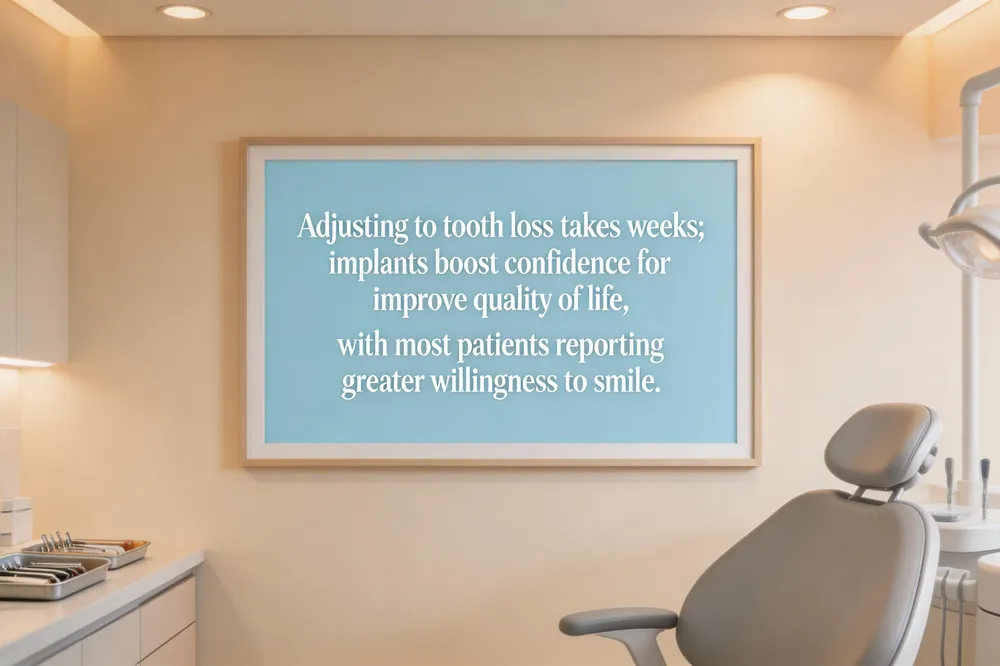
How long does it take to get used to a missing tooth? Adjustment varies, but most patients become comfortable with a prosthetic or the gap within three to six weeks; some may need up to nine weeks for full acclimation. The first week typically involves tenderness and a soft‑food diet, while the second week brings notable relief. Longer‑term gaps can slow adaptation because adjacent teeth may have shifted. Patience, diligent oral‑hygiene, and regular follow‑up appointments smooth the transition.
Confidence boost after implants When a titanium implant integrates with the jawbone through osseointegration, the restored tooth feels and functions like a natural one. Studies show that 80 % of implant recipients report increased confidence and a willingness to smile in social settings. The permanent, stable restoration eliminates the fear of slipping or clicking, allowing patients to speak, eat, and laugh freely—ultimately enhancing overall quality of life.
Conclusion
Key takeaways: Dental implants replace missing teeth with a titanium post that fuses to the jawbone through osseointegration, preserving bone health, preventing adjacent‑to shifting, and delivering chewing efficiency, speech clarity, and a natural appearance. They avoid the drawbacks of removable dentures and bridges, offer long‑term durability (often a lifetime with proper care), and have success rates exceeding 95% in healthy patients. The multi‑step process—consultation, surgical placement, healing, and custom crown—ensures a personalized, comfortable result that boosts confidence and overall quality of life.
If you’re missing a tooth or considering a more permanent solution, schedule a comprehensive evaluation with a qualified implant specialist. Early assessment, proper oral hygiene, and personalized treatment planning can help you achieve lasting function and a confident smile.