Understanding Dental Implants: A Durable Solution to Tooth Loss
What Dental Implants Are
Dental implants are medical devices surgically placed into the jawbone to replace missing or damaged teeth. Acting as artificial tooth roots, they provide a stable foundation to support crowns, bridges, or dentures. Through a process called osseointegration, the implant fuses with the jawbone, ensuring long-term stability comparable to natural teeth.
Components of Dental Implants
A typical dental implant system includes three main parts:
- Implant body: A titanium or ceramic screw-like post inserted into the jawbone to replace the tooth root.
- Abutment: A connector attached to the implant body, extending above the gums to support the artificial tooth.
- Restoration: The visible part such as a crown, bridge, or denture that resembles natural teeth.
Benefits of Dental Implants
Dental implants offer several advantages over traditional tooth replacement options:
- Restore normal chewing function and speech.
- Preserve jawbone density, preventing bone loss.
- Maintain healthy adjacent teeth without needing to alter them.
- Provide improved appearance and natural feel.
- Support dental prosthetics securely, reducing discomfort and slippage.
- Offer a long-lasting solution with high success rates when properly cared for.
With appropriate oral hygiene and professional care, dental implants significantly enhance aesthetics, function, and quality of life.
Step-by-Step Dental Implant Procedure
What are the main steps involved in the dental implant procedure?
The dental implant procedure is a comprehensive process designed to replace missing teeth with durable and natural-looking restorations. Below are the primary steps involved:
-
Initial Consultation and Evaluation
- During this first visit, the dentist conducts a thorough oral examination, including X-rays or 3D imaging, to assess the jawbone quality, gum health, and presence of any dental issues.
- A personalized treatment plan is developed, explaining the procedure, timeline, costs, and any needed preparatory care.
-
Preparatory Procedures: Tooth Extractions and Bone Grafting
- If damaged or decayed teeth are present, they are extracted under local anesthesia or sedation.
- When the jawbone lacks sufficient density or volume to support an implant, a bone graft may be performed. Grafting materials can be synthetic, donor bone, or harvested from the patient.
-
Surgical Placement of the Implant
- The implant, a Metal post for tooth root, is surgically inserted into the prepared jawbone.
- This minor outpatient surgery typically uses local anesthesia, ensuring patient comfort during the procedure.
- A temporary crown or healing cap may be placed to protect the implant site.
-
Healing Phase and Osseointegration
- Over 2 to 6 months, the bone naturally fuses to the implant in a process called osseointegration process, providing a stable foundation.
- During this period, patients follow specific post-implant care instructions, including a soft diet and careful oral hygiene.
-
Abutment and Crown Placement
- After successful osseointegration, a connector piece called an abutment is attached to the implant.
- Impressions are taken to fabricate a custom crown that matches the surrounding teeth in appearance and function.
- The permanent crown is securely fixed to the abutment, completing the restoration.
This multi-step approach ensures that the dental implant integrates well with the jawbone, providing longevity and a natural feel. Patients benefit from improved chewing ability, enhanced aesthetics, and preservation of jawbone integrity with this treatment.
Dental Implant Types, Costs, and Candidate Considerations

What are the common types of dental implants overview and their cost considerations?
Dental implants come in several types tailored to different clinical needs:
-
Endosteal implant placement: The most common kind, these implants are screw-shaped posts placed directly into the jawbone. They typically cost between $3,000 and $5,000 per implant including the crown and abutment.
-
Subperiosteal implants: These are positioned on top of the jawbone but beneath the gums. They are usually chosen for patients with insufficient bone height and cost around $4,000 to $6,000.
-
Zygomatic implants: Anchored in the cheekbone, these are reserved for severe cases of upper jaw bone loss. Their cost ranges from $6,000 to $8,000 or more per implant.
-
All-on-4 dental implant system: This option replaces a full arch of teeth using only four implants, making it more cost-effective for extensive restoration. The cost per arch runs between $15,000 and $30,000.
-
Mini implants: Smaller and less invasive, mini implants are often used for stabilizing dentures and cost from $500 to $1,500 each.
Costs vary further depending on the need for bone grafts, implant material, and geographic location. Accurate pricing requires consultation with a dental professional.
Why might some individuals choose not to get dental implants overview?
Certain health and lifestyle factors may make dental implants unsuitable:
-
Patients with uncontrolled diabetes, active gum disease, or recent cancer treatments face higher risks of poor healing and infection.
-
Inadequate jawbone density or conditions like severe teeth grinding may prevent successful implant placement without additional treatment.
-
Impact of smoking on dental implants significantly reduces implant success rates due to impaired healing.
-
The high financial cost and commitment to rigorous oral hygiene and regular dental check-ups can deter some individuals.
For these reasons, some may opt for temporary solutions like dentures or bridges until conditions improve.
Dental implant candidacy depends on a thorough evaluation of medical history, oral health, and lifestyle, combining patient desires with clinical feasibility to achieve the best outcome.
Post-Surgery Recovery and Recommended Practices

How long is the typical recovery time after receiving a dental implant surgery?
The typical recovery after dental implant surgery involves initial healing over several days to about a week. During this period, patients commonly experience swelling, soreness, and mild bleeding; however, these are usually manageable with recommended care. Most individuals are able to return to light activities or sedentary work within 1 to 3 days if only one or two implants were done without complex procedures like bone grafting.
Complete recovery includes osseointegration process, where the implant fuses securely with the jawbone, taking several months. This fusion is critical to the long-term success and stability of the implant. Recovery duration varies by case complexity and patient health, so following your dentist’s instructions closely helps ensure a smooth healing process.
What are the recommended do's and don'ts after dental implant surgery?
Post-surgery care is crucial and includes the following guidance:
- Do keep your head elevated and apply ice packs at intervals (15-30 minutes) during the first 24 to 48 hours to reduce swelling.
- Do take prescribed antibiotics and pain medication as directed to prevent infection and manage discomfort.
- Do start gentle rinsing with warm saltwater at 24 hours post-op, and use any dentist-provided antimicrobial mouthwash, avoiding aggressive rinsing that could disturb the implant site.
- Do maintain a soft food diet and stay hydrated, avoiding chewing on the implant area.
- Don’t spit, use straws, smoke, or engage in strenuous activities for at least 10 days, as these may disturb healing or dislodge blood clots.
- Don’t bend over excessively or wear dentures/night guards over the surgical site during early healing unless advised.
These dos and don’ts greatly reduce the risk of complications such as bleeding, infection, or implant failure. For more detailed guidance, see The Dos and Don'ts of Caring for Your Dental Implants Post-Surgery.
What is the recommended diet during the dental implant recovery period?
A soft, nutritious diet is essential, especially in the first few days after surgery. Recommended foods include:
- Mashed potatoes, scrambled eggs, smooth soups, and soft cooked cereals (oatmeal)
- Non-dairy smoothies made with almond or oat milk
- Lukewarm or cool nutrient-rich liquids
It is advised to avoid hot, spicy, crunchy, or hard foods to prevent irritation or trauma to the surgical site. Additionally, avoid dairy products such as milk, cheese, and yogurt for the first 48 to 72 hours (sometimes longer) because dairy may promote bacterial growth and mucus, which can interfere with antibiotic effectiveness and slow healing.
Gradual reintroduction of a normal diet is possible following your dentist’s guidance once healing is sufficient.
By adhering to these recovery timelines, hygiene practices, and dietary recommendations, patients can maximize their healing comfort and ensure long-term implant success. For more tips on recovery and aftercare, visit 8 Tips for a Quick Dental Implant Recovery.
Long-Term Care and Maintenance for Dental Implants

How should full mouth dental implants be cared for to ensure long-term success?
Full mouth dental implants require diligent daily care to last and function well over time. Patients should brush gently at least twice daily using a soft-bristle toothbrush to clean around the implant crowns and gums without causing irritation. Flossing once daily is essential, using implant-specific floss or interdental brushes designed to access tight spaces between implants and natural teeth.
Water flossers specifically designed for implants offer an effective way to remove plaque beneath bridges or prostheses, especially in systems like All-on-4 and All-on-6 Implant Systems Care. Incorporating an antimicrobial mouthwash can help minimize bacterial buildup and reduce the risk of infections such as peri-implantitis, an inflammatory condition that can cause bone loss and implant failure.
Diet plays a vital role; patients should avoid very hard or sticky foods—like chewing ice, nuts, or caramel—to prevent mechanical damage to implants or prosthetic restorations. Equally important is quitting smoking, as tobacco use impairs healing and increases complications. Regular dental appointments are critical for professional cleaning and timely detection of early issues to maintain implant health.
What are the common side effects and long-term risks associated with dental implants?
After implant surgery, most patients experience mild swelling, bruising, minor bleeding, and discomfort, which usually resolve within several days with proper care. Over the long term, one of the primary risks is peri-implantitis, an infection resulting in gum inflammation and progressive bone loss around the implant, which can ultimately cause implant loosening or loss if untreated.
Other complications may include nerve damage leading to numbness or tingling sensations, especially if nerves are affected during surgery, and sinus problems from implants placed too high in the upper jaw. Mechanical issues like screw loosening or crown fractures can occur but are often repairable with dental intervention.
Consistent oral hygiene for implants and scheduled regular dental check-ups greatly decrease these risks, promoting implant stability and longevity.
| Aspect | Recommendations | Details |
|---|---|---|
| Daily Brushing | Twice daily with soft-bristle toothbrush | Gentle strokes around implant and gum line |
| Flossing and Cleaning | Implant-specific floss, interdental brushes, water flosser | Effective plaque removal in hard-to-reach spaces |
| Mouthwash | Use antimicrobial rinse as advised | Helps reduce bacterial growth around implants |
| Diet | Avoid hard, sticky foods; no chewing ice | Prevents damage to implants and prosthetics |
| Smoking | Strongly discouraged | Smoking impairs healing and increases failure risk |
| Dental Visits | Regular check-ups and professional cleanings | Early detection & treatment of peri-implant diseases |
The Broader Impact of Dental Implants on Oral Health and Quality of Life
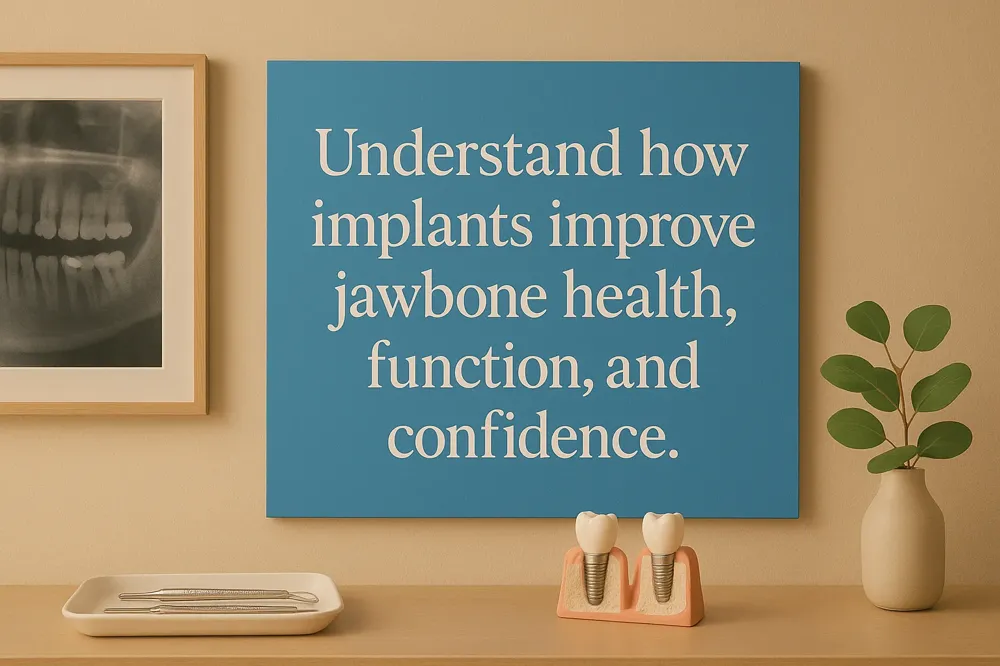
Prevention of bone loss and jawbone preservation
Dental implants are anchored directly into the jawbone, which helps maintain bone density by stimulating natural bone growth. This process prevents the jawbone shrinkage commonly seen after tooth loss. For more information, see Dental implants overview.
Support and stabilization of adjacent teeth
By filling the gap left by missing teeth, implants prevent neighboring teeth from shifting. This stabilization preserves the alignment and integrity of natural teeth. Learn more about Dental implant procedure.
Effects on speech and chewing function
Implants function like natural teeth, improving chewing efficiency and preventing speech issues that can arise from missing teeth or ill-fitting dentures. See details on Dental implant benefits.
Aesthetic and psychological benefits
Dental implants look and feel natural, restoring a confident smile which can boost self-esteem and overall mental well-being. For further reading, visit Benefits of dental implants.
Comparison with alternative tooth replacement options
Unlike dentures or bridges, implants do not require alteration of surrounding teeth and provide a more comfortable, durable solution that integrates with the bone, offering superior long-term oral health benefits. More information can be found at comparison with dental bridges.