Understanding Your Options for Replacing Missing Teeth
Overview of Dental Implants and Bridges
Dental implants are titanium posts surgically placed into the jawbone to replace missing tooth roots. Once healed, a crown is attached, creating a natural-looking and durable tooth replacement. Implants stimulate bone health and can last a lifetime with proper care.
Dental bridges are prosthetic teeth anchored by crowns placed on adjacent natural teeth or implants. They "bridge" the gap left by missing teeth, restoring function and appearance. Bridges usually take a few weeks to place and are less invasive and less costly upfront.
Purpose of Tooth Replacement
Replacing missing teeth helps restore chewing ability, speech clarity, and the natural alignment of your teeth. It also protects neighboring teeth from shifting and preserves facial structure.
Importance of Restorative Dental Options
Choosing the right restoration—implants or bridges—helps improve oral health, maintain jawbone strength, and boost confidence. Consulting with a dental professional ensures the treatment aligns with your individual needs, budget, and lifestyle.
What Are Dental Implants and How Do They Work?
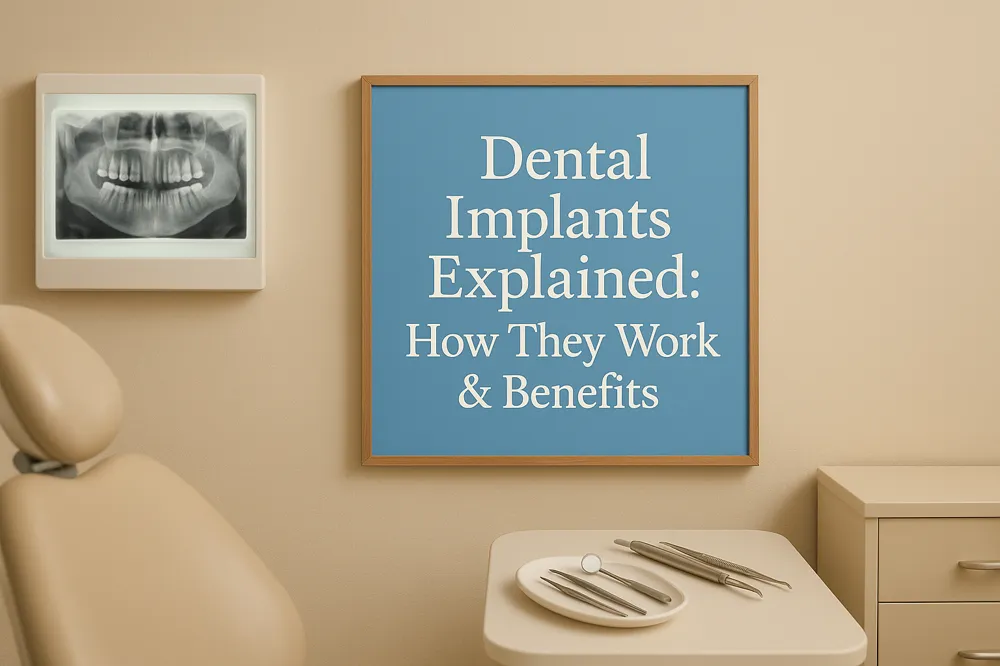
Definition and components of a dental implant
Dental implants are small titanium posts that act as artificial tooth roots when surgically embedded into the jawbone. Each implant typically consists of three parts: the titanium post implanted into the bone, an implant abutment which connects the post to the visible crown, and the custom-made crown that looks and functions like a natural tooth.
Surgical placement and osseointegration
The process begins with oral surgery for implants. Over a healing period of 3 to 6 months, a process called osseointegration occurs, where the implant fuses with the bone tissue. This fusion provides a stable foundation capable of supporting chewing forces just like a natural tooth root.
Durability and longevity
Dental implants are highly durable and designed to last a lifetime with proper care. While the titanium post is permanent, the crowns that cover the implants typically last between 10 to 25 years before they might need replacing due to wear.
Impact on jawbone health
One of the unique benefits of implants over other tooth replacement options is their ability to stimulate bone growth and help prevent bone loss. By mimicking natural tooth roots, implants help prevent the bone loss that usually follows tooth loss. This preservation of jawbone density also helps maintain facial structure and aesthetics.
Maintenance requirements
Implants require routine oral hygiene practices similar to natural teeth: regular brushing, flossing, and dental check-ups. Unlike dental bridges, implants do not require special cleaning tools and are generally easier to maintain. Proper care is essential to ensure the longevity and health of the implant and surrounding tissues.
What Are Dental Bridges and Their Key Characteristics?
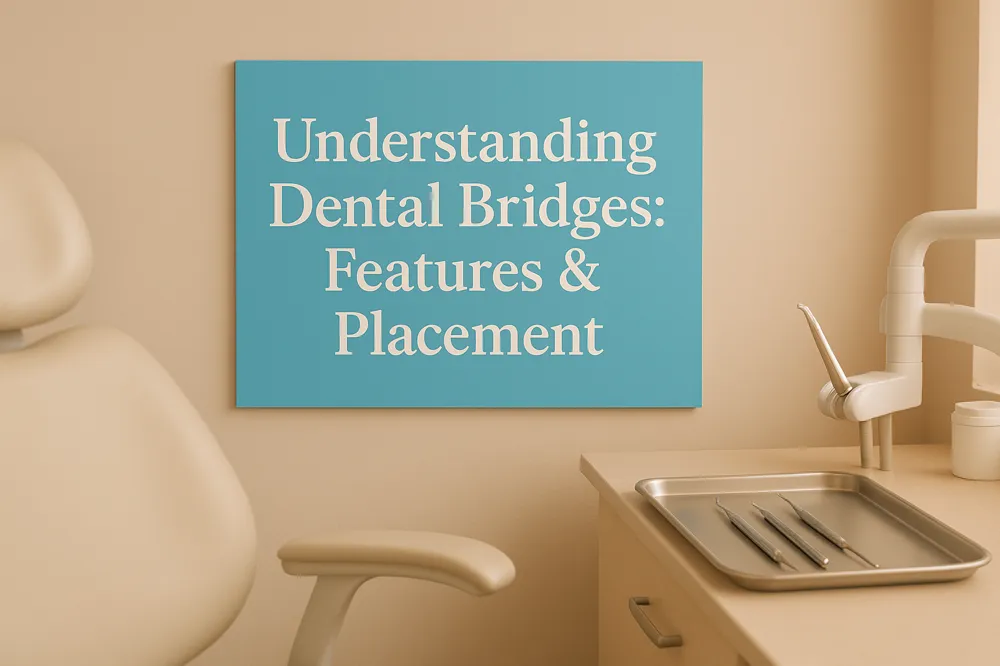
What are dental bridges and how are they placed?
Dental bridges are fixed dental prosthetics designed to replace missing teeth by anchoring artificial teeth—known as pontics—to crowns placed on adjacent natural teeth. They close the gap caused by missing teeth, restoring not only appearance but also function. Common types of dental bridges include:
- Traditional dental bridges: The most common type, anchored with crowns on the natural teeth adjacent to the missing tooth or teeth.
- Cantilever dental bridge: Used when only one adjacent tooth is available to support the bridge.
- Maryland dental bridges: Utilize a metal or porcelain framework bonded to the back of neighboring teeth, often used for front teeth.
- Implant-supported dental bridges: Anchored onto dental implants instead of natural teeth, offering more stability.
The placement process usually spans 1 to 3 dental visits and is non-surgical. During preparation, enamel is removed from the abutment teeth to fit the crowns, impressions are taken, and a custom bridge is fabricated and then cemented into place. For more details, see Bridge placement procedure.
What are the benefits and drawbacks of dental bridges?
Dental bridges offer several advantages:
- They provide a quicker, less invasive option compared to implants.
- Typically, they require fewer dental visits to complete.
- Bridges effectively restore chewing ability and speech clarity.
- The aesthetics match natural teeth, boosting confidence.
- They help prevent remaining teeth from shifting out of their proper position.
However, there are drawbacks to consider:
- Preparing the adjacent teeth involves enamel removal, which can weaken them and potentially increase their risk of decay.
- Cleaning underneath the pontic can be challenging and requires meticulous oral hygiene.
- Bridges do not prevent bone loss in the jaw, which may occur after tooth loss.
- Longevity is generally between 5 to 15 years, after which replacement might be necessary.
Cost-wise, bridges tend to be more affordable upfront than dental implants and are often covered by dental insurance. Still, regular dental visits and proper care are essential to maintain their condition and extend their lifespan.
Comparing Durability, Longevity, and Oral Health Impact
How do dental implants compare with bridges in terms of durability and longevity?
Dental implants offer a significantly longer lifespan compared to dental bridges. While bridges generally last between 5 and 15 years and may need replacement over time, implants can last a lifetime with proper care. This superior durability is due to the implant's unique process called osseointegration process, where the titanium post fuses with the jawbone, creating a stable and permanent foundation for the crown.
Do dental implants and bridges affect bone and oral health differently?
Yes, dental implants provide important benefits for bone preservation and overall oral health that bridges do not. Implants stimulate the jawbone by mimicking natural tooth roots, preventing bone loss and helping maintain facial structure and jaw strength. In contrast, bridges sit on top of the gum line and do not stimulate bone growth, which can lead to gradual bone deterioration over time.
Moreover, bridges require reshaping or crowning adjacent healthy teeth to anchor the prosthetic tooth, potentially weakening these neighboring teeth and altering natural tooth structure. Implants avoid this by standing independently, preserving the health of adjacent teeth.
What maintenance routines are involved with implants and bridges?
Both dental implants and bridges require diligent oral hygiene for long-term success. Implants are cared for similarly to natural teeth with regular brushing, flossing, and dental check-ups, and due to their individual structure, they are generally easier to clean.
Bridges, however, may require extra cleaning tools such as floss threaders or interdental brushes to clean under and around the bridge, as the connected crowns can make flossing challenging. Proper maintenance of bridges is crucial to prevent decay of supporting teeth and to extend their lifespan.
In summary, dental implants offer superior longevity and promote jawbone health without compromising adjacent teeth, while bridges offer a quicker, less invasive option with careful maintenance but do not preserve jawbone and can impact neighboring teeth.
Cost, Procedure Timeline, and Patient Suitability
How do the cost and treatment timelines of implants and bridges compare?
Dental bridges generally offer a more affordable upfront option, with costs typically lower than implants. The complete dental bridge procedure can usually be finished in about 1 to 3 visits, spanning a few weeks. This quicker timeline means patients can restore function and appearance swiftly without the need for surgery.
In contrast, dental implants require a surgical procedure for implants to embed a titanium post into the jawbone. This is followed by a healing period—often between 3 to 6 months—for the implant to fuse securely with the bone, a process known as osseointegration process. Consequently, the treatment timeline for implants is longer, involving multiple appointments over several months. The initial cost of dental implants ranges from $3,000 to $5,000 per tooth, reflecting the surgical nature and advanced materials used. However, despite higher upfront costs, implants provide durability of dental implants, often lasting a lifetime, which can make them more cost comparison dental bridges vs implants effective in the long run compared to bridges that may require replacement every 5 to 15 years.
Who is a good candidate for dental implants or bridges?
Ideal candidates for dental implants include individuals with sufficient jawbone density and good overall health to support and heal from the surgical placement. Patients should have healthy gums and no conditions that impair healing, such as uncontrolled diabetes or autoimmune diseases. Implants are typically not recommended for individuals under 18, as their jawbones are still developing.
Dental bridges overview are a suitable alternative for those who cannot undergo surgery or have significant bone loss that precludes implant placement. Bridges can be preferred when a patient desires a quicker, less invasive procedure or when budget constraints limit implant options. They are also appropriate when the adjacent teeth are strong enough to support the bridge crowns without risking damage.
Consultation with a professional dental consultation is essential to assess oral health, bone condition, and personal factors to determine the best restorative option tailored to the patient's needs.
Functional and Aesthetic Considerations
How do implants and bridges compare in restoring function and aesthetics?
Dental implants provide a natural look and feel as they closely resemble real teeth both visually and functionally. They are anchored into the jawbone, allowing patients to chew a wide variety of foods comfortably and talk clearly without worry. This stability and integration enhance speech and chewing function significantly more than bridges. For more detailed insights, see Dental implants.
Bridges, while effective at restoring chewing and speech, do so by anchoring to adjacent natural teeth which have to be altered. This can sometimes make the bridge feel less natural. They fill gaps quickly and look like natural teeth but generally do not offer the same level of stability or bone preservation as implants. Learn more about Dental bridges overview.
Patient comfort and adaptation are often higher with implants since they do not place stress on neighboring teeth. Bridges may require a period of adjustment and can sometimes cause discomfort if not perfectly fitted. See the comparison in Dental bridges vs implants.
Maintenance differs between the two: implants can be cleaned just like natural teeth with regular brushing and flossing, while bridges need special flossing techniques to clean underneath the pontic (false tooth). Bridges can be harder to keep clean, increasing the risk of decay on supporting teeth. More on this can be found at Maintenance of bridges and implants.
Overall, implants offer better long-term function and aesthetics, with easier hygiene and greater comfort, whereas bridges offer a quicker, less invasive solution with effective but somewhat limited functional and aesthetic restoration. For a comprehensive overview see Choosing between dental bridges and implants.
Making the Right Choice: Professional Guidance and Patient Preferences

How should patients decide between bridges and implants?
Choosing between dental bridges and implants involves several critical factors including the patient's oral health condition, bone density, personal budget, and preference for surgery and maintenance.
A professional dental consultation is essential. Dentists evaluate the health of your gums and jawbone, check for cavities or decay in neighboring teeth, and consider your overall health to determine whether you are a suitable candidate for implants or bridges.
Patients with sufficient bone density and good oral hygiene are often good candidates for implants, which offer long-term durability and help preserve bone health.
For those who prefer a quicker, less invasive procedure without surgery or have budget constraints, bridges may be the better option despite the need for eventual replacement and maintenance.
Long-term oral health planning is important. Implants, while having a higher upfront cost and longer treatment time, tend to be more cost-effective over time due to their longevity and ability to prevent bone loss (cost comparison: bridges vs implants).
Bridges require modification of adjacent teeth and may need replacement every 5 to 15 years but are typically more affordable initially and easier to place (dental bridges procedure).
Balancing treatment invasiveness with durability and patient lifestyle helps ensure satisfaction and oral health success.
Ultimately, your dental professional will tailor recommendations based on your unique needs to ensure the best outcome for your smile and oral function.
Making an Informed Decision for a Lasting Smile
Understanding the Differences Between Bridges and Implants
Choosing between dental bridges and implants hinges on your individual needs and circumstances.
Dental bridges are quicker to place, typically completed within a few visits, and are less costly upfront. However, they usually last 5 to 15 years and require altering adjacent teeth, which may weaken them over time. Additionally, bridges do not prevent jawbone loss.
Dental implants, on the other hand, involve a surgical procedure and a longer healing period but offer a more permanent solution. They closely mimic natural teeth in appearance and function, stimulate bone growth to maintain jaw health, and can last a lifetime with proper care.
Personalized Dental Advice is Essential
Because factors like bone density, oral health, budget, and lifestyle vary, it's important to consult your dentist. A professional evaluation ensures you select the treatment plan tailored to your unique situation for optimal outcomes.
Timely Tooth Replacement Matters
Promptly addressing missing teeth helps prevent shifting of neighboring teeth, bone loss, and other complications. Whether you choose bridges or implants, timely action helps preserve oral health and maintain a confident smile.