Welcome to Clear Aligner Care
Keeping your clear aligners clean isn’t just about a bright smile – it’s a key part of a successful orthodontic journey. Proper maintenance prevents bacterial biofilm, reduces the risk of cavities and gum irritation, and preserves the tray’s transparency so you stay confident throughout treatment.
Daily habits: Remove trays for every meal, rinse with lukewarm water, brush your teeth, then gently brush the aligner with a soft‑bristled toothbrush and an unscented antibacterial soap or a dedicated cleaning crystal. Soak once a day (15‑20 minutes) for deeper sanitation, and store the trays in their case when not worn.
By following these steps, teens and adults alike keep the aligners comfortable, avoid staining or warping, and stay on schedule for the 20‑22 hours‑per‑day wear time that drives faster, healthier tooth movement.
1. Wearing Aligners Correctly and Staying on Schedule
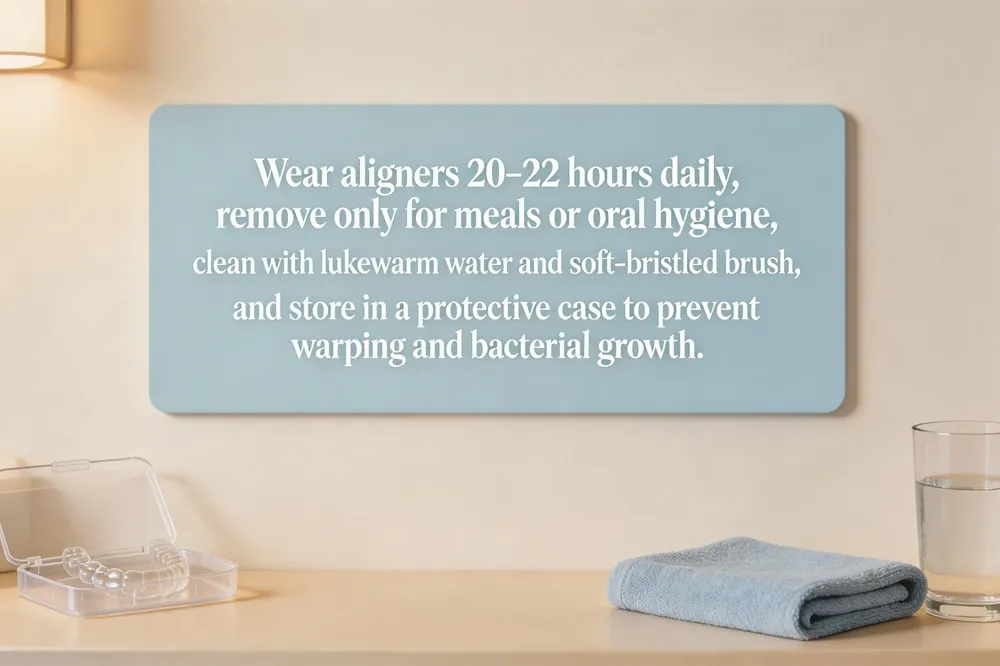 Clear aligners work best when they are in the mouth 20‑22 hours each day. Remove them only for meals, water‑only drinks, and oral‑hygiene steps. Before reinserting, brush and floss your teeth, then rinse the tray with lukewarm water and give it a gentle brush with a soft‑bristled toothbrush and a clear, unscented antibacterial soap or an Invisalign‑specific cleaning solution—avoid toothpaste, hot water, or colored soaps that can scratch or warp the plastic. Store the clean tray in its protective case whenever it’s not being worn to prevent loss, deformation, and bacterial growth. Follow the orthodontist’s schedule for changing to the next set—typically every one to two weeks—and attend all 4‑6‑week check‑ups so progress can be monitored and any issues addressed promptly. Consistent wear, proper insertion technique, and diligent daily cleaning keep the aligners clear, comfortable, and effective for moving teeth on track.
2. A Daily Cleaning Routine That Keeps Aligners Transparent
 Keeping your clear aligners spotless protects your smile and ensures treatment stays on track.
How to clean Invisalign daily
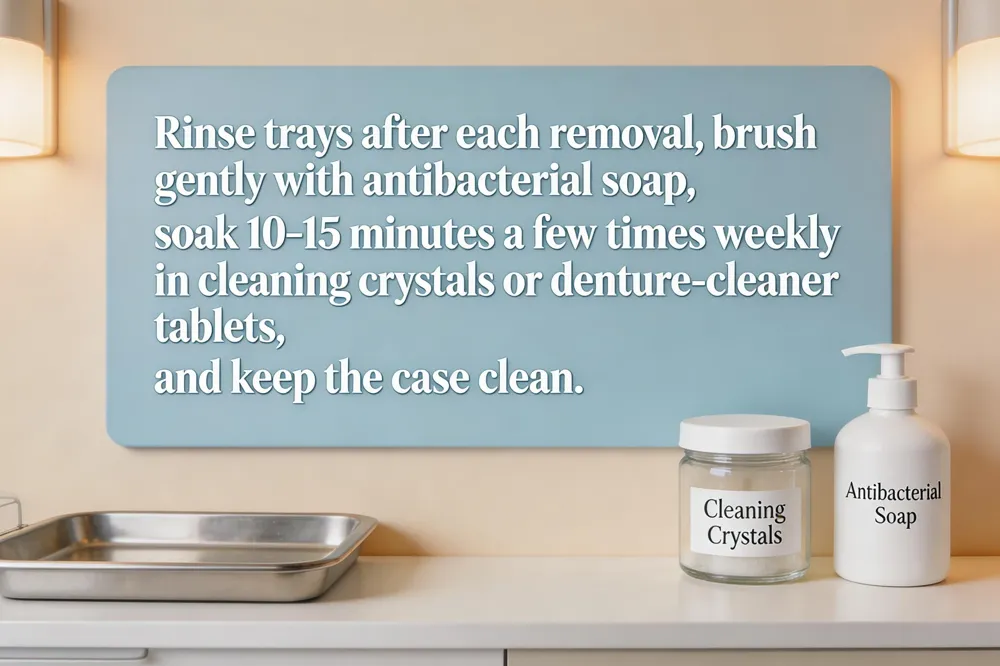
Rinse each tray under lukewarm water as soon as you remove it to wash away saliva and food particles. Gently brush both sides with a soft‑bristled toothbrush and a dab of unscented antibacterial soap or an Invisalign‑approved cleaning solution; avoid toothpaste. Rinse thoroughly, then store the tray in its case.
How to clean clear aligners
- Rinse with cool water after every removal.
- Brush once a day using a soft brush and mild, clear soap—no abrasive toothpaste.
- Soak 10‑15 minutes a few times a week in Invisalign cleaning crystals or a denture‑cleaner tablet.
- Keep the case clean and always place the trays inside when not worn.
What can I clean my clear aligners with?
Use lukewarm water, a soft toothbrush, and clear antibacterial soap or a dedicated aligner cleaner. Avoid hot water, whitening toothpaste, and harsh chemicals that can warp or scratch the plastic.
Aligners cleaner
A regular routine of rinsing, gentle brushing, periodic soaking, and proper case storage maintains clarity, prevents odor, and reduces bacterial buildup, supporting both oral health and effective tooth movement.
3. Chemical Boosts: Crystals, Toothperating and and Disinfectants
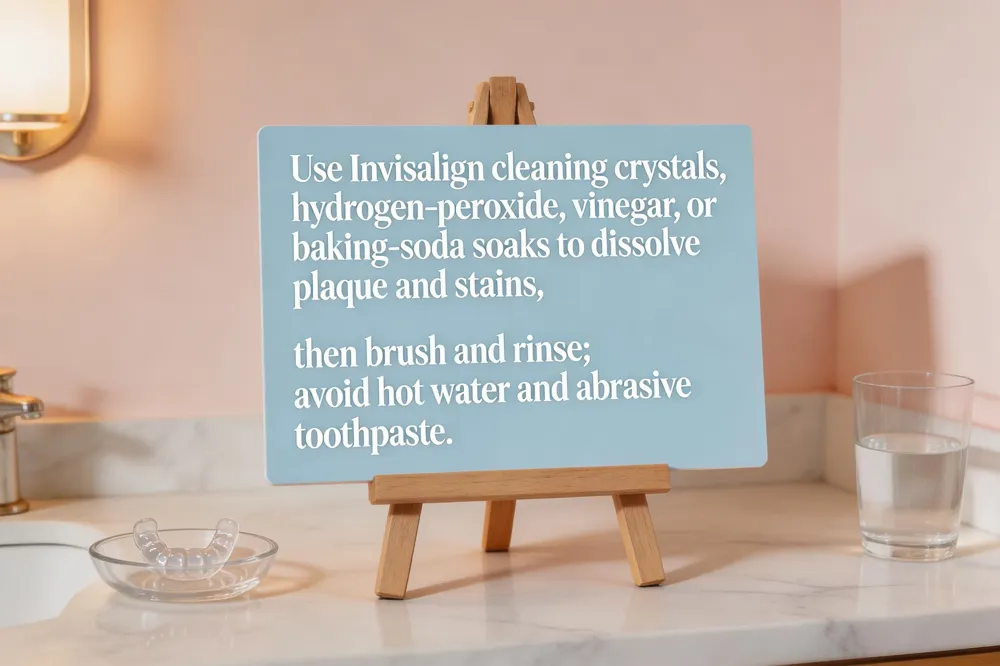 Invisalign cleaning crystals are a dentist‑approved, non‑toxic soak that dissolves in warm water and gently fizzes away plaque, bacteria, and stains without warping the tray. For optimal clarity and freshness, a daily 15‑minute crystal soak is sufficient; some patients prefer a twice‑a‑day routine for a deeper clean. The crystals work by releasing antimicrobial agents that kill oral biofilm, complementing the mechanical action of a soft‑bristled brush. If crystals aren’t on hand, you can achieve similar results with a 1:1 hydrogen‑peroxide solution, a 1:3 white‑vinegar mix, or a baking‑soda soak—each followed by a gentle brush and thorough rinse. Avoid hot water, toothpaste, or colored soaps, as they can scratch or warp the plastic. Store the clean aligners in their protective case, brush and floss your teeth before reinserting, and maintain the 20‑22‑hour daily wear schedule to keep treatment on track.
4. DIY and Home‑Based Cleaning Hacks (Baking Soda, Vinegar, Soap)
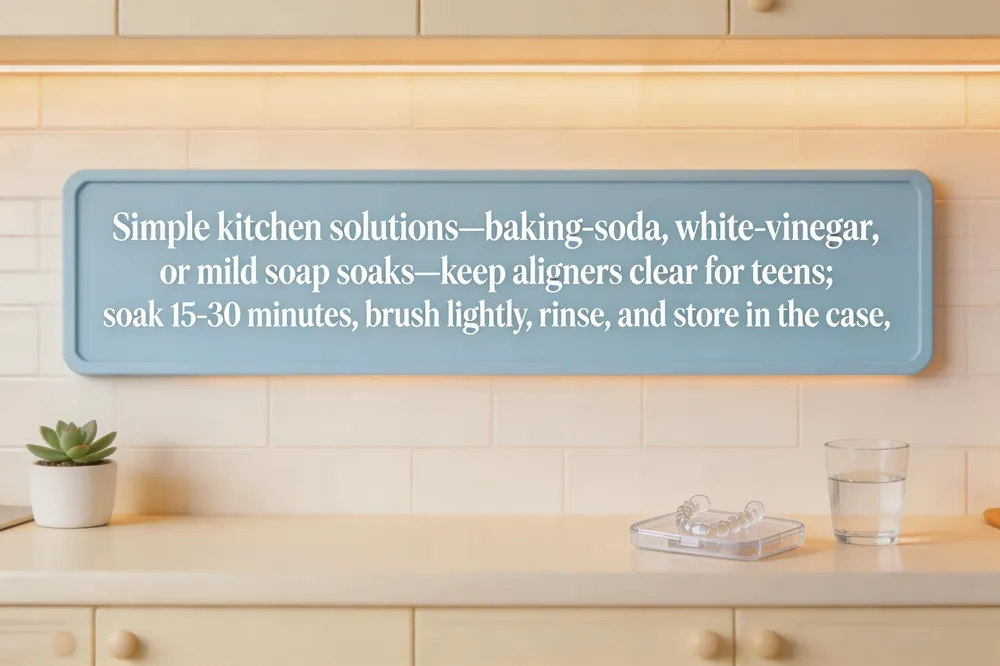 Teens can keep their aligners clear and fresh using simple kitchen items. For a baking‑soda soak, dissolve one tablespoon of baking soda in a cup of lukewarm water, place the trays in the mixture for 15‑30 minutes, then gently brush with a soft‑bristled toothbrush and rinse thoroughly before storing in the case. A white‑vinegar rinse works similarly: combine equal parts distilled vinegar and lukewarm water, soak the aligners for 15‑20 minutes, rinse well, and finish with a gentle brush using a mild antibacterial soap. The most basic routine is a soap‑and‑water clean—mix a few drops of unscented liquid soap with lukewarm water, soak for 15‑20 minutes, brush lightly, and rinse. These methods are safe for teens aged 12 and up, provided they follow the 20‑22 hour wear schedule, brush and floss before reinserting trays, and avoid hot water that could warp the plastic. Regular case cleaning and daily inspection complete a teen‑friendly oral‑hygiene plan.
5. Common Mistakes, Advanced Tools, and Teen‑Friendly Tips
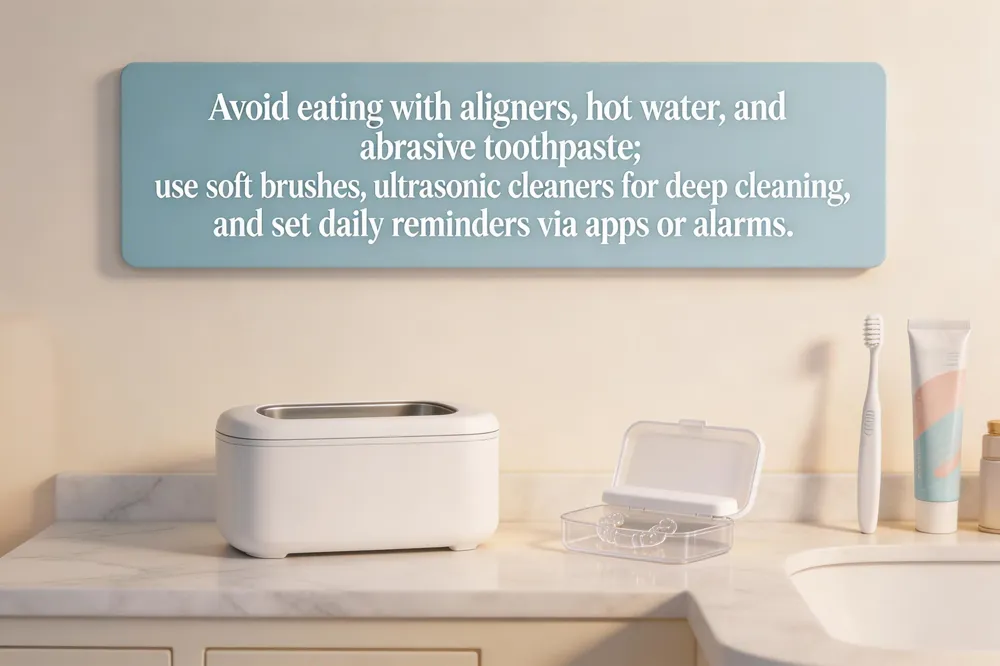 Teens often wonder what not to do with clear aligners. The biggest errors are wearing them while eating or drinking anything but water, leaving them in hot water (which warps the thermoplastic), using abrasive toothpaste that scratches the surface, and skipping daily cleaning after removal. To avoid these pitfalls, always rinse with lukewarm water, brush gently with a soft‑bristled toothbrush and a mild, unscented antibacterial soap, and store the trays in their protective case when not in use.
Avoid hot water and abrasive toothpaste – hot water can deform the aligner and abrasive toothpaste creates micro‑scratches that cloud the material.
Using ultrasonic cleaners – devices such as the Zima Dental Pod provide a weekly deep‑clean by vibrating away biofilm; combine this with daily crystal or tablet soaks for optimal clarity. Ultrasonic cleaners
Daily reminders for teens – set smartphone alarms, use the My Invisalign app, or place a sticky note on the bathroom mirror to cue brushing, flossing, and aligner insertion at least 20‑22 hours a day. This routine keeps teeth healthy, trays transparent, and treatment on schedule.
Keeping Your Smile on Track
To keep your Invisalign treatment moving smoothly, stick to three core habits every day. Wear your trays for 20‑22 hours, removing them only for meals, water, and oral‑hygiene routines; rinse with lukewarm water, brush gently with a soft toothbrush and clear antibacterial soap, and store them in the provided case when not in use. Schedule orthodontic check‑ups every 4‑6 weeks so the dentist can monitor progress, replace worn trays, and address any staining or fit issues early. Remember that consistency is the secret to success—set reminders, keep a travel case handy, and treat each cleaning step as a vital part of your smile’s transformation. Following these steps protects teeth, keeps aligners clear, and keeps treatment consistently on schedule.