Why Clear Aligners Are Gaining Popularity Among Teens
Clear aligners appeal to teens because they are virtually invisible, letting adolescents smile and speak confidently without the metal‑brace stigma. The removable design lets them take the trays out for sports, protecting the mouth from brackets and allowing the use of custom mouthguards, while also making brushing and flossing as easy as with regular teeth. Most orthodontists recommend clear aligners for patients aged 12‑18 who have mild‑to‑moderate crowding, spacing, or bite issues. Treatment usually lasts 12‑18 months, with a new set of trays every 1‑2 weeks and a daily wear time of 20‑22 hours to keep the plan on schedule.
Understanding Treatment Duration and Daily Wear Schedule
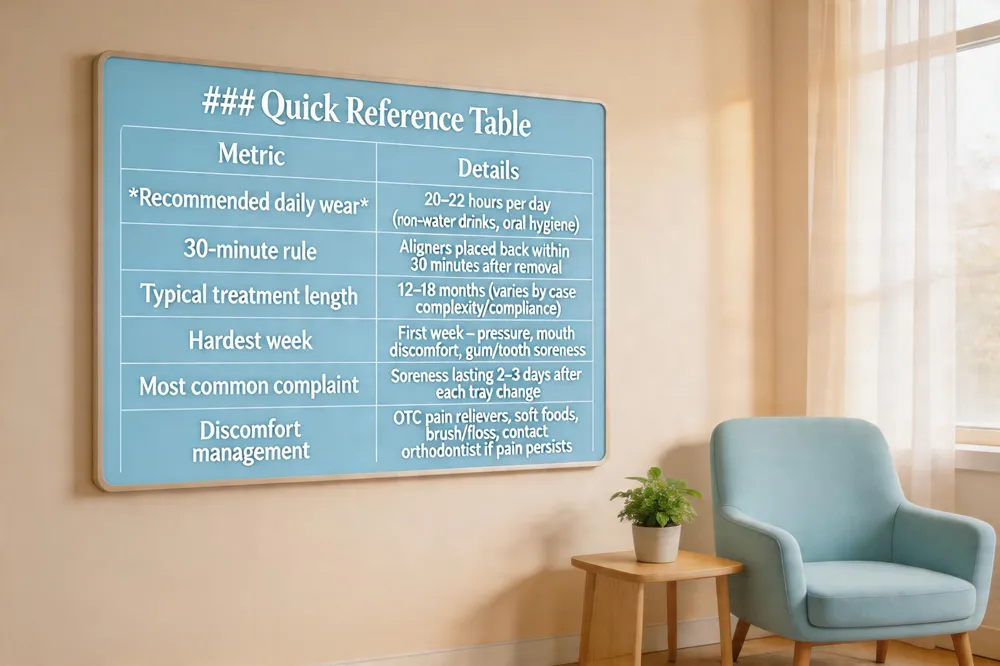
Quick Reference Table
| Metric | Details |
|---|---|
| Recommended daily wear | 20–22 hours per day (only remove for eating, drinking (non‑water) and oral hygiene) |
| 30‑minute rule | Aligners should be placed back within 30 minutes after removal to maintain required wear time |
| Typical treatment length | 12–18 months for most teens (varies with case complexity and compliance) |
| Hardest week | First week – initial pressure, mouth discomfort, gum soreness, tooth sensitivity |
| Most common complaint | Pressure and soreness lasting 2–3 days after each tray change |
| Discomfort management | OTC pain relievers (ibuprofen/acetaminophen), soft foods for first 24 h after tray change, diligent brushing/flossing; contact orthodontist if pain persists |
 Teenagers are typically instructed to wear their Invisalign® aligners for about 20–22 hours each day, removing them only for eating, drinking (aside from water), and oral‑hygiene routines. This consistent daily wear allows the aligners to apply the proper forces to move teeth gradually. The overall treatment duration for most teens ranges from 12 to 18 months, though the exact timeline depends on case complexity and how closely the wear schedule is followed. What is the 30‑minute rule for Invisalign? After you take out your trays to eat, drink, or clean your teeth, you should put them back in within 30 minutes. This helps keep the required 20‑22 hours of daily wear and limits the time acidic foods and bacteria stay on your teeth, protecting enamel and preventing delays. What is the hardest week of Invisalign? The first week is usually the toughest because your teeth are just beginning to respond to the new pressure. You may feel overall mouth discomfort, gum soreness, and tooth sensitivity. By the second to fourth week the pressure eases, and any soreness typically subsides after a day or two. What is the biggest complaint about Invisalign? The most common complaint is the initial pressure and soreness that accompanies each new set of aligners, lasting about 2–3 days. This manageable discomfort signals that the aligners are working. How to manage common discomfort: Use over‑the‑counter pain relievers (ibuprofen or acetaminophen) as needed, eat soft foods during the first 24 hours after a tray change, and keep a regular brushing and flossing routine to maintain oral hygiene. If pain persists beyond a few days, contact the orthodontist for a check‑up.
Compliance Challenges and Why Some Teens Stop Treatment
Compliance Challenges Overview
| Challenge | Impact on Treatment | Mitigation Strategies |
|---|---|---|
| 20‑22 hour wear rule feels restrictive | Slower tooth movement, longer overall timeline, reduced motivation | Use blue‑dot wear indicator, set reminders, parental monitoring apps |
| Complex cases (large rotations, severe crowding, bite corrections) | Perceived slower progress, frustration | Set realistic expectations, select appropriate case severity for teen age |
| Age considerations | Younger teens may have less stable compliance | Begin at age 12+ when permanent teeth erupted; ensure growth stability |
| Lack of monitoring | Undetected non‑compliance leads to delays | Remote tools like DentalMonitoring (up to 50 % fewer in‑office visits) |
| Unrealistic expectations | Drop‑out due to perceived slow results | Educate on consistent wear benefits, celebrate milestones |
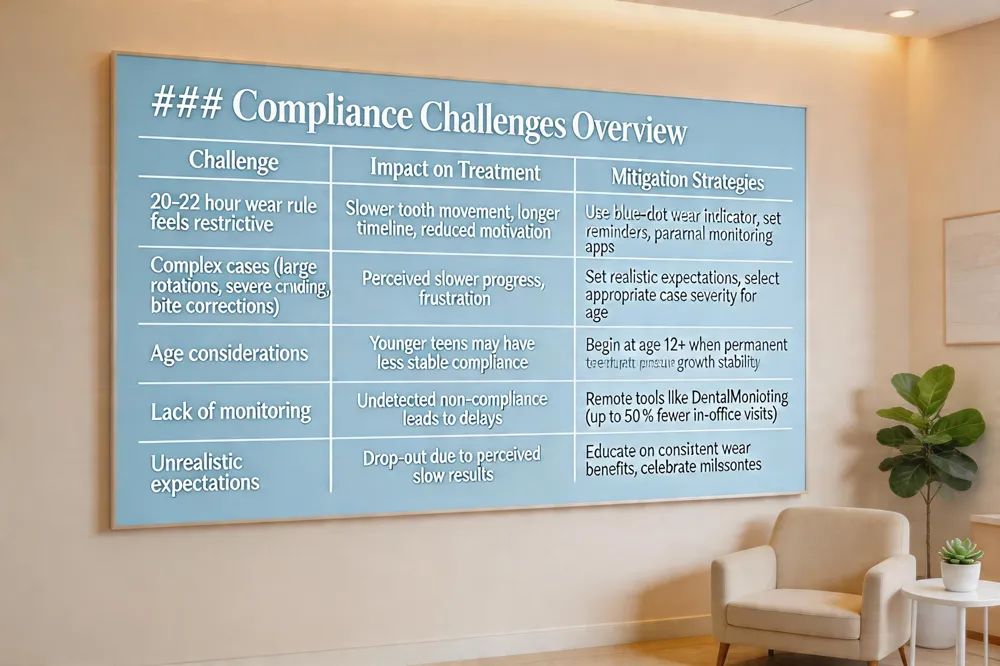 Teens often quit Invisalign when the 20‑22‑hour daily wear rule feels too restrictive. Missing even a few hours a day slows tooth movement, prolongs appointments, and can erode motivation. Complex cases—large rotations, severe crowding, or significant bite corrections—require more precise force and may feel slower than mild cases, leading to frustration. Age matters too: most providers start clear aligners at 12 years once permanent teeth have erupted; a 14‑year‑old is typically a good candidate if growth is stable and compliance can be monitored. Parents can watch compliance with blue‑dot indicators or remote tools like DentalMonitoring, which also cuts in‑office visits by up to 50 %. When teens understand that consistent wear, proper cleaning, and regular check‑ins keep the timeline on track, dropout rates drop. In short, realistic expectations, age‑appropriate case selection, and reliable compliance monitoring are key to keeping teens on the clear‑aligner journey.
Everyday Care, Hygiene, and Lifestyle Tips for Teens
Daily Care & Lifestyle Tips
| Tip | How to Do It |
|---|---|
| Clean aligners | Rinse with lukewarm water, gently brush inside/outside with soft‑bristled toothbrush and mild unscented liquid soap or dedicated cleaning crystal (avoid toothpaste) |
| Travel hygiene kit | Pack mini toothbrush, floss picks, small toothpaste tube, reusable case for on‑the‑go protection |
| Sports & vigorous activity | Remove aligners, store in case, wear custom mouthguard to protect trays and teeth |
| Compliance tracking | Use fading blue‑dot indicator on Invisalign Teen trays; pair with remote‑monitoring apps like DentalMonitoring |
| Kissing | No restriction – aligners are securely fitted and do not interfere |
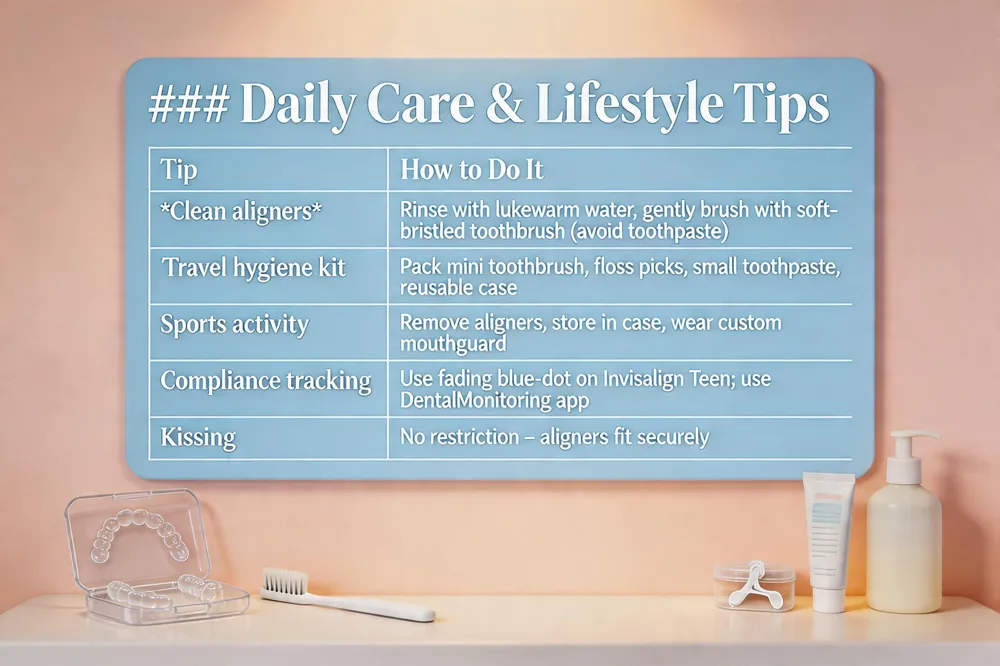 Keeping clear aligners clean is simple and effective. Rinse each tray with lukewarm water after removal, then gently brush the inside and outside with a soft‑bristled toothbrush and a mild, unscented liquid soap or a dedicated aligner‑cleaning crystal; avoid toothpaste, which can scratch the plastic. For a quick refresh on the go, pack a travel‑size oral‑hygiene kit that includes a mini toothbrush, floss picks, a small tube of toothpaste, and a reusable case—this ensures the aligners stay protected and hygienic throughout the school day or a weekend trip.
When playing sports or engaging in vigorous activities, remove the aligners and store them in their case, then wear a custom mouthguard. This prevents damage to the trays and protects the teeth from impact.
Compliance indicators, such as the fading blue dot on Invisalign Teen, let both teen and parent visually track wear time. Pair this with an FDA‑cleared remote‑monitoring app like DentalMonitoring, which records weekly scans and alerts the orthodontist to any deviations.
Can I kiss my boyfriend while wearing Invisalign? Yes. Invisalign aligners are securely fitted and do not interfere with kissing or intimacy.
Clear Aligners vs. Traditional Braces: What Parents Should Compare
Comparison Table
| Aspect | Clear Aligners | Traditional Braces |
|---|---|---|
| Initial appointment time | ~1 hour (tray fitting) | 1–2 hours (brackets placement, archwire) |
| In‑office visits | Fewer (up to 50 % less) | Every 4–6 weeks for adjustments |
| Typical treatment duration | 12–18 months (average) | 18–24 months (average) |
| Provider training | Orthodontist with specialized aligner planning | Orthodontist (3 years additional specialty training) |
| Insurance coverage | Comparable to braces | Comparable to aligners |
| Lifestyle impact | Removable, easier oral hygiene, no food restrictions | Fixed, dietary limitations, more oral hygiene effort |
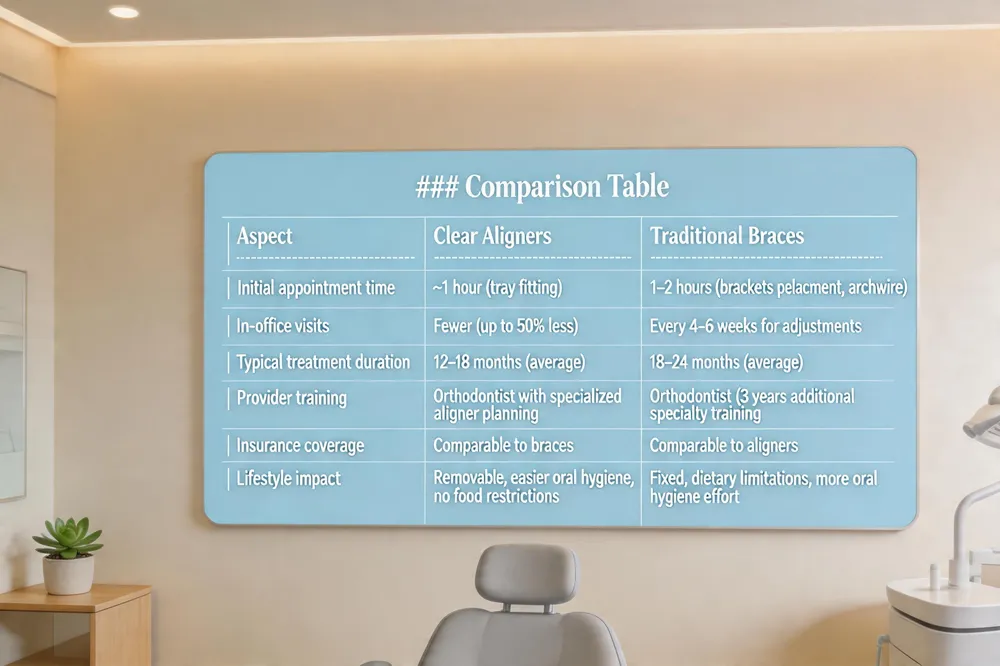 Placing braces on a 13‑year‑old typically takes about one to two hours from start to finish. The orthodontist first cleans the teeth, attaches the brackets with a special adhesive, and then threads the archwire through the brackets. After the brackets are set, the wire is secured and any required elastics are placed. The procedure is done in a single appointment, though the first few days may feel uncomfortable as the teeth begin to shift under pressure. Once the braces are in place, the teen will return for adjustments every four to six weeks throughout the treatment.
Overall, a full orthodontic timeline for traditional braces in teens usually spans 18 to 24 months, divided into phases of alignment, bite correction, and fine‑tuning. Board‑certified orthodontists complete an additional three years of specialized training after dental school, which translates into more accurate treatment planning and better outcomes compared with general dentists.
Both clear aligners and braces are typically covered by dental insurance at comparable levels, and many practices offer flexible payment plans, financing, or in‑office promotions to make care affordable. Clear aligners often require fewer in‑office visits—sometimes up to 50 % less—but still demand diligent wear (20‑22 hours daily) and regular check‑ins.
Real‑World Stories, Technology, and Extra Considerations
Real‑World Highlights
| Example | Key Takeaway |
|---|---|
| Billie Eilish’s 18‑month Invisalign journey | Consistent 20‑22 h wear and bi‑weekly tray changes produce noticeable results quickly |
| DentalMonitoring remote monitoring | AI‑driven weekly scans cut appointments by ~½, maintaining compliance and tracking tooth movement |
| Spark TruGEN aligners (Varble Orthodontics) | Stain‑resistant material with engineered force delivery for predictable, sometimes faster outcomes |
| Parental support tools | Reminder apps, wear‑time charts, blue‑dot compliance indicator help teens stay on schedule |
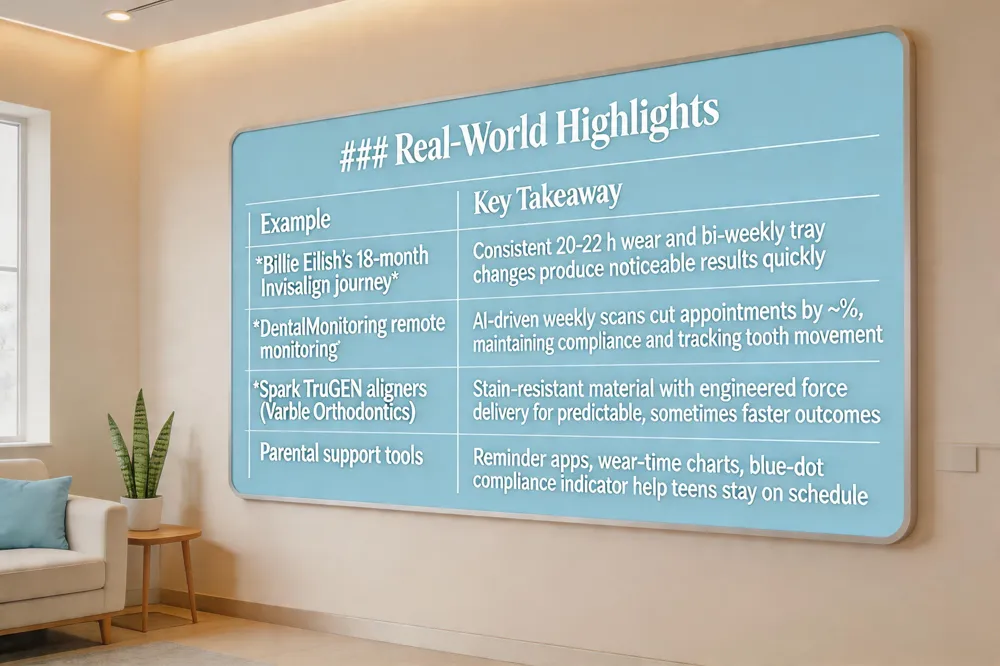 Billie Eilish’s 18‑month Invisalign journey shows how a teen star can successfully fit clear‑aligner treatment into a busy schedule. She wore the trays for the recommended 20‑22 hours each day, changing to a new set every one to two weeks, and the results were visible within a few months, culminating in a discreet smile by the end of the 18‑month period.
Remote monitoring with DentalMonitoring simplifies teen compliance. The FDA‑De Novo approved AI system captures weekly intra‑oral scans, allowing orthodontists to track tooth movement and wear time without a full in‑office visit. This can cut appointments by about half, reducing a typical two‑year plan from 20‑24 visits to 8‑12.
Spark TruGEN aligners used by Varble Orthodontics, offer a clearer, more stain‑resistant material than conventional plastics. Their engineered force‑delivery maintains consistent pressure, helping achieve predictable movements and sometimes faster treatment.
Parental support tools such as reminder apps, wear‑time charts, and the blue compliance dot on Invisalign Teen trays give families tangible ways to monitor and encourage the 20‑22 hour daily wear schedule, keeping teens on track for a successful outcome.
Key Takeaways for Parents and Teens
Commit to wearing the aligners 20‑22 hours, removing them only for meals, brushing, or sports. After meals, keep trays out for at least 30 minutes while you clean your teeth, then reinsert. Clean aligners twice daily with a soft brush and lukewarm water, and store them in a protective case. Use blue‑dot compliance indicators or DentalMonitoring’s remote scans to track wear. Attend check‑ups every 6‑8 weeks and contact your orthodontist if anything feels off.