Why a Mouthwash Matters
Mouthwash is best used as a helpful adjunct to brushing and flossing, reaching the gum line and interproximal spaces that a toothbrush may miss. Therapeutic (antibacterial) rinses contain active agents—such as chlorhexidine, cetylpyridinium chloride, essential‑oil blends, or fluoride—that actively reduce plaque, gingivitis, and cavity risk, while cosmetic formulas mainly mask odor with flavoring agents and provide little or therapeutic benefit. Safety is overseen by the FDA, which requires accurate labeling of active ingredients, and by the American Dental Association (ADA), whose Seal of Acceptance confirms a product’s safety and efficacy for its intended use. Key precautions include avoiding mouthwash for children under six (or under seven unless dentist‑approved), steering clear of alcohol‑based rinses if you have dry mouth or sensitivity, and waiting at least 30 minutes after using a fluoride rinse before eating or drinking to let the fluoride work. Consulting your dentist ensures the right choice for your oral‑health goals.
Understanding Mouthwash Types and Safety
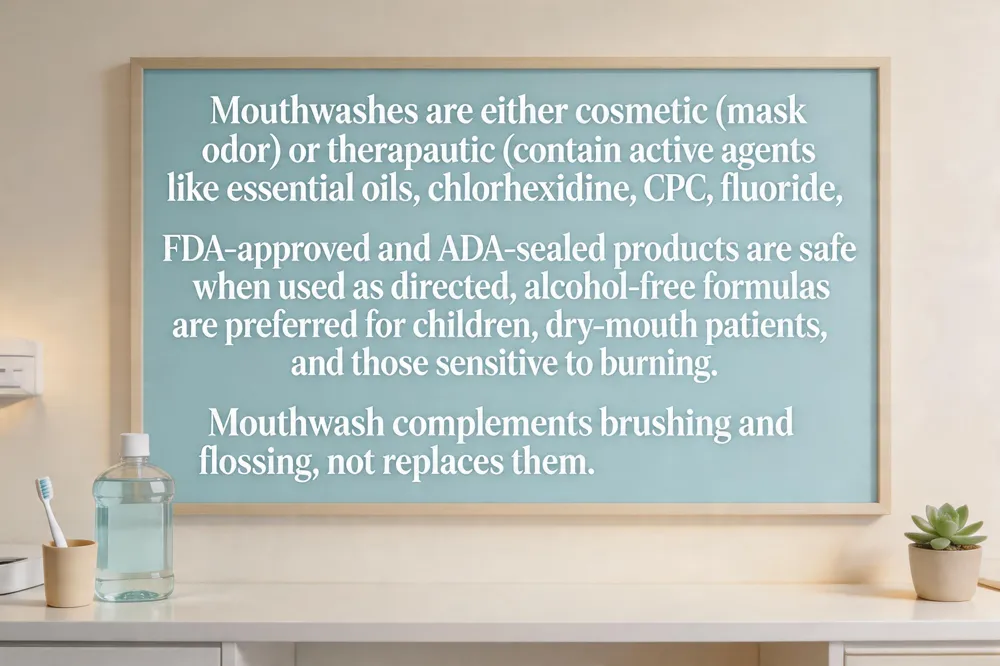 Mouthwash, also called a mouth rinse, is a liquid you swish around the mouth and then spit out. It can freshen breath and, depending on its formulation, reduce oral bacteria, plaque, and gingivitis, or deliver therapeutic agents such as fluoride. There are two main classifications: cosmetic mouthwashes that primarily mask odor and therapeutic mouthwashes that contain active ingredients (e.g., essential oils, chlorhexidine, cetylpyridinium chloride, fluoride) to combat decay, gum disease, or halitosis. When used as directed, most over‑the‑counter rinses are safe; they are cleared by the FDA and many carry the ADA Seal of Acceptance, confirming scientific review for safety and efficacy. Alcohol‑free options are recommended for children, dry‑mouth patients, and anyone sensitive to burning sensations, while alcohol‑based rinses can cause irritation and are not advised for those groups. Children under six should not use mouthwash unless a dentist advises otherwise, because of ingestion risk. Overall, mouthwash is an adjunct to brushing and flossing, not a replacement, and selecting the right type—cosmetic for temporary freshening or therapeutic for plaque‑control—should be guided by your oral‑health goals and, when needed, professional recommendations.
Key Active Ingredients and Their Effects
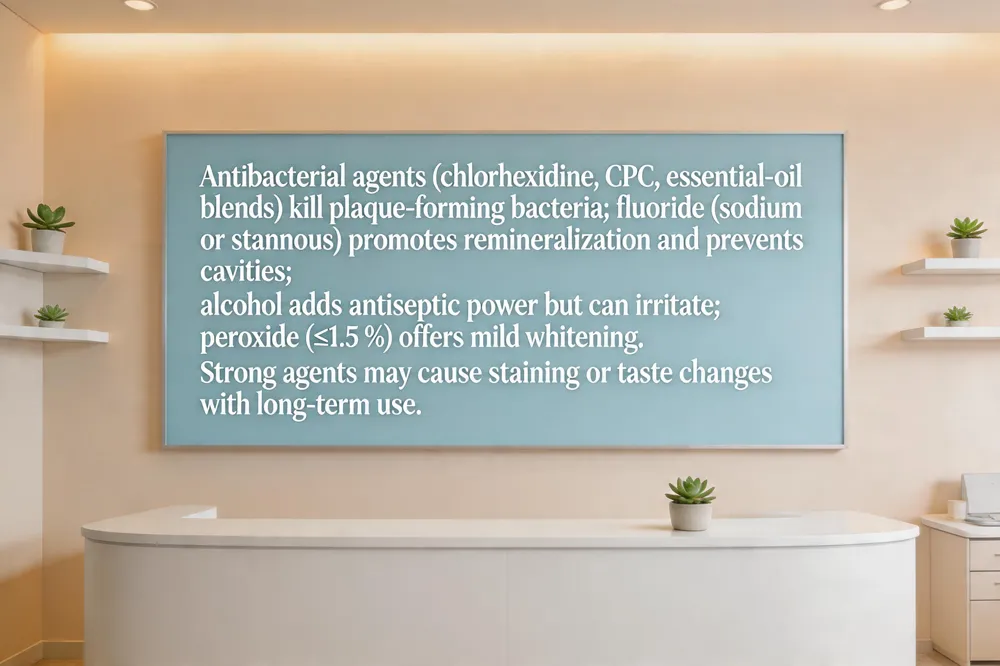 Understanding what’s inside a mouthwash helps you match the product to your oral‑health goals.
Antibacterial agents – Chlorhexidine, cetylpyridinium chloride (CPC) and essential‑oil blends (eucalyptol, menthol, thymol) are the workhorses that kill plaque‑forming bacteria and reduce gingivitis. Chlorhexidine is a prescription‑strength antiseptic that disrupts bacterial cell membranes; CPC is an over‑the‑counter quaternary ammonium compound that also freshens breath; essential oils penetrate bacterial walls for a broader antimicrobial effect.
Fluoride – Sodium or stannous fluoride forms a protective film on enamel, promoting remineralization and lowering cavity risk, especially for those who drink non‑fluoridated water.
Alcohol & peroxide – Alcohol adds antiseptic power but can cause burning, dry mouth, and irritation. Peroxide (≤1.5 %) offers mild whitening and ulcer soothing without the harsh burn of alcohol‑based rinses.
Side‑effects – Strong agents like chlorhexidine may cause temporary tooth staining or altered taste if used long‑term; alcohol‑based rinses can exacerbate dryness.
Q&A
- Active ingredient that kills bacteria? Chlorhexidine, CPC, and essential‑oil blends are the primary antibacterial agents.
- Best mouthwash ingredients? Fluoride + an antibacterial (chlorhexidine or CPC) + essential oils; look for ADA‑approved, alcohol‑free formulas for daily use.
- Do antiseptic rinses prevent cavities? They reduce bacterial load but only fluoride directly prevents decay.
- Can I use antiseptic mouthwash every day? Alcohol‑free, low‑concentration antiseptics (essential oils or mild peroxide) are safe daily; chlorhexidine should be limited to short courses.
- Antiseptic vs. antibacterial? Antiseptics target a broad spectrum (bacteria, viruses, fungi) and are often prescription‑only; antibacterials focus on plaque‑causing bacteria and are generally OTC and suitable for everyday use.
Consult your dentist for a personalized recommendation based on gum health, caries risk, and any sensitivities.
Targeted Mouthwash Recommendations
 Best mouthwash that doesn’t stain teeth
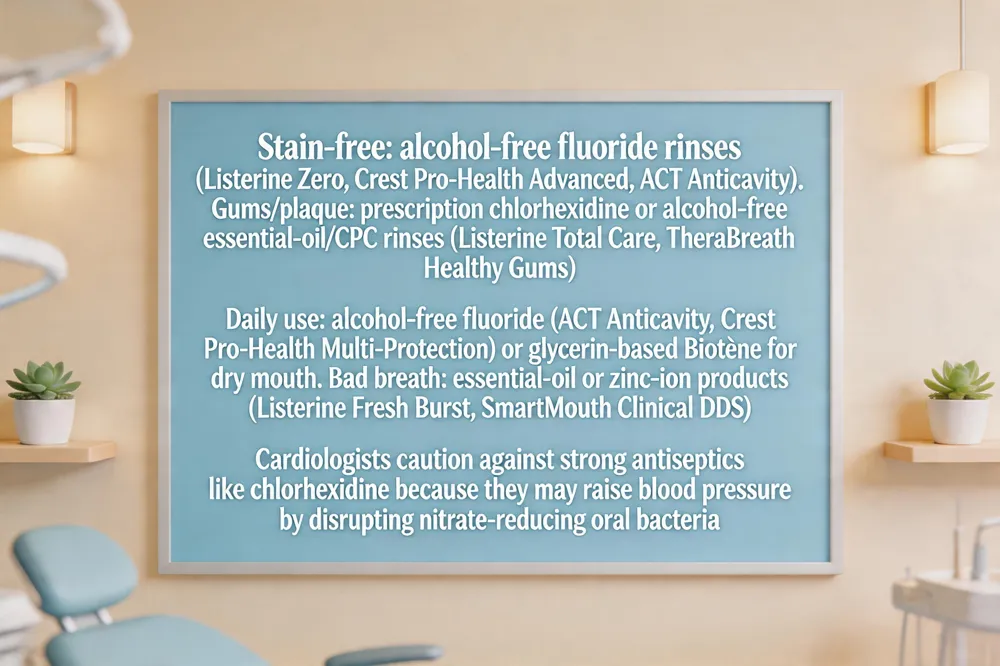
Choose alcohol‑free, fluoride mouthwashes such as Listerine Zero, Crest Pro‑Health Advanced, or ACT Anticavity Fluoride. These formulas protect enamel without the dark pigments that cause yellow or brown discoloration. Sensitive‑tooth options like Sensodyne Pronamel or Listerine Sensitivity Zero also avoid staining while delivering potassium nitrate or fluoride for relief. Avoid prescription‑strength chlorhexidine and high‑concentration essential‑oil rinses, which are known to cause staining with prolonged use.
Best mouthwash for gums and plaque
The gold‑standard for rapid plaque control is prescription chlorhexidine (0.12 %–0.2 %). For daily use, an alcohol‑free therapeutic rinse with essential oils (eucalyptol, menthol, thymol) or cetylpyridinium chloride—e.g., Listerine Total Care or TheraBreath Healthy Gums—provides effective plaque reduction while being gentle on soft tissue. Zinc‑chloride formulas (Listerine Clinical Solutions) quickly calm bleeding gums. Adding fluoride or stannous fluoride supports enamel protection for patients with receded gums or high caries risk.
Best mouthwash for daily use
An alcohol‑free fluoride rinse like ACT Anticavity, Crest Pro‑Health Multi‑Protection, or TheraBreath Fresh Breath offers cavity prevention and fresh breath without irritation. For dry‑mouth patients, glycerin‑based Biotène adds moisture while still delivering fluoride. Natural, alcohol‑free choices such as Tom’s of Maine Wicked Fresh are pleasant‑tasting and safe for everyday use.
Best mouthwash for bad breath
Antimicrobial rinses with essential oils—Listerine Fresh Burst, Crest Pro‑Health, or the alcohol‑free TheraBreath Fresh Breath—target odor‑producing bacteria effectively. Zinc‑ion products like SmartMouth Clinical DDS also control halitosis while being gentle on gums.
Why do cardiologists warn against mouthwash?
Strong antiseptic rinses (especially chlorhexidine) can disrupt nitrate‑reducing oral bacteria, lowering nitric‑oxide production and modestly raising blood pressure. This effect is most pronounced with broad‑spectrum, alcohol‑based formulas and may increase cardiovascular risk in hypertensive patients. Milder, non‑chlorhexidine, alcohol‑free options have little impact on this pathway and are safer for heart health.
Practical Usage Tips & DIY Options
 Choosing the right rinse and using it correctly maximizes oral‑health benefits. Below are practical tips and a simple DIY recipe.
How to use mouthwash
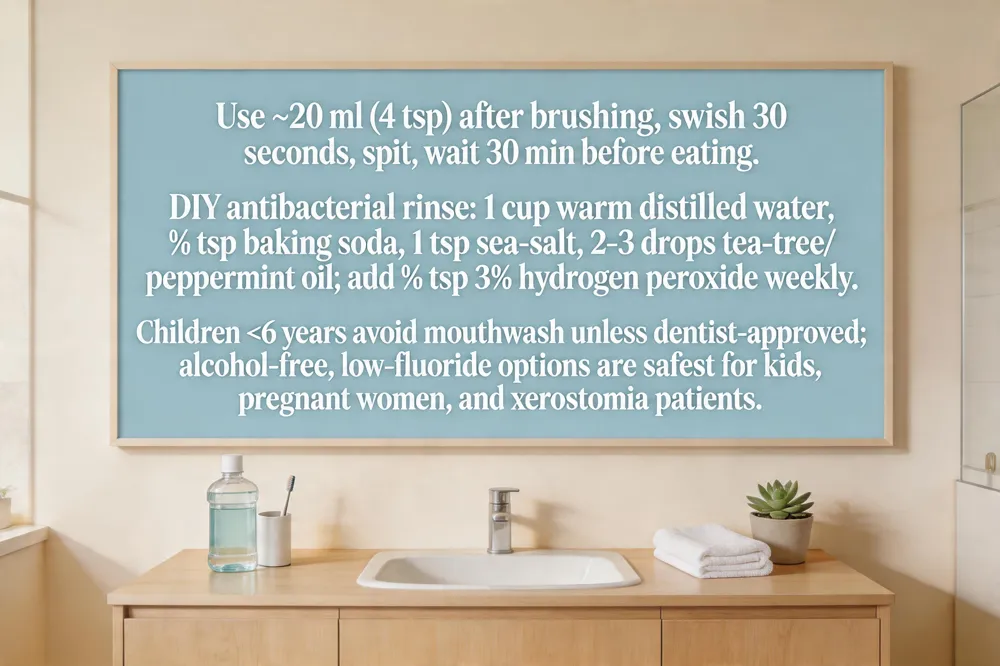
Measure about 20 ml (four teaspoons) of product, pour into a cup and swish for 30 seconds, reaching teeth, gums and tongue. Spit out; do not swallow. Use after brushing and flossing, twice, and wait 30 minutes before eating or drinking.
Homemade antibacterial rinse recipe
Mix 1 cup warm distilled water, ½ tsp baking soda, 1 tsp sea‑salt, and 2‑3 drops tea‑tree or peppermint essential oil. Stir until dissolved. Add ½ tsp 3 % hydrogen peroxide weekly. Store in a clean, airtight container in the refrigerator and discard after three days. Consult your dentist before using DIY rinse.
Frequency and timing
Therapeutic rinses are used twice; cosmetic fresheners may follow meals. Wait 30 minutes after fluoride toothpaste before rinsing.
Special populations
Children under six should avoid mouthwash unless a dentist advises; alcohol‑free, low‑fluoride options are safest. Pregnant women and xerostomia patients should choose alcohol‑free formulas.
What kind of mouthwash should I use
Pick a therapeutic rinse that matches your need: fluoride for cavities, essential‑oil or chlorhexidine for gingivitis, or an alcohol‑free rinse for dry mouth. Discuss with your dentist.
Antibacterial mouthwash better?
Yes – antibacterial (therapeutic) rinses actively reduce plaque and gingivitis, while cosmetic rinses only mask odor.
Professional Guidance and When to Seek It
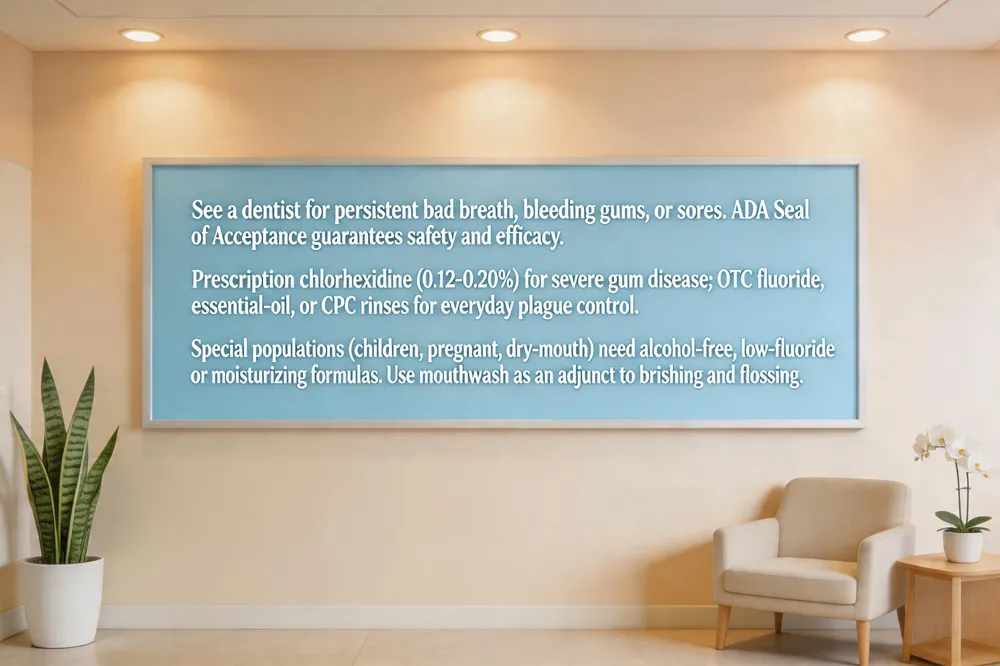 If you notice persistent bad breath, bleeding gums, or a new sore, schedule a dental visit promptly—these signs may indicate infection or early gum disease that a therapeutic mouthwash alone cannot resolve. The American Dental Association (ADA) Seal of Acceptance tells you the product has met rigorous safety and efficacy standards; choosing a seal‑approved rinse ensures clinically proven benefits. For severe periodontal disease, post‑extraction care, or chronic halitosis, dentists often prescribe chlorhexidine (0.12 %–0.20 %) because it delivers the strongest antibacterial effect, though short‑term use is advised to avoid staining. Over‑the‑counter options such as fluoride‑containing rinses (e.g., ACT Anticavity) protect enamel, while essential‑oil or cetylpyridinium chloride (CPC) formulas (Listerine, Crest Pro‑Health) reduce plaque and gingivitis for everyday use. Special populations need extra caution: children under six should avoid mouthwash unless a dentist directs otherwise; older children (6‑7 years) may use alcohol‑free, low‑fluoride or CPC rinses under supervision. Pregnant patients and those with dry‑mouth conditions benefit from alcohol‑free, fluoride‑rich or moisturizing formulations. Always use mouthwash as an adjunct to brushing and flossing, follow the product’s dosing instructions, and discuss any concerns with your dentist to tailor the best regimen for your oral health.
Putting It All Together for a Healthier Smile
Choosing the right mouthwash starts with a clear oral‑health goal. If you want to keep cavities at bay, look for an ADA‑approved rinse that contains fluoride; the added fluoride strengthens enamel and helps remineralize early lesions, especially for those who drink non‑fluoridated water. When gum disease or gingivitis is a concern, an antibacterial or antiseptic rinse—such as one with cetylpyridinium chloride, essential‑oil blends, or chlorhexidine—can reduce plaque and inflammation along the gum line. Follow the product’s directions: usually 15‑20 ml swished for 30 seconds after brushing, then avoid eating or drinking for at least 30 minutes to let the active ingredients work. Children under six should not use mouthwash, and anyone experiencing a burning sensation should stop use and consult a dentist. A brief visit to your dental professional can confirm the best formula for your individual needs and ensure safe, effective use. Regular dental check‑ups together with the right rinse keep your smile bright and your gums healthy.