Welcome to Your Restorative Dentistry Guide
Dental crowns, bridges, and implants each play a unique role in restoring a damaged smile. Crowns protect weakened teeth, rebuild shape, and blend seamlessly with surrounding teeth. Bridges fill gaps left by missing teeth, anchoring a false tooth to adjacent crowns or implants to keep the bite stable. Implants act as artificial roots, preserving jawbone density while supporting crowns or bridges that look and function like natural teeth. Modern dentistry at Loud Family Dental uses digital scanning, CAD/CAM milling, and high‑strength materials such as zirconia to deliver precise, aesthetic results in fewer visits. Patients can expect a gentle, personalized treatment plan, same‑day crown options when eligible, and thorough after‑care guidance to ensure long‑lasting oral health.
Understanding Dental Crowns: Types, Materials, and Costs
 Types of dental crowns and cost
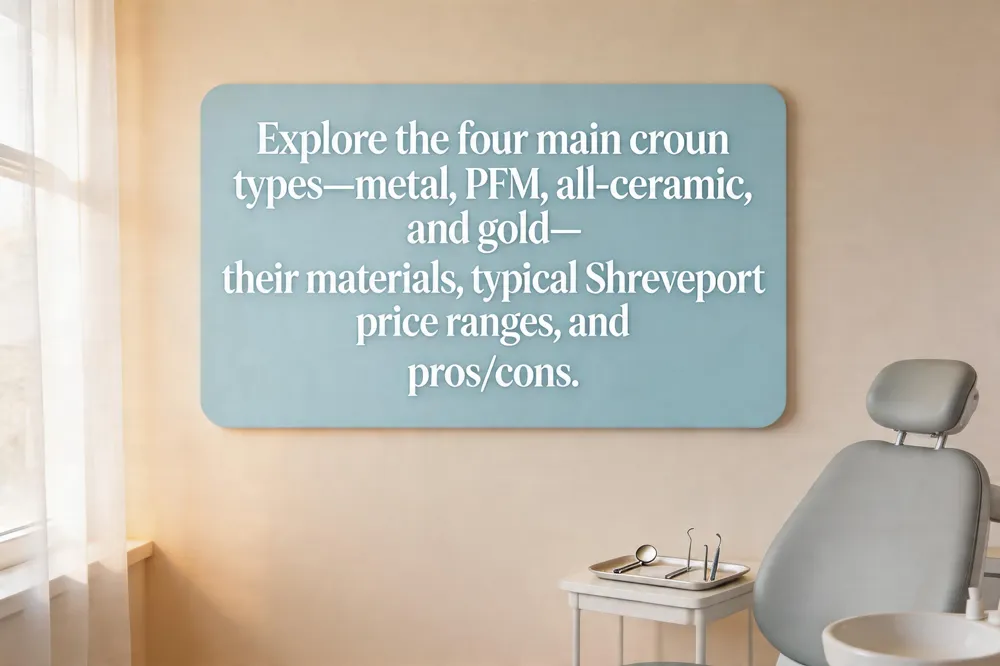
Dental crowns are available in metal, porcelain‑fused‑to‑metal (PFM), all‑ceramic (zirconia or e‑max), and gold alloys. In Shreveport, metal crowns run $1,000‑$1,400, PFM $800‑$1,200, all‑ceramic $1,200‑$1,600, and gold $1,300‑$1,800. Prices include preparation, temporary and permanent crowns, lab work, and dentist time.
Zirconia crown
Zirconia crowns are all‑ceramic biocompatible caps made from zirconium dioxide. They are ultra‑strong, metal‑free, and mimic natural translucency, lasting 10‑15+ years. CAD/CAM technology can fabricate them in a single visit, offering both durability and aesthetics.
Disadvantages of dental crowns
Crowns may chip or loosen over time. Poor fit can lead to bite issues or decay beneath the crown. High material and labor costs are also a consideration.
Tooth cap vs crown
A cap (onlay/inlay) covers only the damaged biting surface, preserving most natural tooth structure and costing less. A full crown encases the entire visible tooth, providing comprehensive protection for heavily damaged teeth or when supporting bridges or implants.
The Crown Placement Process: From Preparation to Final Fit
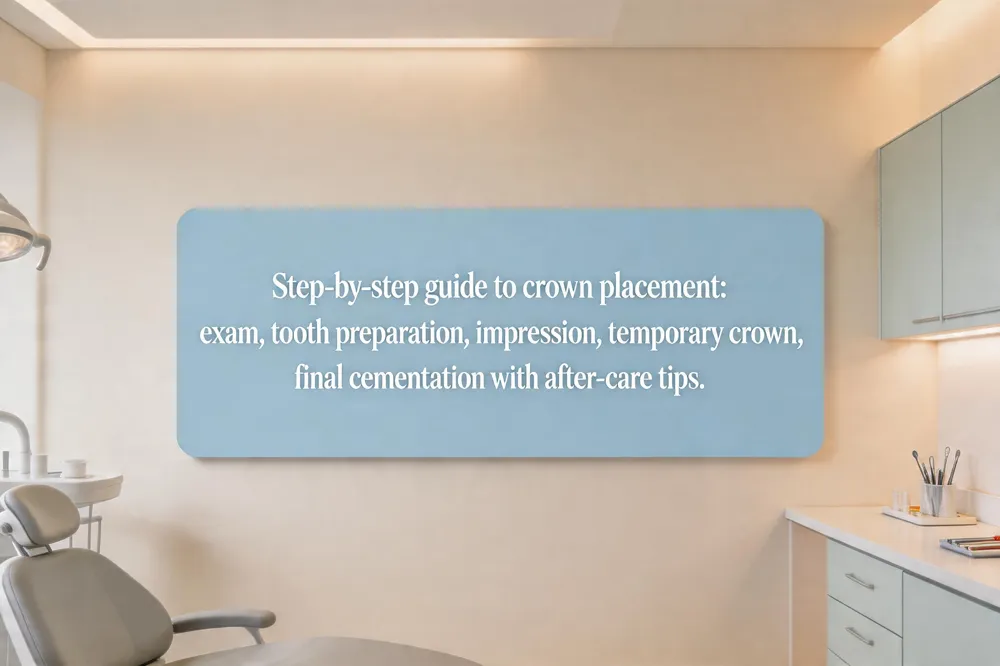 A crown placement begins with a comprehensive exam and X‑ray, followed by local anesthesia to keep you comfortable. The dentist removes any decay or old fillings, then reshapes the tooth by filing down 1–2 mm of enamel to create a uniform taper that will hold the crown securely. An impression or digital scan of the prepared tooth is taken to manufacture a custom‑fit crown, while a temporary crown protects the tooth during the lab‑fabrication period (usually one to two weeks). At the second visit the temporary crown is removed, the permanent crown is checked for fit, color, and bite, and any necessary adjustments are made. Finally, the crown is permanently cemented onto the tooth, and the dentist provides after‑care instructions—brushing twice daily, flossing, avoiding hard foods, and regular check‑ups—to ensure a durable, natural‑looking restoration.
Dental Bridges: Options, Costs, and Longevity
 Dental bridges come in several designs to suit different clinical situations. Traditional bridges use crowns on two adjacent teeth to hold one or more pontics, while cantilever bridges rely on a single crowned tooth for support—ideal when only one side of the gap has a healthy tooth. Maryland (resin‑bonded) bridges employ a thin metal or porcelain wing bonded to the backs of neighboring teeth, preserving more natural tooth structure. For a long‑lasting, bone‑preserving solution, implant‑supported bridges attach to surgically placed titanium posts, eliminating the need to grind down healthy teeth.
Cost considerations vary. In Shreveport, a single‑unit front bridge without insurance typically runs $800‑$1,200; a three‑unit traditional bridge ranges $1,500‑$2,500. With insurance, many plans cover 50‑80 % of the average $4,000 out‑of‑network price, leaving a $600‑$1,200 out‑of‑pocket expense. Implant‑supported bridges are higher in price but offer superior durability.
Removable partial dentures (often called partial dentures) are a cost‑effective, non‑surgical option that can be taken out for cleaning, though they may feel less stable than fixed bridges.
Common problems include loosening, decay on supporting teeth, gum irritation, and chipping from hard foods or bruxism. Regular brushing, flossing, professional cleanings, and night guards help prevent these issues.
A dental bridge is a long‑term solution, typically lasting 5‑15 years, with some zirconia bridges reaching 20 years when well maintained. They are not permanent; eventual replacement or repair is expected as supporting teeth or the bridge itself age.
Dental Implants: Types, Costs, Advantages, and Considerations
 Dental implants are a permanent, natural‑looking solution for missing teeth. They consist of a titanium or zirconium post placed in the jawbone, an abutment, and a custom‑made crown. The three main types are endosteal (screw‑like posts placed directly into healthy bone), subperiosteal (resting on top of thin bone beneath the gum), and zygomatic (long fixtures anchored in the cheekbone for severe upper‑jaw loss).
Cost in Shreveport typically ranges from $2,500 to $4,000 for a single tooth, including the post, abutment and crown; nationally the package averages $3,000‑$6,000. Financing options and detailed estimates are usually offered, and additional procedures such as bone grafts can increase the price.
Advantages include preservation of jawbone density, no need to grind down neighboring teeth, and the ability to care for the restoration just like natural teeth. Disadvantages are the higher upfront cost, multiple visits, a healing period of several months, and rare complications such as infection, peri‑implantitis or nerve injury.
Patients with uncontrolled medical conditions, active gum disease, insufficient bone, heavy smoking, or limited budget may be advised to postpone implants. Original Medicare does not cover implants; only some Medicare Advantage plans may offer limited dental benefits.
Supporting Your Restorations: Oral Hygiene, Nutrition, and Lifestyle
 Keeping crowns, bridges, and implants healthy starts with diligent oral care. Brush twice a day with a soft‑bristled brush using gentle circular motions, and floss or use a water flosser to clear plaque from under restorations. Interdental brushes are especially useful around bridges and implant abutments.
Nutrition plays a role, too. Xylitol, a natural sweetener, helps rebuild enamel by keeping the mouth’s pH neutral and encouraging calcium and phosphate to remineralize weak spots. Chewing Xylitol‑gum or using Xylitol‑rich toothpaste can reduce cavity risk on restored teeth.
Lifestyle habits matter: smoking impairs gum health and bone density, increasing the chance of crown or implant failure; excessive alcohol can dry the mouth and promote decay. Manage bruxism with a custom nightguard to protect crowns and implants from grinding forces.
After a procedure, follow the 3‑3‑3 rule—600 mg ibuprofen three times daily for no more than three days—to control pain and inflammation.
Quick FAQs
- What is the sweet mineral that rebuilds teeth? Xylitol is a natural sweetener that neutralizes oral pH and promotes remineralization, helping repair early enamel damage.
- What is the rule of 7 in dentistry? First tooth by 7 months, first permanent tooth by age 7, and first orthodontic check by age 7.
- What is the 3‑3‑3 rule in dentistry? 600 mg ibuprofen (three 200 mg tablets) three times a day for up to three days.
- Front teeth crowns before and after: Before photos often show chips, discoloration, or gaps; after custom porcelain or zirconia crowns, teeth regain shape, uniform shade, and proper alignment, delivering a natural look and durable function.
Making the Right Choice: Crowns, Bridges, or Implants?
 Choosing between a crown, a bridge, or an implant starts with a clear look at the tooth’s condition and the surrounding bone. If the tooth is still present but weakened by decay, a crack, or a large filling, a custom‑made crown can reinforce it and restore its shape, often lasting 10‑15 years with good oral hygiene. When a tooth is missing, a bridge may be the most straightforward option—traditionally it uses crowns on the two adjacent teeth to anchor a false tooth, but it requires shaving down those healthy teeth. Implants, on the other hand, demand sufficient jawbone density; they are titanium posts that fuse with bone (osseointegration) and can support a crown or a multi‑unit bridge without altering neighboring teeth, preserving bone and facial structure. Cost‑benefit analysis is essential: crowns are typically the least expensive, bridges fall in the middle, while implants have higher upfront costs but can last a lifetime, often proving more cost‑effective over decades. Many practices offer financing plans such as CareCredit or in‑network insurance coverage to ease the financial burden. Regardless of the option, long‑term success hinges on diligent care—brushing twice daily with a soft brush, daily flossing (or water flossers under bridges and implants), avoiding hard or sticky foods, and visiting the dentist for check‑ups and professional cleanings at least twice a year. Setting realistic expectations—knowing that crowns may need replacement after 10‑15 years, bridges about 5‑10 years, and implants can endure 20 plus years—helps patients feel confident in their treatment choice and committed to maintaining a healthy, beautiful smile.
Your Path to a Restored, Confident Smile
Dental crowns, bridges, and implants each offer a way to restore damaged or missing teeth. Crowns protect weakened teeth and can also support bridges; bridges fill gaps by anchoring false teeth to adjacent crowns or implants; implants provide a permanent root that eliminates bone loss and preserves neighboring teeth. They can be made from porcelain, zirconia, metal‑ceramic or gold to match smile. With oral‑hygiene and check‑ups, crowns often last 10‑15 years, bridges 5‑10 years, and implants can last a lifetime. Schedule a consultation today to explore the best option for needs. At Loud Family Dental we prioritize comfort, use techniques, and deliver results.